The concern is growing alongside the violence unfolding in the Middle East. Reports suggest that more than 1,000 people have already died in the regional conflict, with fears increasing that neighboring countries could become involved and push the situation into something much larger.
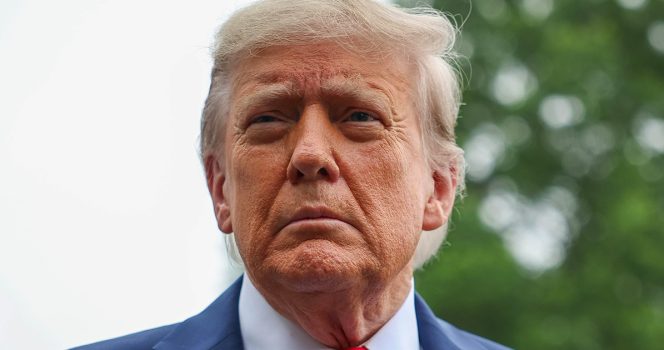
During an interview with TIME, President Donald Trump addressed concerns about possible retaliatory attacks inside the United States.
“I guess,” Trump said when asked whether Americans should be worried.
“But I think they’re worried about that all the time. We think about it all the time. We plan for it. But yeah, you know, we expect some things.”
Then he added bluntly:
“Like I said, some people will die. When you go to war, some people will die.”
Those comments have only intensified public anxiety surrounding the possibility of a wider global conflict.
Some world leaders already believe the world may be closer to a third world war than many people realize. Ukrainian President Volodymyr Zelensky recently told the BBC that the conflict sparked by Russia’s invasion of Ukraine may already represent the beginning stages of a larger international war.
“I believe that Putin has already started it,” Zelensky said. “The question is how much territory he will be able to seize and how to stop him.”
Public opinion appears to reflect those fears. According to a YouGov survey conducted across several European countries and the United States, a large percentage of people believe another world war could break out within the next decade. Around 45 percent of Americans reportedly share that concern.
Even more alarming, most respondents believe nuclear weapons would likely be used if such a conflict erupted.
Because of those fears, researchers and analysts have spent years examining which places might be safer in the event of a large-scale war or nuclear attack.
Outside the United States, countries with long histories of neutrality are often mentioned. Switzerland is frequently considered one of the safest because of its neutral political stance, mountainous terrain, and extensive bunker systems. Ireland and Austria are also commonly discussed because of their historical efforts to remain outside major wars.
Inside the United States, however, safety may depend largely on geography and proximity to military infrastructure.
According to research highlighted by Newsweek, some experts believe certain states on the East Coast and in the Southeast may be considered less immediate targets in a nuclear scenario. These areas include states such as Maine, Vermont, Massachusetts, Pennsylvania, Virginia, North Carolina, South Carolina, Georgia, and Florida.
Several Midwestern regions are also sometimes viewed as relatively less vulnerable compared to areas tied directly to strategic military systems.
But experts warn that parts of the central United States could face much greater danger.
States like Montana, Wyoming, Colorado, Nebraska, North Dakota, South Dakota, Iowa, and Minnesota are often considered higher-risk areas because they are located near major missile silo facilities connected to America’s nuclear defense systems.
In a nuclear conflict, those locations would likely become priority targets because destroying missile silos early could limit the United States’ ability to launch retaliatory strikes.
Still, specialists repeatedly stress that geography alone offers no guarantee of safety.
Modern warfare would likely target more than just military bases. Major cities, transportation hubs, power grids, communication networks, ports, and critical infrastructure could all become vulnerable in a large-scale global conflict.
And with thousands of nuclear weapons still existing worldwide, experts caution that no location could truly be considered completely safe in the event of a full nuclear war.
The reality is that discussions about “safe places” are often relative rather than absolute. Some areas may face lower immediate risk than others, but the global consequences of nuclear conflict — including economic collapse, supply shortages, radiation concerns, and long-term environmental damage — could affect nearly everyone regardless of location.
For now, analysts emphasize that diplomatic solutions and de-escalation remain the most important path forward as tensions continue to rise around the world.

