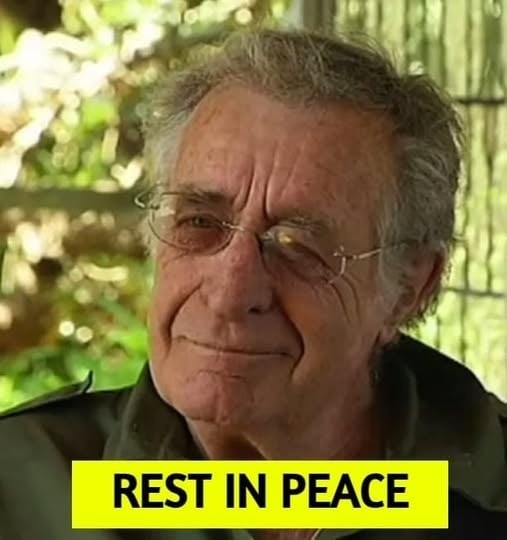
According to reports, the accident occurred on a rural roadway where emergency crews responded rapidly and attempted advanced medical intervention. Despite those efforts, his injuries proved fatal.
For many viewers, Grant Page represented a disappearing era of filmmaking — one built not on digital illusion, but on precision, planning, and people willing to place themselves physically inside the action. Long before modern CGI could simulate impact convincingly, performers like Page were the reason audiences felt speed, chaos, and risk so intensely on screen.
Yet those who worked in stunt performance often understood something the audience did not always see clearly: the profession was never about recklessness alone. Beneath the spectacle was discipline. A successful stunt depended less on fearlessness than on preparation, timing, engineering, trust, and the ability to remain calm while surrounded by danger.
That balance is part of what made Page so respected within the industry.
Colleagues and family members have described him as energetic and deeply connected to his craft even late in life. His son Leroy spoke of a man who continued developing ideas and thinking creatively rather than retreating into nostalgia. That detail matters. Some people spend their later years speaking only about who they once were. Others remain inwardly alive to the work itself.
Grant Page became closely associated with the practical intensity that defined early Australian action cinema, especially the world surrounding the Mad Max films. Those productions gained their reputation because they felt tangible — vehicles sliding across real terrain, collisions carrying actual weight, and performers responding to genuine physical conditions rather than digital placeholders.
The realism audiences admired came at a cost measured not only in effort, but in accumulated injuries, scars, exhaustion, and years spent testing the limits of human coordination. Stunt professionals rarely appear at the center of publicity, yet their work quietly shapes how entire generations remember action cinema.
Page’s influence extended beyond individual performances. Many in the industry credit him with helping advance stunt coordination practices and safer execution methods that protected crews and performers alike. That contribution may ultimately matter more than any single sequence. Skill becomes legacy when it leaves behind better standards for those who follow.
His death also carries a quiet reminder about the fragility shared by everyone, regardless of experience or reputation. A man who survived controlled explosions, crashes, and high-risk productions for decades was ultimately lost in an ordinary roadway accident — the kind of everyday uncertainty no amount of expertise fully removes from life.
There is something humbling in that reality. Human beings can master craft, improve systems, and reduce risk, yet none of us entirely escapes vulnerability. What remains afterward is not control, but the imprint of how we spent our time and what we contributed to others.
Grant Page leaves behind four sons, countless collaborators, and a body of work woven into the memory of practical filmmaking itself. In an age increasingly shaped by digital perfection, his career stands as a reminder that some of cinema’s most enduring moments came from real people performing difficult things with courage, precision, and trust in one another.
And perhaps that is why those scenes still feel alive decades later: because somewhere beneath the choreography and machinery, there was always a human being truly present inside the risk.