
Incidents like this naturally draw attention because cruise ships compress large numbers of people into shared indoor spaces for extended periods of time. Even when the likelihood of broader transmission appears limited, health officials often respond aggressively in the early stages. The purpose is not to create alarm, but to avoid delay while facts are still being verified.
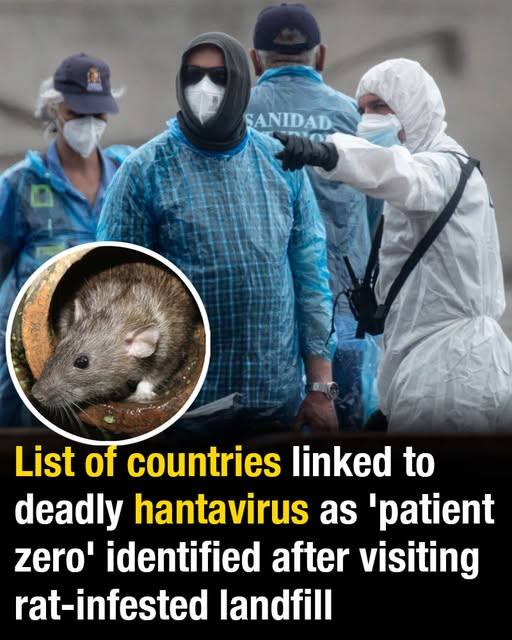
Images circulating online of response teams wearing respirators and protective suits intensified public concern. Yet such precautions are common during uncertain investigations. Public health systems are built around preventing worst-case scenarios before they develop, especially when international travel allows people to disperse across borders within hours.
Behind the scenes, the greater challenge is often coordination rather than panic. Authorities must identify passengers, trace movements, align reporting standards between countries, and ensure people receive consistent guidance without unnecessary confusion. Modern travel makes outbreaks more logistically complex even when the medical risk itself remains relatively contained.
Investigators are reportedly focusing on a passenger who tested positive and is currently isolated while contact tracing continues. Attention has also turned toward activities before boarding, including travel through Ushuaia, Argentina, where some reports suggest possible exposure connected to areas with significant rodent activity. Health teams are now reconstructing timelines carefully, reviewing excursions, transportation links, and shared environments to understand where exposure may have occurred.
Hantavirus itself is generally associated with infected rodents rather than ordinary person-to-person spread. In many strains, infection occurs through inhalation of microscopic particles from dried rodent droppings, urine, or saliva, particularly in enclosed or poorly ventilated spaces. This is why guidance often emphasizes caution in barns, storage buildings, abandoned structures, or dusty areas where rodents are present.
Although widespread human-to-human transmission is not considered typical for most forms of hantavirus, authorities still treat any suspected case seriously when large groups and international travel are involved. Precaution during uncertainty is often less damaging than hesitation followed by escalation.
One difficulty is that early symptoms can resemble common viral illnesses. Fever, muscle pain, fatigue, and headaches may appear first before more severe breathing complications develop in serious cases. For this reason, travelers who feel significantly unwell after potential exposure are encouraged to seek medical attention early and provide accurate travel history rather than dismiss symptoms out of embarrassment or fear.
The situation also serves as a reminder of how interconnected modern travel has become. A single medical concern on one vessel can quickly involve airports, hotels, clinics, border agencies, and health departments across multiple countries. Effective response depends not only on medicine, but also on calm communication, public trust, and practical cooperation.
Travel health experts continue recommending straightforward precautions rather than fear-driven reactions:
- Avoid enclosed spaces with visible rodent activity or droppings.
- Be cautious in dusty, poorly ventilated environments.
- Maintain strong hygiene practices during travel.
- Seek medical advice early if unusual symptoms appear after travel.
- Share travel history honestly with healthcare providers when necessary.
For now, officials continue monitoring passengers during the observation period while verifying whether additional cases emerge. Most travelers will likely remain unaffected. Still, the response highlights an important reality of public health: careful early action may appear dramatic from the outside, but its purpose is often to keep larger problems from developing later.
In moments like these, staying informed without feeding panic becomes part of the public responsibility as well.