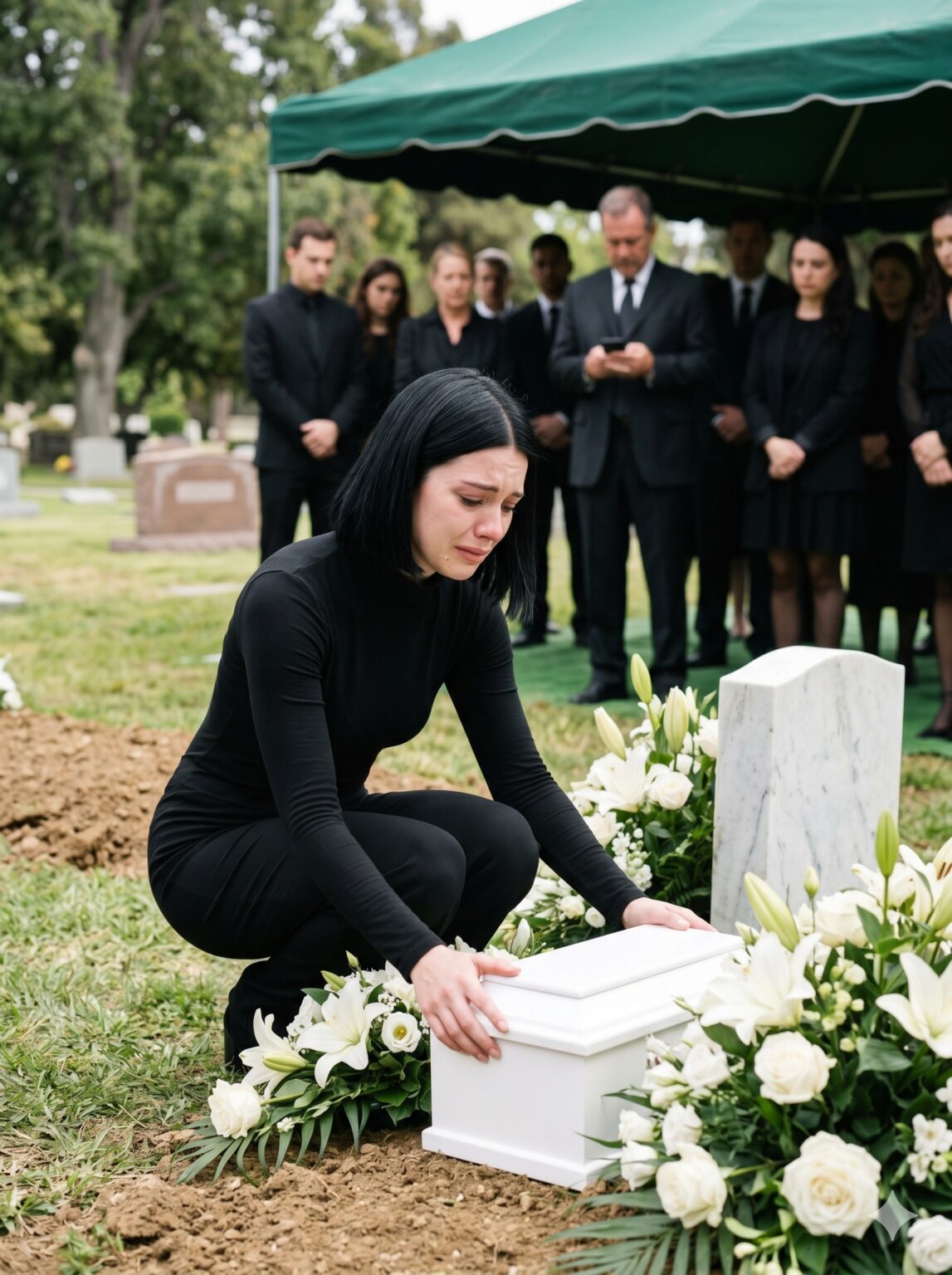
Four days after she passed, I called my parents to share the funeral arrangements and ask them to come to Columbus. I did not need solutions. I did not expect grand speeches. I simply needed my family to stand beside me while I buried my child.
My mother hesitated before telling me they could not attend because my brother was hosting a barbecue that weekend. There were guests invited already, she explained, as though logistics were the true difficulty. Then, with a casualness that stunned me more than anger would have, she said I could always have another baby.
Some sentences alter a relationship permanently. Not because they are loud, but because they reveal something too clearly to ignore.
On the day of the funeral, I stood outside the chapel alone holding a blanket Lily never had the chance to use. No parents walked in beside me. No brother placed a hand on my shoulder. I entered quietly, stood beside the small white casket, and spoke about my daughter because her brief life still deserved witness and love.
Grief changes the weight of things. The silence inside that room taught me not only what I had lost, but also what had long been absent within my family long before Lily’s death exposed it.
For years, I had been the dependable one. I paid overdue bills, solved emergencies, and softened consequences so everyone else could remain comfortable. I told myself it was loyalty. Perhaps part of it was. But another part was habit — the habit of believing love could eventually be earned through endless understanding and sacrifice.
After the funeral, something in me grew still.
I contacted my attorney, my bank, and the property office. I withdrew financial support and allowed responsibilities to return to the people who actually owned them. I did not do it in rage. Rage burns quickly. This felt quieter than that. More final.
My mother called soon afterward, accusing me of overreacting because of “one bad day.” My brother later arrived at my house smelling of smoke and grilled food, speaking about inconvenience rather than loss, as though the funeral had simply interrupted the rhythm of his weekend.
For the first time in my life, I did not argue. I did not explain myself in circles hoping to be understood. Some people hear pain only when it disturbs their comfort. Others are unable to face what their absence says about them, so they minimize the wound instead.
My father eventually admitted something difficult but honest: for years, it had been easier to disappoint me than to challenge my mother. His confession did not repair the damage, but it at least carried truth, and truth is often more useful than reluctant affection wrapped in excuses.
My mother continued defending herself. I let her words pass without resistance.
There comes a point when protecting your peace is no longer punishment toward others. It becomes simple stewardship of what remains of your own heart.
When I buried Lily, I buried more than a child. I buried the belief that love must always mean enduring harm silently. I buried the instinct to keep rescuing people who would not stand beside me in my darkest hour.
What remained afterward was grief, yes — but also clarity.
And clarity, though painful at first, can sometimes be the beginning of a more honest life.