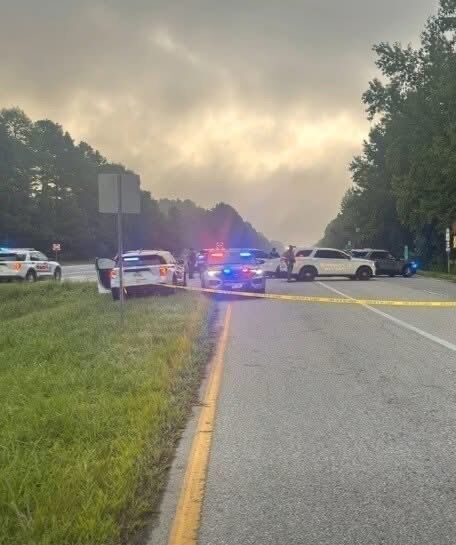
a tense atmosphere. Residents who normally walked those sidewalks or drove those roads were suddenly watching from behind windows as familiar streets were treated like a high-risk zone.
Authorities established a restricted perimeter, allowing only essential personnel to enter. Roads were closed, public transportation was redirected, and daily life in the area came to a sudden stop. The scale of the response suggested that officials were handling a potentially dangerous situation that required patience, control, and careful coordination.
For the surrounding community, the disruption was immediate. Businesses closed their doors, families were told to remain indoors, and uncertainty spread quickly. In the absence of full details, rumors began moving online faster than confirmed information. Officials urged the public not to rely on speculation, stressing that safety, containment, and verified updates remained the priority.
Moments like this remind us how quickly ordinary life can be interrupted. A street that feels familiar in the morning can become unreachable by afternoon. A neighborhood built on routine can suddenly be held together by caution, trust, and the discipline to wait for truth instead of feeding fear.
There is a responsibility in how a community responds to uncertainty. Fear is natural, but panic spreads harm. Curiosity is understandable, but speculation can mislead. When authorities are still working, the wisest response is not to fill the silence with assumptions, but to protect one another by staying calm, staying away from danger, and allowing verified facts to emerge.
As the situation continues to unfold, officials remain focused on securing the area and determining exactly what happened. For residents and businesses affected, the hope is simple: that the threat is resolved safely, that no further harm comes to the community, and that the truth becomes clear without rumor making the wound deeper.