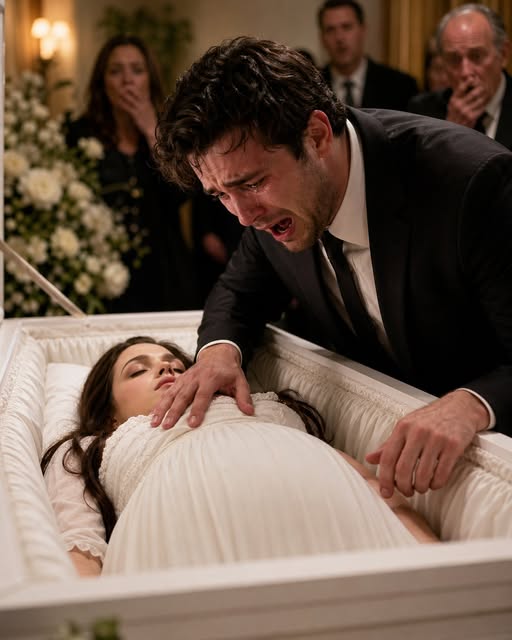
The movement was unmistakable. A tiny, rhythmic push against the cold fabric of Melva’s dress. Pedro froze, his breath hitching in his chest as the world tilted on its axis. Logic screamed that it was a trick of the nerves or a cruel hallucination born of grief, but the kick came again—sharper this time, a desperate plea from the darkness. “No,” he whispered, his voice cracking as he slammed his hands against the casket. “Open it! He’s alive!”
The funeral home erupted into chaos. Relatives shouted for him to stop, fearing a mental breakdown, but Pedro was beyond reach. He was a man possessed by the singular, burning truth of a heartbeat. When the staff finally relented and forced the lid open, the room fell into a stunned, suffocating silence. There, beneath the pale, still form of his wife, the fabric of her dress shifted again. A visible, rhythmic pulse of life. The impossible had happened: in the shadow of death, a miracle was fighting to breathe.
The transition from mourning to frantic medical intervention was a blur of sirens and white-knuckled terror. In the ambulance, Pedro didn’t let go of Melva’s hand, pleading with her to hold on just long enough to let their son into the world. When they reached the hospital, the urgency was palpable. The doctors, finally seeing the fetal activity for themselves, rushed them into surgery. Pedro was left in a sterile hallway, his clothes stained with the dust of the funeral home, praying to a God he had almost stopped believing in just hours before.
The news arrived like a physical blow. His son, Mateo, had been delivered—fragile, tiny, and fighting for every gasp of air. But Melva, his beautiful, dancing, vibrant Melva, had not survived the trauma of the accident. The grief was a tidal wave, but as Pedro stood over the incubator in the neonatal unit, watching his son’s chest rise and fall, he found a reason to endure. He reached into the glass, and for the first time, Mateo’s tiny, translucent fingers curled around his own.
The peace of that moment was shattered by a doctor’s grim entrance. Holding a file that looked heavy with secrets, the physician approached with a look of deep concern. “Mr. Salgado,” he began, his voice low and steady. “There is something about the accident report you need to know.” Pedro looked up, his heart sinking as the doctor continued, “The crash may not have been an accident.” The air in the room turned ice cold. The realization hit him with the force of a freight train: someone had orchestrated the end of his family, and in their haste to bury the truth, they had almost interred his son alive. The hunt for justice had just begun.