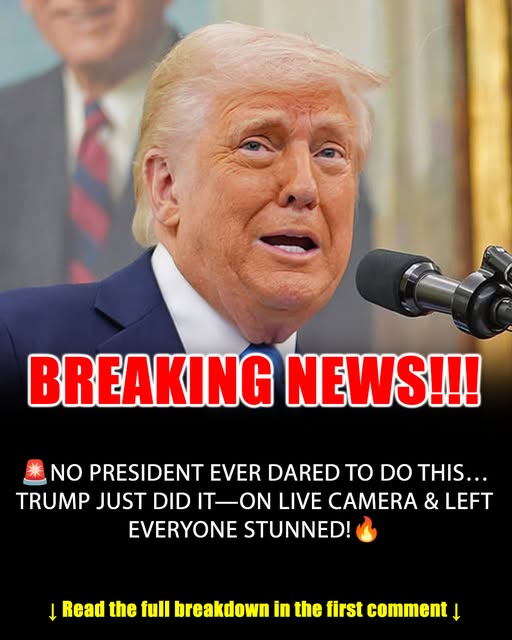
The mood inside the briefing room was already tense as cameras started rolling, but what followed caught nearly everyone off guard. In recent months, analysts had been debating the direction of Donald Trump’s administration, expecting a familiar mix of policy updates and political messaging. Instead, when he stepped to the podium, he moved past the usual topics—no economy, no foreign policy breakdown, no standard opening remarks—and shifted the focus toward the media itself.
His tone was firm and controlled as he delivered a message that immediately changed the atmosphere in the room. Speaking directly to the press and those watching at home, he signaled that changes were coming. The way it was said stood out. It felt less like a routine statement and more like a direct challenge to the role of the media in public life.
The reaction inside the room was immediate. Conversations stopped, and a noticeable silence followed as journalists processed what had just been said. The relationship between presidents and the press has often been strained, but it has traditionally operated within an understood framework. This moment felt different to many observers, suggesting a sharper and more confrontational stance.
Responses outside the room came quickly. Media advocacy organizations raised concerns about press freedom, emphasizing the importance of independent journalism in a democratic system. Legal experts and civil liberties groups also weighed in, pointing to the potential implications such rhetoric could have for public trust and government accountability.
At the same time, supporters of the administration interpreted the moment differently. For them, it represented a direct response to what they see as bias and inconsistency in modern media coverage. They viewed the message as an effort to push for greater accountability and transparency within journalism, rather than an attack on its role.
Although the remarks lasted only a short time, the discussion they sparked has continued. Analysts are now examining what this could mean in practical terms—whether it leads to changes in press access, communication strategies, or remains primarily a rhetorical shift. The uncertainty has kept both political observers and news organizations closely watching what comes next.
Tension between political leadership and the media is not new in American history, but what stood out here was the broader scope of the message. Instead of responding to a specific report or outlet, the focus was on the institution as a whole, which is why it has drawn so much attention.
Public reaction reflects that divide. Some see the moment as concerning, warning that it could affect the balance between power and accountability. Others see it as a necessary confrontation in a media landscape they feel lacks neutrality. The discussion highlights a deeper issue—the ongoing debate over where trust should be placed and how information is shaped.
As coverage continues, newsrooms are adjusting, trying to maintain their role while navigating an environment where their credibility is being questioned more directly. Whether this moment leads to concrete changes or remains symbolic, it has clearly shifted the conversation.
What comes next will likely define how that relationship evolves, as both sides adapt to a dynamic that feels more uncertain than before.