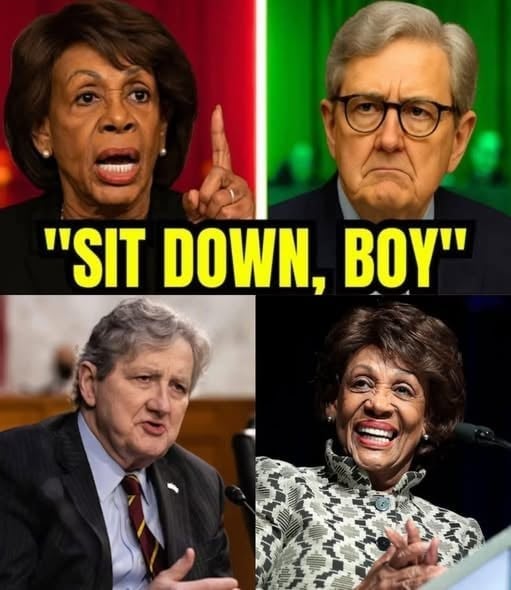
…d for. In a political climate defined by shouting matches and the relentless pursuit of the viral soundbite, the moment felt jarringly different. Kennedy could have easily met fire with fire. He could have descended into the fray, trading barbs and escalating the conflict into the kind of spectacle that fuels cable news cycles for weeks. He didn’t.
Kennedy’s refusal to lash out was not a sign of weakness; it was a deliberate, calculated reordering of the scene. By choosing a calm, almost disarming tone, he effectively denied Waters the spectacle she had sought to create. He refused to play the role of the wounded victim or the righteous brawler. Instead, he claimed something far rarer in the halls of power: absolute self-possession.
As he spoke, the shift in the room was palpable. The insult, intended to diminish him, instead boomeranged, leaving Waters visibly stunned as she realized her attempt to belittle him had failed to land. Kennedy’s response was not a roar, but a surgical strike of composure that forced the entire committee to confront the reality of the exchange. He had effectively stripped the theater away, leaving only the substance of the argument—and the character of the people making it.
That moment traveled far beyond the committee walls because it forced an uncomfortable, necessary question on everyone watching at home: What kind of power do we actually celebrate? Is it the power to humiliate, to tear down, and to make others feel small? Or is it the power to absorb a blow without becoming the very thing that struck you?
In a country trained to cheer for the loudest voice in the room, Kennedy’s restraint became a quiet, powerful referendum on dignity. It served as a reminder that true authority is rarely found in the volume of one’s voice, but in the strength of one’s resolve. By choosing not to descend, he rose above the fray, proving that the most effective way to handle an insult is not to return it, but to let it fall flat against the shield of one’s own integrity. The cameras kept rolling, but the narrative had already shifted—from a petty political spat to a profound lesson on the cost of winning by making someone else small.