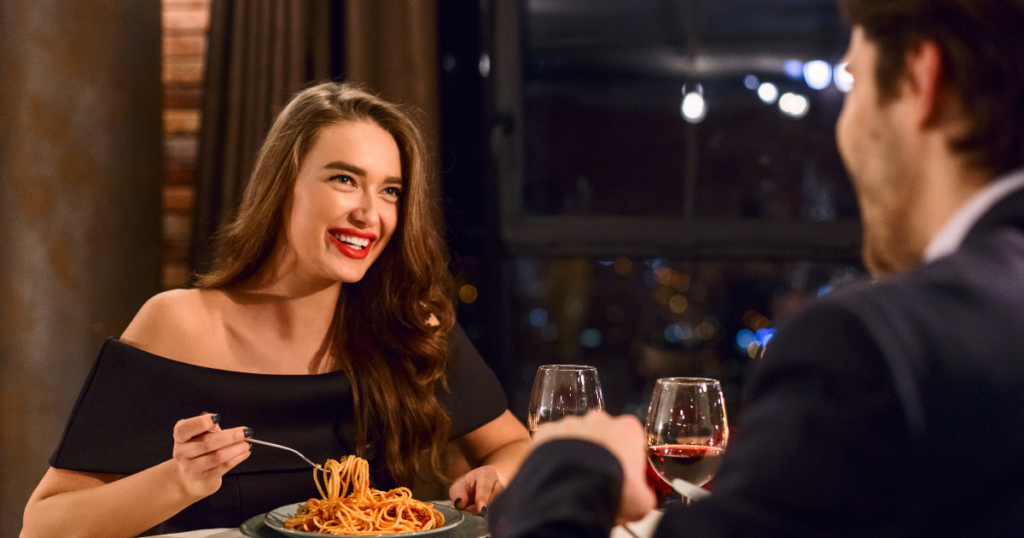
Yesterday marked our three-year anniversary, and my boyfriend told me he had something special planned for the evening. He made a reservation at a restaurant far nicer than the places we usually visited, and a few days beforehand he even told me to dress up because he had a “surprise” waiting.
Naturally, my mind started filling in the blanks.
Three years together felt like a meaningful milestone. The way he hinted about the surprise made it sound important, maybe even life-changing. I tried not to get ahead of myself, but it was difficult not to imagine that perhaps he was planning to propose.
So I let myself enjoy the excitement. I got my nails done, spent extra time getting ready, and chose a dress I felt beautiful in. By the time I left the house, I carried that nervous kind of hope that only appears when you believe something big might happen.
When we arrived at the restaurant, everything seemed perfect. The room was softly lit, quiet music played in the background, and our table overlooked a beautiful view. For a moment I thought the evening might really become one of those memories people talk about for years.
But as dinner went on, small things started to feel off.
He seemed distracted.
He checked his phone repeatedly under the table, barely touched his food, and kept glancing toward the entrance like he was expecting someone to arrive. Whenever I tried to start a conversation, his replies were short before his attention drifted back to the screen in his hand.
At the time, I tried to explain it away. If he really had a surprise planned—especially something like a proposal—maybe he was just nervous.
Eventually, the server approached our table holding a plate with a slice of cake. Across the top, written in chocolate icing, was a message.
My heart began racing.
This had to be the moment.
But when I leaned closer and actually read the words, the excitement drained away instantly.
The cake said:
“Congrats on your promotion!”
I stared at it, confused.
“What promotion?” I asked.
My boyfriend froze. The smile he had been forcing slowly disappeared.
“That… wasn’t supposed to happen like that,” he said quietly.
Suddenly everything from the evening replayed in my mind: the phone, the distracted glances toward the door, the strange tension in his voice.
And then a thought hit me that made my stomach drop.
“This dinner wasn’t planned for me, was it?” I asked.
He hesitated just long enough for the answer to become obvious.
Finally he admitted the truth. Earlier that week he had arranged the dinner to celebrate a coworker who had just received a promotion. The reservation, the cake, the whole evening had originally been meant for that celebration.
But apparently she canceled at the last minute.
Instead of canceling the reservation, he decided to take me out for our anniversary and hoped the cake wouldn’t cause a problem.
As he tried explaining, he kept insisting it wasn’t what it looked like and that he still wanted to celebrate our anniversary.
But by that point, the evening felt different. What I thought had been a carefully planned milestone now felt like something leftover—an event originally meant for someone else.
I sat quietly for a moment, letting the realization settle.
Then I pushed my chair back and stood up.
“What’s wrong?” he asked, suddenly panicked.
I looked at him and shook my head.
“This wasn’t supposed to be our anniversary dinner,” I said. “It was someone else’s celebration.”
He tried to explain again, but I had already heard enough.
I walked to the front of the restaurant, paid for my half of the bill, and headed toward the door. Behind me I could hear him calling my name, trying to convince me it wasn’t a big deal.
But after three years together, one thing had suddenly become very clear.
If someone spends a romantic evening with you while their attention is somewhere else, the message on the cake isn’t the real problem.
The cake just makes the truth impossible to ignore.
And sometimes the strongest choice you can make is simply to stand up, walk away, and leave the rest of the story behind.