
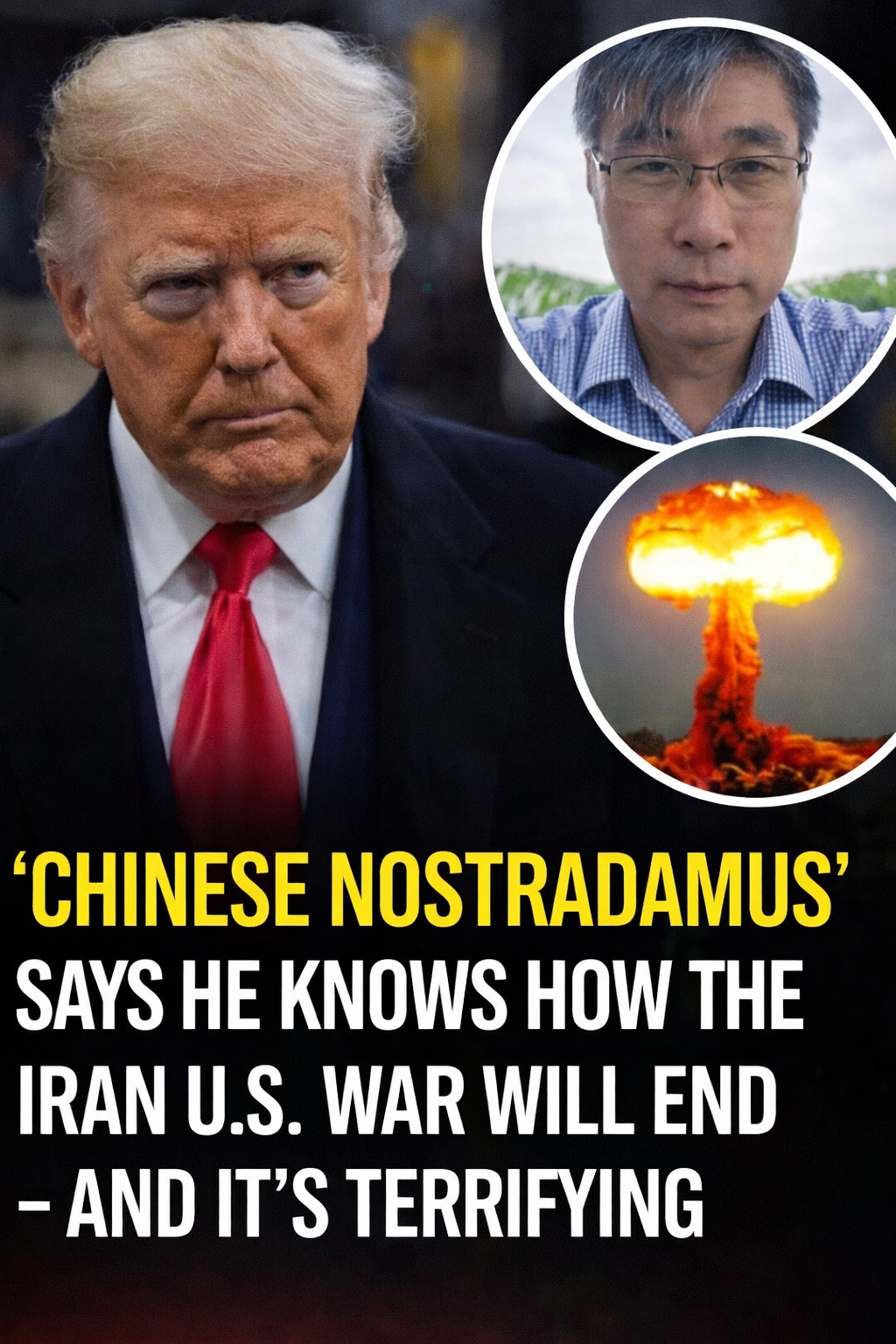
The warning has drawn attention. Professor Xueqin Jiang, sometimes referred to by commentators as the “Chinese Nostradamus,” has offered a sobering assessment about the possibility of a future conflict between the United States and Iran. In his view, such a war would not resemble the quick, decisive campaigns many imagine. Instead, he suggests it could become a prolonged and exhausting confrontation whose costs would weigh heavily on all sides.
Jiang argues that the United States risks entering what he calls a “long war trap.” According to his analysis, Iran has spent decades preparing for a style of conflict very different from traditional large-scale battles. Rather than seeking overwhelming battlefield dominance, Iranian strategy has focused on endurance, decentralized capabilities, and asymmetric tactics designed to gradually pressure stronger adversaries.
Much of this approach centers on relatively inexpensive technologies such as drones, short-range missiles, and dispersed launch systems. While individually modest compared with advanced Western weaponry, these tools can be deployed in large numbers and across wide areas. In Jiang’s assessment, their purpose is not necessarily to win dramatic battles, but to sustain continuous pressure and force opponents into costly defensive responses.
This creates what analysts often describe as an economic imbalance in warfare. Defensive systems—such as missile interceptors and advanced radar networks—can cost millions of dollars per engagement. Meanwhile, the drones or rockets they intercept may cost only a small fraction of that amount. Over time, Jiang argues, this difference in cost could place significant strain on the side relying on expensive defenses.
Beyond military considerations, Jiang also highlights the broader economic stakes of any conflict in the region. The Middle East remains home to critical energy infrastructure and some of the world’s most important shipping routes. Disruptions in these areas could have consequences far beyond the battlefield.
Particular attention is often given to the Strait of Hormuz, a narrow maritime corridor through which a large share of global oil shipments passes each day. Any prolonged instability affecting that route could influence energy prices, supply chains, and financial markets worldwide.
Whether Jiang’s prediction proves accurate remains uncertain, and many analysts emphasize that geopolitical outcomes depend on complex political, military, and diplomatic factors. Yet his warning reflects a broader shift in how modern conflicts are being understood. Increasingly, strategists argue that endurance, economic sustainability, and technological adaptation may shape the outcome of future wars as much as traditional military strength.