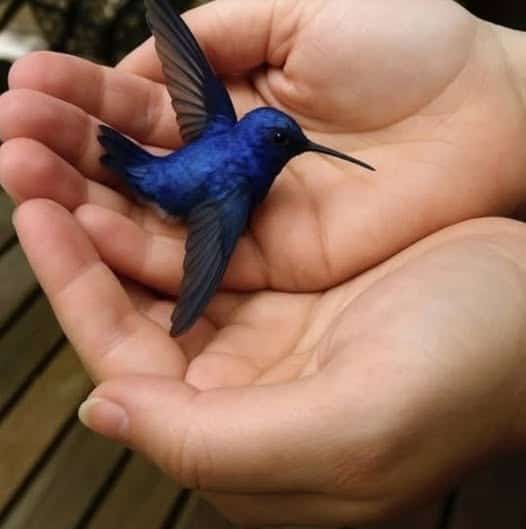
Across many cultures, the hummingbird has long been noticed not only for its beauty, but for the way its presence seems to shift a moment. Small, quick, and luminous, it arrives without warning and leaves just as suddenly — yet people often remember when they saw one.
In Indigenous traditions throughout the Americas, hummingbirds are seen as signs of renewal and change. Their appearance in a garden or near a window is sometimes understood as a season opening — a reminder that life can move from heaviness into ease, from waiting into movement. Not because fortune magically appears, but because renewal often begins quietly.
For those carrying grief, a hummingbird’s visit can feel especially tender. Many interpret it as a soft reminder of connection — not a message spoken in words, but a presence that stirs memory and comfort at once. In moments of loss, small signs can steady the heart, offering reassurance that love does not vanish simply because someone is gone.
Whether spiritual or symbolic, the comfort they bring is real.
There is also something grounding in the way hummingbirds move. Their wings blur with speed, yet they can hover perfectly still. Watching them pulls attention away from rushing thoughts and back into the present moment. For a few seconds, worries loosen their grip.
They ask nothing — only that we notice.
In that noticing, many people find calm.
The hummingbird does not promise sudden miracles or easy answers. What it offers is gentler: a reminder that life holds brief moments of brightness even in difficult seasons, and that stillness can exist within motion.
Sometimes renewal doesn’t arrive as a grand change.
Sometimes it arrives as a small living thing passing through your day, quietly reminding you to breathe, to feel, and to remain open to beauty.
And that, in itself, is a blessing.