Lois Smith was born in 1930 in Topeka, Kansas, where her first steps into acting weren’t glamorous auditions but church halls and biblical plays directed by her father. There was no rush toward reinvention, no crafted persona. She kept her married name, moved to New York, and supported herself with ordinary work — slicing deli meat, checking coats at the Russian Tea Room — while quietly learning her craft.
Fame came early but never ruled her.
In 1955, LIFE Magazine placed her on its cover among rising starlets. At twenty-five, she was the oldest of the group, noted not for sparkle but for a “pale-faced intensity.” Even then, her path was clear: depth over dazzle, work over attention.
That choice shaped everything that followed.
On stage, she lived inside the words of great playwrights, growing naturally from youthful roles into powerful, layered characters — including Madame Arkadina in The Seagull. On screen, she appeared in films that spanned generations, from East of Eden to Twister and Minority Report.
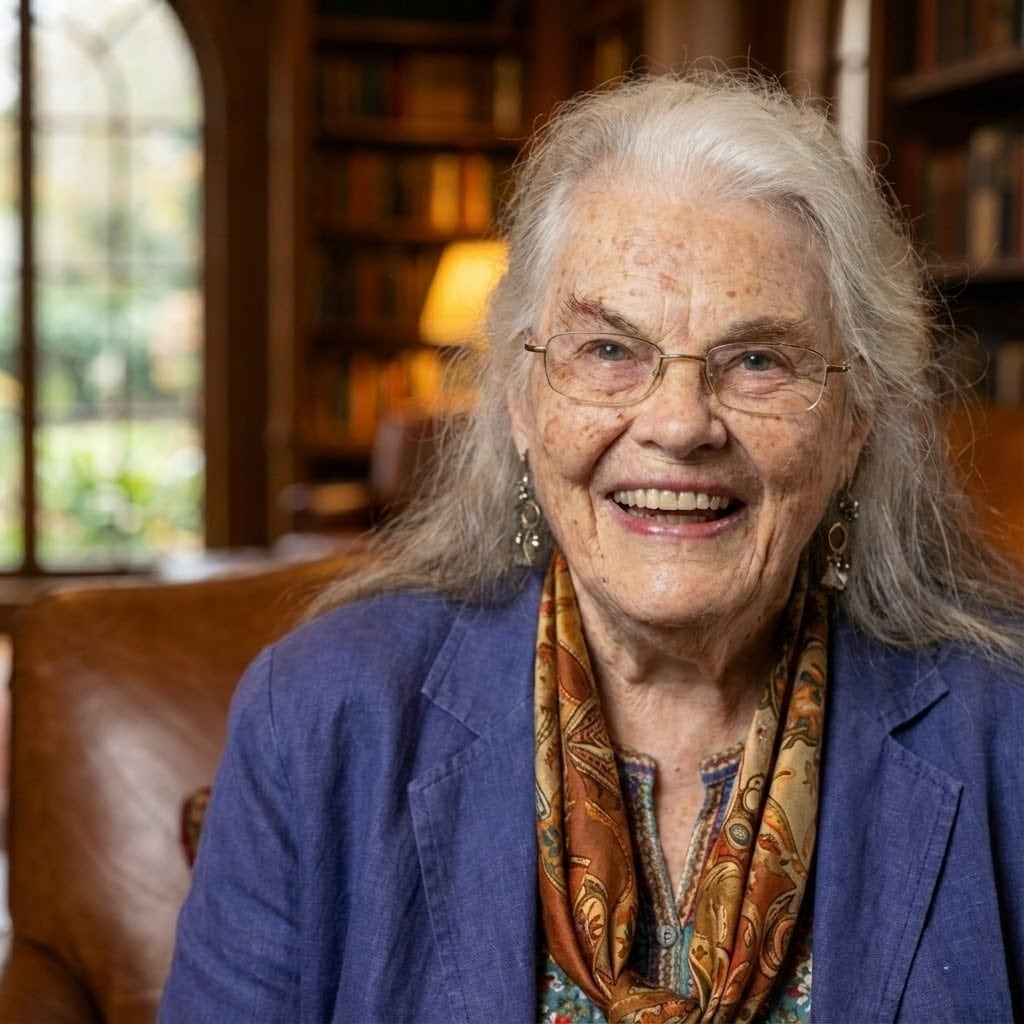
While much of Hollywood fought time, Smith made peace with it. She let her dark hair turn white. She didn’t reshape herself to remain “marketable.” She simply kept working — steadily, honestly, without apology.
And the years kept opening doors instead of closing them.
In 2021, at ninety years old, she became the oldest actor ever to win a Tony Award for performance, honored for her quiet, devastating role in The Inheritance. It wasn’t a comeback. It was a continuation — the natural result of decades of presence, discipline, and humility.
Long before that win, she had already built a career that few achieve: over seventy years of consistent work, more than a hundred roles, and the rare ability to remain relevant without reinventing herself.
Even into her nineties, she continues taking on complex parts, including her role in the 2024 film The Uninvited. And when asked for advice, she offers nothing dramatic:
Be on time.
Enjoy the work.
Simple. Steady. Human.
Her journey isn’t about defying age.
It’s about refusing to fear it.
Lois Smith didn’t chase youth, fame, or reinvention. She chose craft, patience, and authenticity — and time met her with opportunity instead of erasure.
In an industry that often treats aging as disappearance, she became proof of something quieter and stronger:
That depth grows.
That presence matures.
And that a life built on sincerity doesn’t fade — it settles into something enduring.
Not louder.
Just truer.