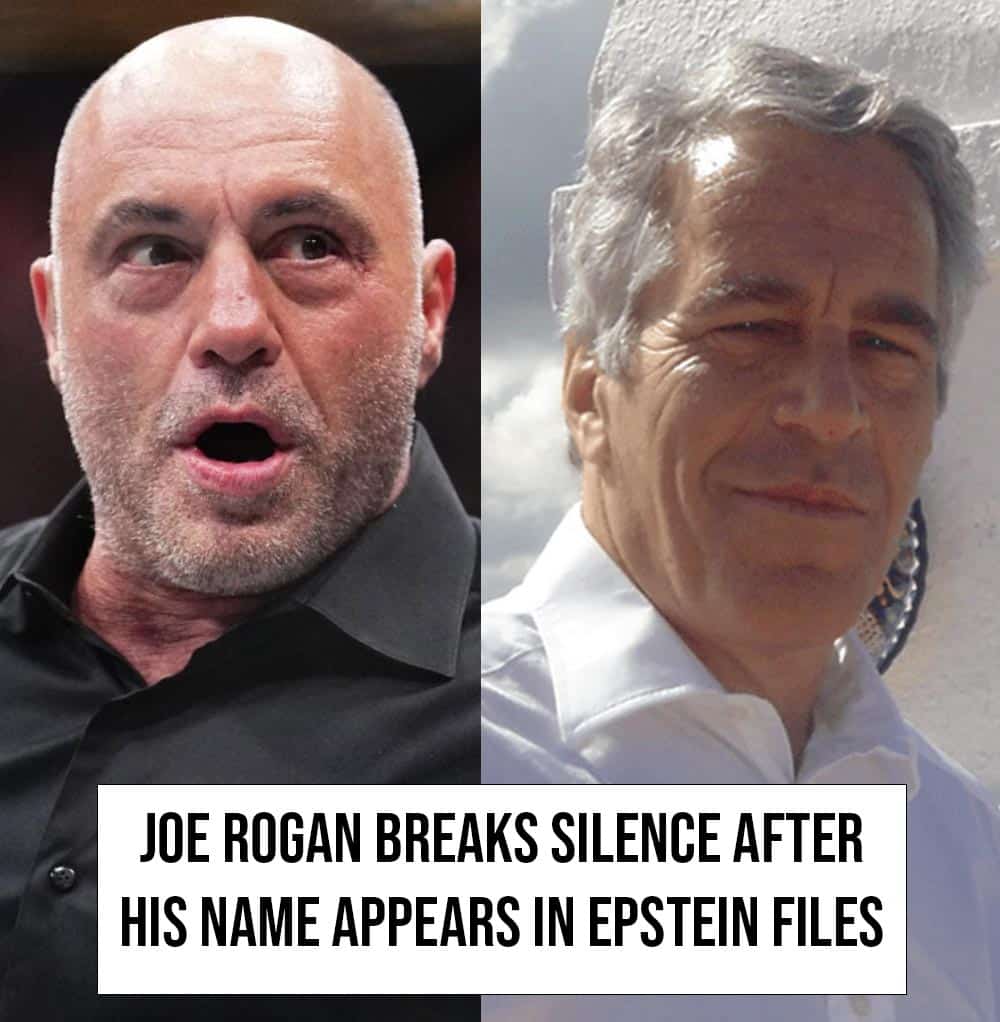
Recently released documents from the United States Department of Justice connected to Jeffrey Epstein have drawn renewed public attention. Among many names appearing in the records is Joe Rogan, who has since addressed the mention publicly.
The material, released over 2025 and 2026 under a federal transparency law, contains millions of pages from past investigations. They outline how Epstein abused underage girls while also noting that investigators did not find enough evidence to establish a coordinated trafficking network involving other powerful individuals.
The scale of the release has naturally stirred public scrutiny — not only of Epstein’s crimes, which are firmly established, but of anyone whose name appeared in communications around him, even when no wrongdoing was alleged.
A brief email, a clear refusal
Rogan’s name appears in a 2017 email exchange between Epstein and physicist Lawrence Krauss.
In the message, Epstein wrote that he had seen Krauss on Rogan’s podcast and asked if an introduction could be made. Krauss replied that he would reach out. In a later follow-up, he informed Epstein that Rogan did not seem interested in meeting.
Years later, Rogan addressed the exchange directly on The Joe Rogan Experience.
“I’m in the files for not going,” Rogan said plainly.
“It was never even a possibility.”
He described being surprised that anyone thought he would want such a meeting, adding that he shut the idea down immediately.
There was no attempt to dramatize it — only to clarify it.
What investigators concluded
During the same episode, Rogan reacted to coverage summarizing findings from the Federal Bureau of Investigation.
The FBI concluded that while there was strong evidence of Epstein’s abuse of young women and girls, there was not sufficient proof of a broader criminal conspiracy involving other public figures.
Prosecutors later noted that photographs and financial records recovered from Epstein’s properties did not directly implicate additional individuals in criminal activity.
These findings do not soften Epstein’s crimes.
They simply distinguish proven wrongdoing from association, rumor, and proximity.
Oversight continues
Members of Congress have since reviewed unredacted versions of the documents to ensure transparency and confirm that no material evidence was withheld from public release.
As more people named in indirect contexts speak publicly, a pattern is emerging — not of hidden networks being revealed, but of how easily association alone can ignite suspicion in the absence of wrongdoing.
The quieter lesson
There is wisdom in clarity.
Epstein’s actions were real, grave, and deserved full exposure.
At the same time, justice requires care — separating proven harm from mere mention.
Public trust isn’t built by expanding blame.
It’s built by holding the guilty firmly accountable while resisting the urge to turn proximity into accusation.
In moments like this, truth works best when it is steady rather than sensational —
firm about wrongdoing, careful about innocence, and respectful of the difference between the two.