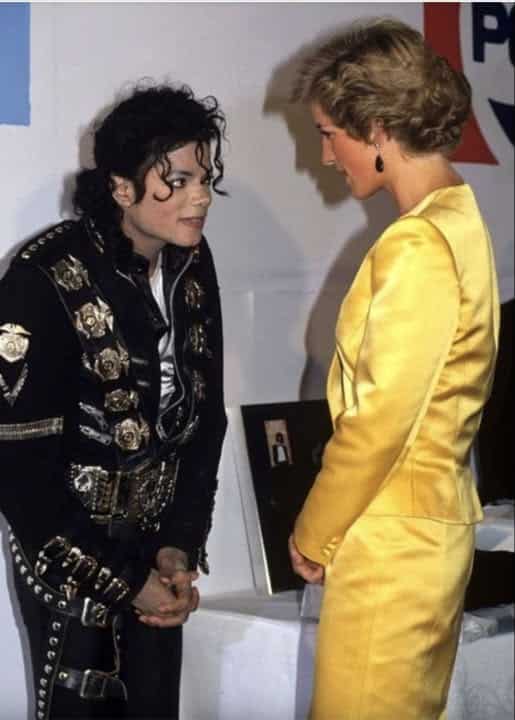
There is a photograph from the summer of 1988 that continues to draw people in. In it, Princess Diana stands beside Michael Jackson backstage at Wembley Stadium.
At first glance, it looks like a simple meeting between two famous figures.
But the stillness in the moment tells a deeper story — one of recognition between two people who knew what it meant to live without privacy.
By the late 1980s, both were carrying extraordinary public weight. Diana had become known as “the People’s Princess,” not through ceremony, but through presence — touching hands, listening, going where suffering lived. Michael Jackson had reached a level of fame few in history have known, filling stadiums while quietly bearing the cost of constant exposure.
Different worlds.
Similar pressures.
They met only once — on July 16, 1988 — when Diana and her then-husband Prince Charles attended Jackson’s Bad tour concert at Wembley Stadium. The event supported charities connected to The Prince’s Trust, and Jackson had already contributed generously to causes in Britain, including Great Ormond Street Hospital.
Backstage, the meeting was polite — almost shy.
Jackson later admitted he felt nervous. Performing for tens of thousands never rattled him, but meeting a princess did. In the photographs, both appear composed, carrying a quiet formality that often rises when two private people are placed in a public moment.
Part of that reserve came from Jackson’s choice to remove “Dirty Diana” from the setlist. The song shared her name, and he worried it might feel disrespectful.
Diana surprised him.
According to Jackson, she asked about the song and encouraged him to perform it. She wanted the concert as it was meant to be — no careful editing for her presence. It was a small moment, but revealing. Not fragile. Not offended. Simply confident and amused by coincidence.
Witnesses later said she enjoyed the show openly, even dancing in her seat, while Charles remained more restrained. Diana loved music — not as spectacle, but as joy — and Jackson’s work was among what she admired.
Their time together was brief.
Yet it left an impression.
Jackson later spoke of her warmth and kindness, and of how she seemed to understand fame not as glamour, but as weight. Both lived under relentless attention. Both knew how admiration could exist beside loneliness.
Some say they stayed in occasional contact, though details remain unclear. What is clear is the recognition he felt — two of the most visible people in the world quietly understanding one another’s burden.
Their connection also rested in compassion.
Diana reshaped royalty through humanitarian work — with AIDS patients, landmine survivors, and forgotten communities. Jackson poured enormous resources into children’s causes and filled his music with calls for healing and unity. Neither used influence simply to be admired. Both used it to serve.
When Diana died in 1997, the world mourned. Jackson was deeply shaken, later calling her “the true princess of the people.” His grief was not performative — it was the loss of someone who had seen him beyond the spectacle.
Today, that 1988 photograph carries more than nostalgia.
It captures two human beings standing inside extraordinary lives — both admired, both misunderstood, both carrying the quiet cost of being endlessly seen.
Not royalty and pop royalty.
Just two people meeting in a rare moment of normalcy.
And perhaps finding, in each other, a sense of being understood.