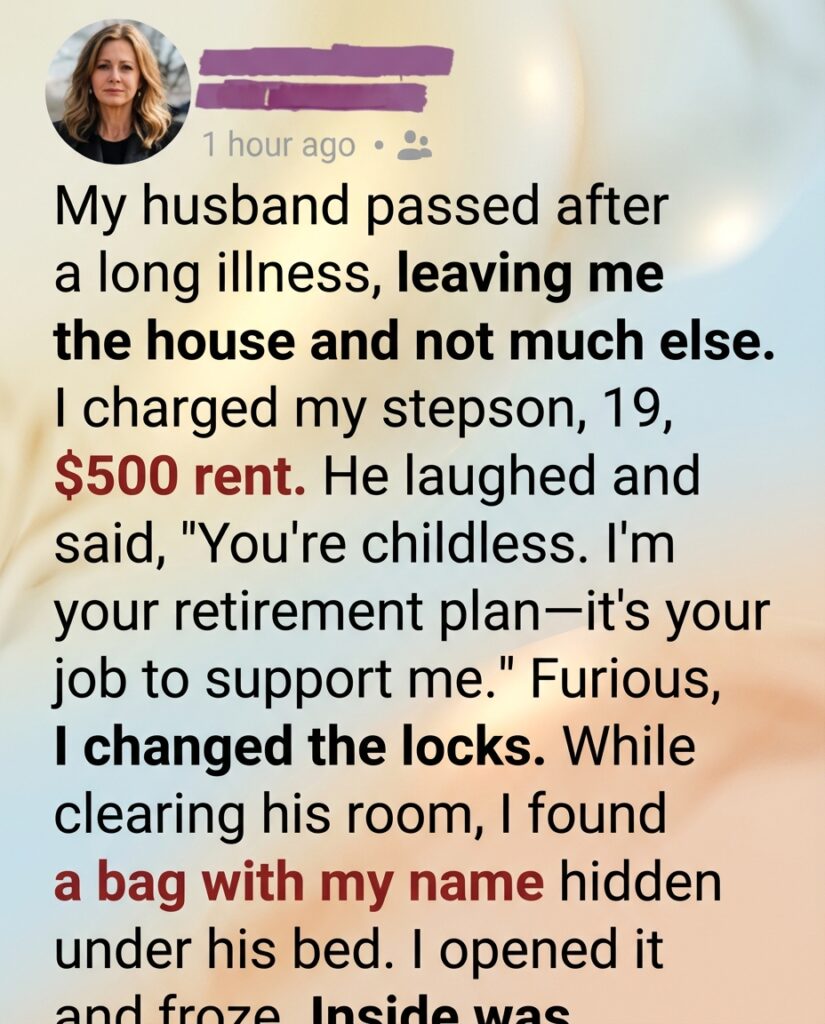
After my husband died, the house grew quiet in a way I wasn’t prepared for. The stillness was broken mostly by the shuffle of mail and the steady appearance of bills on the kitchen table. My nineteen-year-old stepson, Leo, and I were both adjusting to life without him, but I felt the weight of the mortgage and the future pressing constantly on my chest.
When I finally asked Leo if he could contribute something toward rent, I tried to keep my voice calm. He laughed lightly and said everything would be fine. In the fog of grief and exhaustion, it sounded careless. Not cruel, just distant. I spent that night turning his words over in my mind, feeling alone in a responsibility I thought he wasn’t willing to share.
By morning, fear had hardened into resolve. I told myself I couldn’t carry everything anymore. I began packing his things, more from hurt than anger, convinced I was doing what reality demanded.
While clearing the space under his bed, I came across a duffel bag tucked into the shadows with my name written across it. Inside was a savings passbook filled with small, steady deposits made over years. Tucked beside it was a note for my upcoming birthday.
He hadn’t been dismissing our situation. He had been preparing for it—quietly, patiently, in the only way he knew how. His laugh the night before wasn’t indifference. It was an awkward attempt to keep me from worrying until he could show me what he’d done.
When Leo walked in that evening, I was still standing near the door, holding the bag. I apologized before he could speak. Not for asking about rent, but for assuming his heart wasn’t in the same fight as mine. I told him how proud I was, and how much his effort meant.
We both realized how grief had narrowed our vision. I had seen disrespect where there had been loyalty. He had stayed silent when reassurance would have helped. Neither of us was wrong in intention—just overwhelmed.
Since then, we’ve learned to move through this quieter life together instead of side by side in separate fears. The bills haven’t vanished, but the house no longer feels heavy with unspoken worry.
I’ve come to understand that family isn’t proven by perfect communication or shared blood. It’s revealed by who remains when everything familiar is gone—who keeps showing up, saving quietly, and choosing responsibility even when no one is watching.