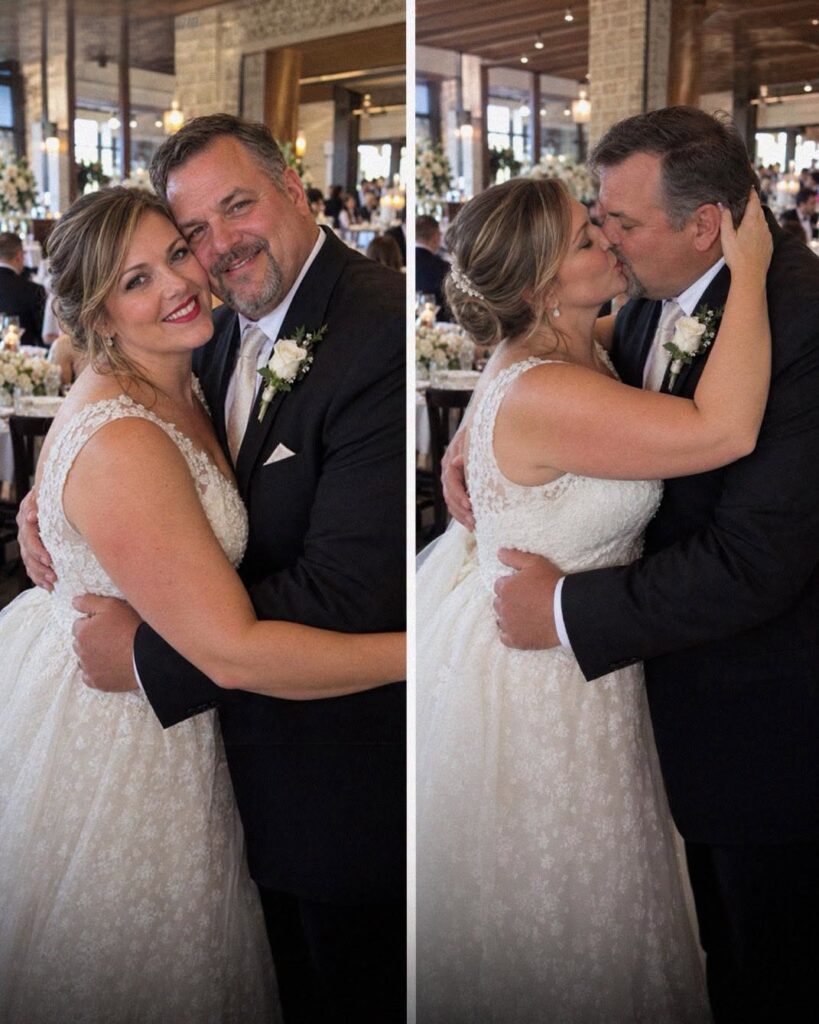
Three weeks after we buried my mother, my father announced he was marrying her sister.
I wasn’t surprised.
What surprised him was my wedding gift.
It was a small white box containing two old brass numbers.
A 1 and a 7.
They had hung beside Mom’s front door for more than thirty years.
Dad and Aunt Lisa didn’t know it yet, but those two numbers were the only part of Mom’s house they were ever going to get.
And I knew that because one month before Mom died, I’d overheard exactly what they were waiting for.
It happened when I came home from college a day earlier than expected.
Mom’s chemotherapy had been especially brutal that week.
Dad had texted me that she was barely eating and sleeping most of the day, so I stopped for groceries on the way home.
I unlocked the front door quietly.
Mom was upstairs.
I could hear the little white-noise machine she used while sleeping.
Then I heard Lisa laughing in the kitchen.
At first, I smiled.
Aunt Lisa had been around constantly since Mom got sick.
She brought soup.
Picked up prescriptions.
Sat beside Mom during treatments.
Helped her tie scarves around her head after she lost her hair.
I was about to walk into the kitchen when Lisa said:
“God, honey, I can’t wait for us to finally be together.”
I stopped.
Honey?
Then Dad answered.
“Sweetheart, we’ve already been together for a year. Be patient.”
The grocery bag nearly slipped from my hands.
For several seconds, I couldn’t move.
Lisa lowered her voice.
“I’m tired of sneaking around. I want to live here with you. I want our wedding.”
Dad laughed softly.
“Just wait a little longer.”
Then he said the sentence that changed everything.
“The house belongs to Cathy. I need to make sure I get it first. She still has papers to sign, so right now I have to keep playing the loving husband.”
I couldn’t breathe.
Lisa said something too quietly for me to understand.
Dad replied:
“Once that’s settled, we can stop pretending.”
I backed away from the kitchen.
One step.
Then another.
Neither of them knew I was there.
I carried the groceries straight back outside, climbed into my car, and closed the door.
I didn’t cry.
My brain wouldn’t let me.
Instead, it started showing me little memories.
Dad warming Mom’s blanket in the dryer before chemotherapy.
Lisa sitting beside her bed with tea.
Dad kissing Mom’s forehead before appointments.
Lisa calling her “Cath” and rubbing lotion into her hands when the treatments dried her skin.
How much of it had been real?
How much had been performance?
And how long had they been waiting for her to die?
I drove around for almost an hour.
When I finally returned, Lisa was gone.
Dad opened the door.
“You’re early.”
“Surprise.”
He hugged me.
I stood there with my cheek against his shoulder and stared into the kitchen where I’d just heard him discussing my mother’s death like it was a closing date.
“Your mom’s sleeping,” he said. “Rough morning.”
“I’ll sit with her.”
For the next month, I became frighteningly good at pretending.
Mom would wake after treatment and ask about college.
I’d smile.
Dad would make soup.
I’d watch him.
Lisa would visit.
I’d listen.
Every day, I thought about telling Mom.
I rehearsed the words.
Dad and Lisa are having an affair.
They’re talking about getting your house.
They’re waiting.
But then I’d look at her.
At the medications lined up beside her bed.
At how slowly she moved.
At how she apologized when I helped wash her hair because she hated needing help.
One afternoon, she caught me staring.
“What is it, honey?”
“Nothing.”
Mom smiled.
“You’re terrible at nothing.”
I almost told her.
The words were right there.
Instead, I adjusted the blanket over her feet.
“How are you feeling?”
She gave me a look.
“That was a professional subject change.”
I laughed because she did.
Then she asked about an exam I had coming up.
Even then, when eating half a sandwich counted as a successful day, Mom was worried about me.
I couldn’t put Dad’s betrayal on top of everything else she was carrying.
Maybe that was cowardice.
Maybe it was mercy.
At nineteen, I didn’t know the difference.
A month later, Mom died.
The funeral passed in fragments.
Flowers.
Coffee nobody drank.
People touching my shoulder.
People saying she wasn’t suffering anymore.
Lisa cried harder than almost anyone.
Dad stood beside Mom’s casket looking devastated.
Strangely, that made me hate him even more.
Because his grief looked real.
Apparently a person could betray someone and still mourn them.
Three weeks later, Dad called.
“I wanted you to hear this from me, Kristen.”
I already knew what was coming.
He and Lisa were engaged.
Dad explained that grief had brought them together.
“Lisa and I have leaned on each other, and somewhere along the way…”
I closed my eyes.
“Somewhere along the way?”
Silence.
“Kristen?”
“Nothing.”
“I know this is going to feel fast.”
“Probably.”
“I hope eventually you’ll understand.”
I almost laughed.
Instead, I asked:
“When’s the wedding?”
He sounded surprised.
“You’re coming?”
“Of course.”
That was the moment I decided I’d bring them a gift.
I just didn’t know what it would be.
Four days later, I found out.
I was sorting through Mom’s belongings when my phone rang.
The woman introduced herself as a representative from a local organization that supported cancer patients and their families.
“I’m calling about Cathy’s property.”
I sat straighter.
“My mother’s house?”
“Yes. She listed you as the family contact for personal belongings before we begin preparing the residence.”
“Preparing it for what?”
There was a pause.
“I’m sorry. I assumed you knew.”
I looked around Mom’s bedroom.
Her reading glasses were still sitting on the nightstand.
“What did my mother do?”
The woman explained.
During treatment, Mom had met families who traveled hours for cancer care.
People sleeping in hospital chairs because hotels were too expensive.
Caregivers sleeping in cars.
Families trying to choose between medical bills and accommodation.
Mom started asking the organization questions.
Then more questions.
And while Dad had apparently been waiting for her to sign papers involving the house, Mom had been signing papers of her own.
She had arranged to transfer the property to the organization while retaining the legal right to live there for the rest of her life.
After her death, the organization would use the house as temporary lodging for cancer patients and their caregivers.
I stood so quickly the chair scraped across the floor.
“Are you sure?”
“Yes.”
“My father thinks he’s getting the house.”
“The arrangement was completed by your mother.”
I walked downstairs.
The front door stood directly across the hallway.
Beside it were two old brass numbers.
Continue Reading ⬇️