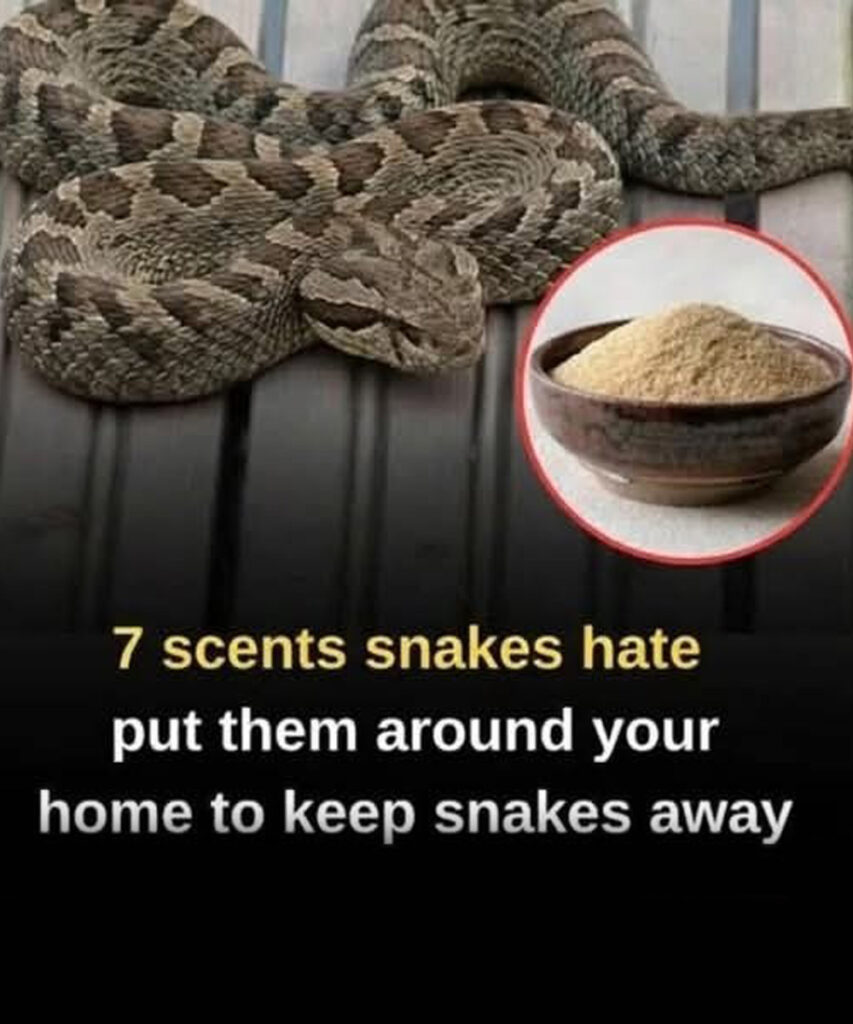
It’s true that snakes experience the world very differently from us—and that’s where most of the confusion about “smells” begins.
Unlike humans, snakes don’t rely primarily on their noses. They use a specialized system known as Jacobson’s organ. When a snake flicks its tongue, it’s not just a random motion—it’s collecting microscopic chemical particles from the air and transferring them to this organ for analysis. In simple terms, they’re reading their environment rather than just smelling it.
Why strong smells don’t work the way people think
Because snakes depend on chemical detection, it’s tempting to assume that strong or unpleasant odors would drive them away. The logic seems straightforward: overwhelm their senses, and they’ll leave.
But in practice, it doesn’t work reliably.
Snakes aren’t guided by comfort—they’re guided by survival. If your property offers what they need, they may tolerate irritation:
- Food (rodents, insects, small animals)
- Shelter (woodpiles, clutter, dense vegetation)
- Temperature balance (shade, warmth, moisture)
A strong smell might discourage them briefly, but it rarely overrides those core needs.
Common “repellents” — and their limits
Many household or natural solutions are often suggested, but none are consistently proven:
- Clove or cinnamon oil – can irritate sensory receptors, but effects are temporary and inconsistent
- Sulfur – strong odor, but unpleasant for humans and harmful to soil over time
- White vinegar – may disrupt chemical sensing in small areas, but damages plants
- Garlic and onions – strong smell, yet may attract insects (which attract snakes) and are unsafe for pets
- Citrus or citronella – short-lived effect; requires constant reapplication
- Cedar oil or mulch – may help indirectly by reducing insects and moisture
- Peppermint oil – intense, but potentially toxic to pets
At best, these act as mild, temporary deterrents—not solutions.
What actually works
The most effective approach isn’t chemical—it’s environmental.
If you remove what attracts snakes, you remove the reason they stay:
- Keep grass short and trim dense bushes
- Eliminate woodpiles, debris, and clutter
- Seal cracks, gaps, and entry points around your home
- Control rodents and insects (their main food sources)
- Reduce moisture in crawl spaces and shaded areas
This directly targets the “why” behind their presence.
A more realistic perspective
There’s no reliable “magic smell” that guarantees snakes will stay away. The idea is appealing because it’s easy—but snakes don’t respond to convenience. They respond to opportunity.
If your yard provides food and shelter, even the strongest scent won’t matter much.
If it doesn’t, they won’t stay—regardless of smell.
The bottom line
Scents can be used cautiously as a small, temporary layer of deterrence—but they should never be your primary strategy.
Real prevention comes down to something simpler:
Make your space less appealing to live in.
Once you shift focus from “repelling” to “removing attraction,” the problem becomes far more manageable—and far less mysterious.