
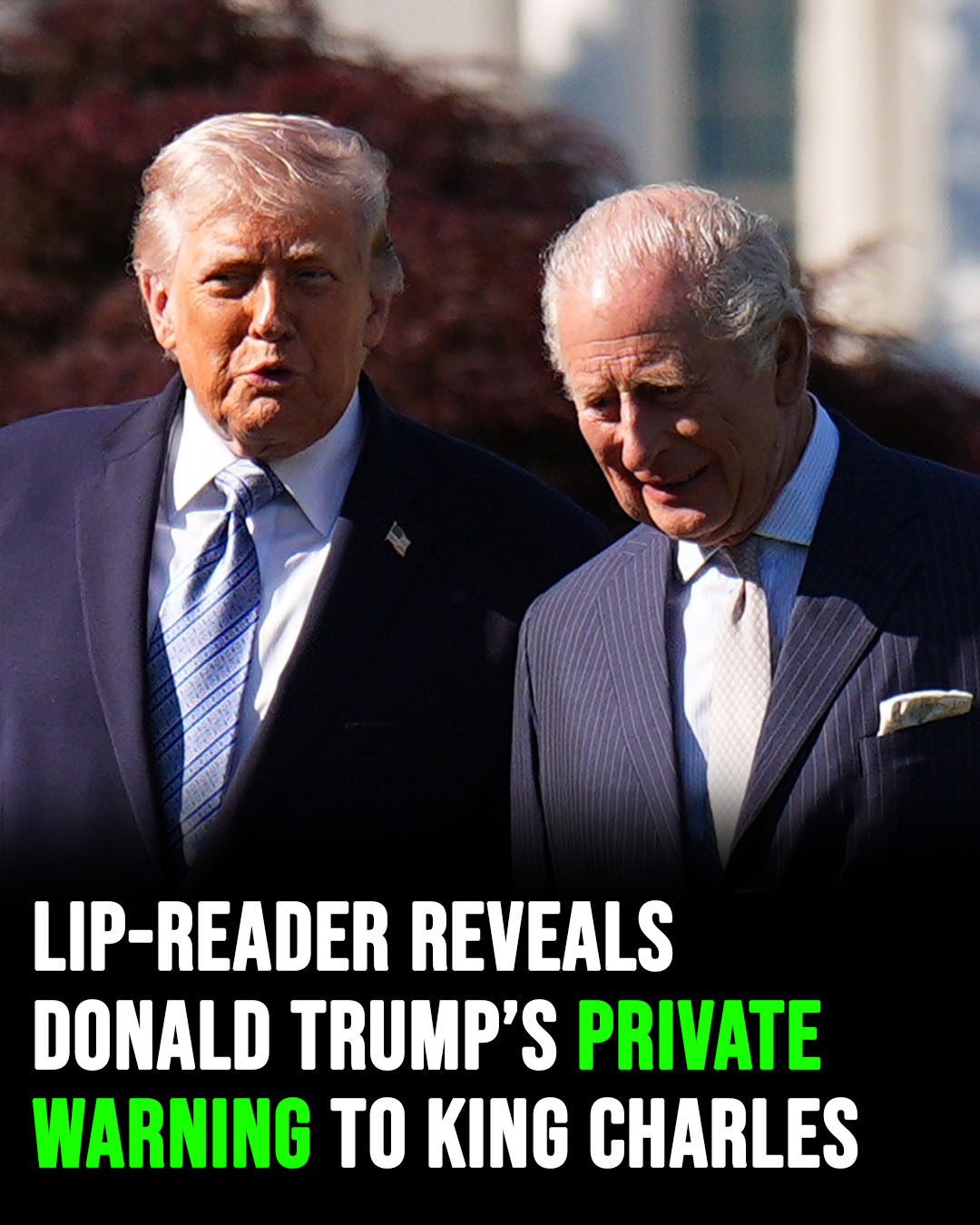
State Visit Highlights Diplomacy—While Private Moments Draw Attention
A recent state visit between the United States and the United Kingdom has drawn global interest, not only for its formal significance but also for a brief, widely discussed private exchange.
Donald Trump and Melania Trump hosted King Charles III and Queen Camilla at the White House, marking a rare and symbolically important visit by a British monarch to the U.S.
The public moments unfolded as expected—formal greetings, photographs, and a series of carefully planned engagements. These included a private tea, a garden event at the British ambassador’s residence, and a tour led by the First Lady. The tone remained measured and respectful, reflecting the long-standing relationship between the two countries.
A Meeting Framed by Larger Tensions
The visit comes at a time when global relations remain sensitive, shaped by ongoing security concerns and shifting alliances. In such settings, even routine diplomatic gestures carry additional weight.
The British royal family traditionally avoids direct political commentary, focusing instead on continuity and symbolic unity. The visit, in that sense, was less about policy statements and more about maintaining steady ties during uncertain periods.
Attention on a Brief Exchange
Interest grew following claims from lip-reading specialist Nicola Hickling, who suggested that a short exchange between the two leaders touched on current geopolitical issues.
According to her interpretation, references were made to ongoing discussions involving Vladimir Putin and broader concerns about international stability.
In the same account, King Charles appeared to respond with caution, subtly guiding the conversation away from sensitive territory—consistent with the monarchy’s long-standing approach. Trump, by contrast, was described as more direct in expressing concern about possible escalation.
It is important to note that such interpretations remain unconfirmed, and private conversations at this level are rarely meant for public analysis. What can be observed, however, is the contrast in communication styles—one shaped by restraint, the other by immediacy.
The Discipline of Public Leadership
Moments like these tend to attract attention because they reveal something beyond prepared statements. Still, they also remind us that leadership often involves knowing what not to say as much as what to say.
In formal diplomacy, restraint is not avoidance—it is a form of control. And directness, when measured, can reflect urgency rather than imbalance. Both approaches, when grounded, serve a purpose.
What matters is not the moment itself, but how it is carried forward.
A Visit That Continues Its Course
Following the reported exchange, the visit proceeded without disruption. Cultural and ceremonial events remained the focus, emphasizing cooperation, shared history, and continuity between the two nations.
The timing also aligns with upcoming commemorations tied to key moments in U.S.–U.K. relations, reinforcing the broader intention behind the visit.
Final Reflection
Public attention often settles on brief, human moments—especially when they hint at what lies beneath official dialogue. But lasting diplomacy is rarely defined by a single exchange.
It is shaped over time, through consistency, restraint, and the quiet discipline of maintaining relationships even when the world grows unsettled.
This visit, in that sense, reflects something steady: not the absence of tension, but the effort to navigate it without losing balance.