When One Interview Becomes a National Moment
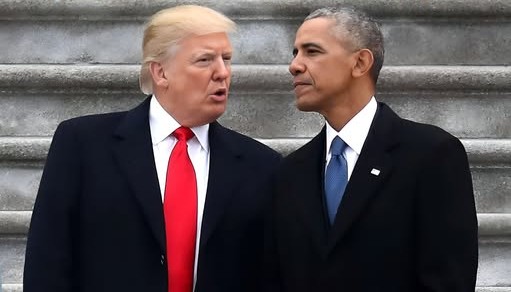
A recent televised interview featuring Donald Trump quickly turned into a focal point of national conversation after he directed pointed remarks toward Barack Obama. Political disagreements between the two are nothing new, but what stood out in this case was the tone and immediacy of the moment. Delivered live and without filtering, the exchange carried a different kind of weight—one that extended far beyond the original broadcast and into the broader media landscape within minutes.
The fact that the remarks were made on live television played a major role in their impact. Unlike pre-recorded segments, there was no opportunity for editing, moderation, or reframing. Viewers experienced the exchange exactly as it happened, which often creates a stronger sense of authenticity—whether perceived positively or negatively. The language was direct, the delivery unrestrained, and the response almost instantaneous. Within moments, clips began circulating online, turning what might have been a routine interview into a widely shared and debated event.
Part of the reason the moment resonated so strongly lies in the long-standing contrast between the two figures. Obama’s presidency from 2009 to 2017 was defined by a more measured communication style and policy focus on issues like healthcare reform and economic recovery. Trump, who served from 2017 to 2021, built his public image around a more direct, often unconventional approach to messaging. Because of this history, any public remarks involving both figures tend to carry added significance, drawing attention not just for what is said, but for what it represents.
That attention is amplified almost immediately by social media. Platforms like X (formerly Twitter), Facebook, and Instagram act as real-time distribution channels, where short clips, reactions, and commentary spread faster than traditional news cycles can respond. Trending hashtags emerge within minutes, and public discourse begins forming before full context is even established. In today’s media environment, television no longer stands alone—its reach is extended and reshaped by digital platforms that determine how long a moment lasts and how it is interpreted.
Communication analysts often point out that this combination—live delivery followed by instant digital amplification—creates a unique kind of influence. Statements made without editing are often perceived as more genuine, but they also leave less room for nuance or clarification. As a result, reactions tend to polarize quickly. Some viewers interpret such moments as refreshingly candid, while others see them as unnecessarily confrontational. In many cases, the conversation shifts away from the substance of the remarks and toward the speed and scale of their spread.
This dynamic reflects a broader shift in political communication. Visibility is now constant, attention moves rapidly, and perception is shaped not just by content, but by how that content travels. A single statement can dominate headlines within minutes, not because of its depth, but because of its reach. For public figures, this creates a new kind of balancing act—between speaking directly and managing the consequences of being heard instantly by a global audience.
For viewers, it presents a different challenge. In an environment where reactions often arrive faster than context, understanding the full picture requires a more deliberate approach. Looking beyond the initial clip, considering background, and recognizing how platforms influence interpretation all become essential parts of engaging with modern political discourse.
In the end, this moment is less about a single exchange and more about the system surrounding it. It shows how live media, political messaging, and digital reaction now operate together—shaping not only what people hear, but how they understand it.