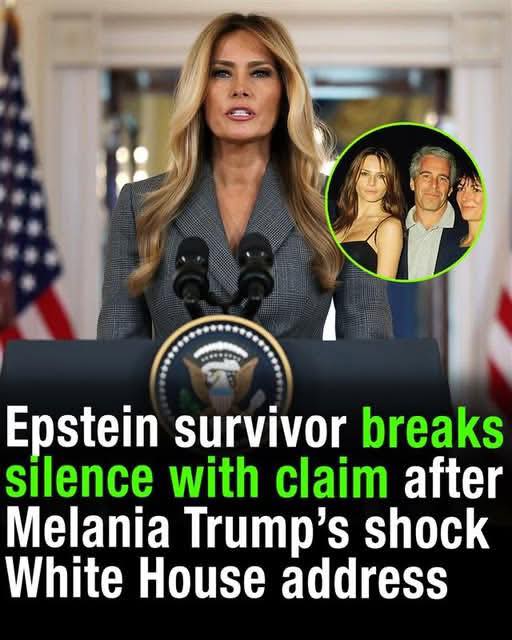
as they felt their own painful experiences were being sidelined by a narrative of convenience. In her address, the former First Lady was unequivocal: she claimed no connection to Epstein, denied he had any role in her introduction to Donald Trump, and asserted she was never a victim or a participant in his world. She dismissed a resurfaced 2002 email—in which she wrote to Epstein’s accomplice, Ghislaine Maxwell, about a magazine feature—as nothing more than a “trivial note.”
For the survivors, however, the address felt like a dismissal of the gravity of their trauma. A collective of women who endured abuse at the hands of Epstein and his associates issued a stinging rebuttal, arguing that the rhetoric served only to shift the burden of proof onto those who have already sacrificed so much to come forward. Lisa Phillips, who alleges she was assaulted on Epstein’s island when she was just 21, expressed deep skepticism regarding the timing and the intent behind the public statement.
“I think everyone has a boiling point,” Phillips remarked in an interview with Sky News, suggesting that the sudden push for distance from Epstein’s circle is a calculated move rather than a genuine pursuit of clarity. The tension escalated further when Melania pivoted to a call for action, urging lawmakers to allow Epstein’s victims to testify under oath before Congress. She argued that formal, recorded testimony is the only path to uncovering the full truth, a sentiment that has drawn support from some political corners but intense scrutiny from others.
The survivors’ response to this call for a congressional hearing was swift and biting. While the idea of a formal record is theoretically empowering, many victims view the proposal as performative. Lily Phillips, another survivor, did not mince words when addressing the former First Lady’s sudden interest in their plight. “I would say I call her bluff,” she stated, challenging the sincerity of the request. “Why would you make a statement like that and then not do anything? How can you make a statement like that without first saying: ‘OK, I’m here for you. Have the survivors reach out.'”
As the debate rages on, the core of the conflict remains the chasm between political optics and the raw, lived reality of those who were trapped in Epstein’s orbit. While high-profile figures continue to distance themselves from the scandal, the survivors are demanding more than just public declarations; they are calling for accountability and a seat at the table that is defined by their terms, not by the needs of those who once walked in the same circles as their abuser. The question now is whether this clash will lead to the transparency Melania claims to seek, or if it will remain another chapter in a long, unresolved history of silence and suspicion.