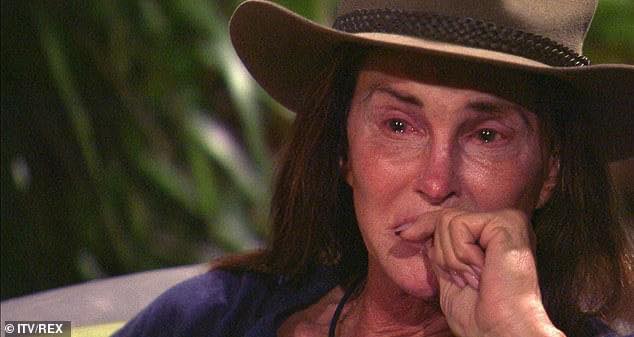
…ead, threatening to snap under the weight of a transition played out before a global audience. The world saw an Olympic hero, a reality TV figure, and a cultural lightning rod, but few understood the private, bone-deep exhaustion of playing a role that won applause but cost her a soul. Dyslexia had already taught her to survive the sting of doubt and the judgment of others; years later, that same stubborn, quiet resilience carried her through the terror of transition under the brightest, most unforgiving lights on earth. She stepped forward into the unknown, fully prepared to walk the path alone.
Instead, the people whose opinions mattered most did not vanish into the ether. Her children, forced to navigate their own shock and confusion, wrestled with anger before ultimately choosing presence over distance. The transition was not a clean break, but a messy, evolving conversation. In the quiet moments that followed the headlines, “Dad” became less of a rigid label and more of a living archive of memories—scraped knees, school runs, and the steady, comforting rhythm of quiet car rides.
Accepting that word now is not a retreat, but a deliberate act of grace. It is her way of honoring their shared history while refusing to betray the woman she fought so hard to become. In that uneasy, honest middle ground, Caitlyn offers a rare kind of proof: that identity and love do not have to be bitter opposites. They can be companions, even when the road between them is paved with broken expectations and hard-won truths.
Her journey serves as a reminder that the hardest race isn’t the one against time or competitors, but the one against the silence we impose upon ourselves. By choosing to live in the light, she didn’t just find her own freedom; she redefined what it means to be a parent, a partner, and a person. The gold medal may have defined her youth, but this—the courage to be seen—is what defines her legacy.