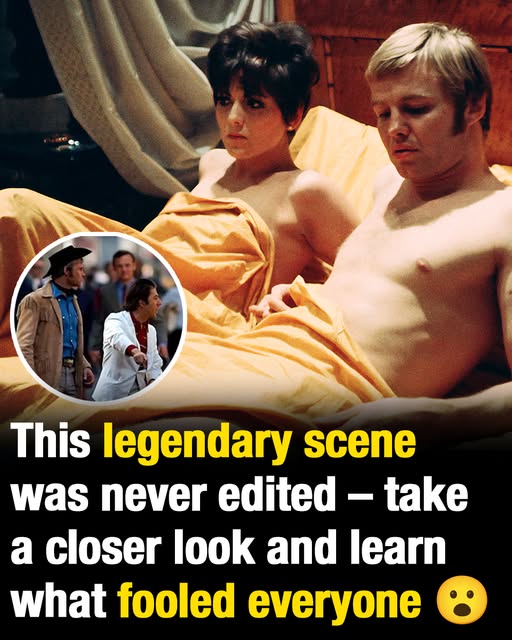
…thing movement that shattered the illusion of death? It is the kind of detail that keeps film historians awake at night, debating whether the most gut-wrenching scene in cinema history was a perfect performance or a human error.
The Price of Perfection
To understand the weight of that final scene, one must look at the lengths to which Dustin Hoffman went to inhabit the role of Enrico “Ratso” Rizzo. This was not merely acting; it was a physical and psychological transformation. Hoffman famously placed a jagged stone inside his shoe to ensure his limp remained authentic, a constant, sharp reminder of the character’s physical decay. He lived in the grime of the streets, internalizing the cough, the hollowed-out eyes, and the desperate, frantic energy of a man who knew his time was running out.
When the cameras rolled on that final, devastating bus ride, Hoffman was not just playing a dying man; he was exhausted, drained by the method he had chosen to honor the character. It is this level of commitment that makes the alleged “bloopers” so controversial.
The Twitch of a Ghost
As Joe Buck finally realizes that his only friend has slipped away, the camera lingers on the cold, still face of Ratso. It is a moment of profound, singular grief. Yet, sharp-eyed viewers have spent years dissecting the frame. They point to the way Ratso’s chest seems to rise, a subtle, rhythmic expansion that suggests the actor was still drawing breath. Even more unsettling is the moment Joe gently closes Ratso’s eyelids—a gesture of finality—only for one of them to appear to twitch under the pressure of his fingers.
Are these the ghosts of a performance that refused to stay dead, or simply the biological reality of a human being trying to remain perfectly still while the world watches? In the context of a film that thrives on the grit of reality, these “mistakes” feel strangely intentional. They mirror the way we, as human beings, struggle to accept the finality of loss. We look for signs, we watch for movement, and we pray for a flicker of life long after the heart has stopped.
The Beauty of the Flaw
Whether it was a technical error by the production team or a subconscious reflex by Hoffman, these moments have become part of the film’s mythology. They do not diminish the power of the ending; they amplify it. They inject a layer of eerie ambiguity that keeps the audience tethered to the screen. Is Ratso truly gone, or is he caught in that liminal space between the life he lost and the peace he never found?
Ultimately, the genius of Midnight Cowboy lies in its refusal to offer closure. The bus keeps rolling, the landscape shifts, and Joe Buck is left alone in a world that never cared for him or his friend. If there is a twitch in an eyelid or a rise in a chest, perhaps it is just the film itself breathing, refusing to let the tragedy end. It remains a bruised, unforgettable classic—a reminder that sometimes, the most human moments are the ones that aren’t supposed to happen at all.