cut.
The word tasted like broken glass in my mouth. I turned to find my son Caleb’s hand on my elbow, his face pale and set in a way I’d never seen. Not in twenty-two years. Not when his father left. Not when he launched his company. “Mom,” he whispered, voice trembling with control. “We need to talk. Now.” He led me through the French doors into the parking lot, away from the jazz and the laughter, away from my daughter glowing beside the man I’d once promised forever.
The air was crisp. My heels clicked against the pavement as Caleb pulled out his phone, tapping through encrypted folders with fingers that shook not from fear, but from fury. “I hired a private investigator,” he said. “I didn’t trust Arthur. The way Rowan started isolating—it reminded me of how he treated you.” He showed me documents: bankruptcy filings from before we met, defaulted loans, lawsuits from his actual ex-wife detailing years of hidden finances and missed alimony payments. “He’s a serial manipulator, Mom. He targets women with money. Rowan has your name, your connections. He’s using her.”
I stood frozen, staring at court records that explained everything. Six months of marriage to Arthur had ended not because we’d rushed, but because I’d demanded a prenup. When he couldn’t access my finances, he’d lost interest. Now he’d moved to easier prey—my own daughter.
“We have to tell her,” Caleb said.
“She won’t believe us in private,” I whispered, my voice breaking. “Not when he’s controlling the narrative.”
Caleb’s jaw tightened. “Then we bring him into the light.”
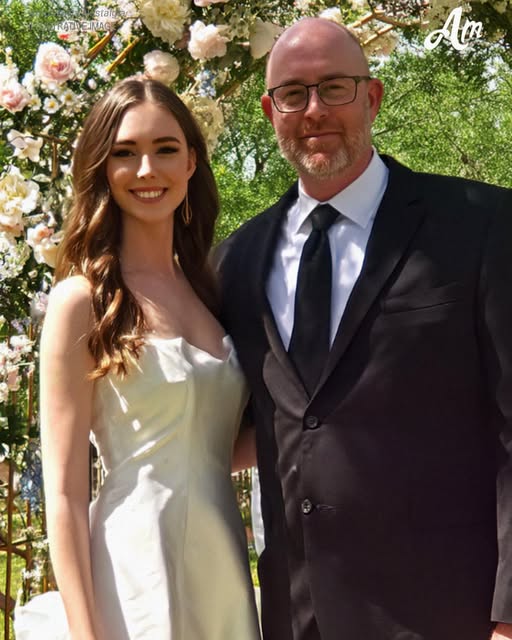
Back inside, the reception glowed with candlelight. Rowan radiated joy in her ivory dress, Arthur beside her looking every bit the proud husband. Caleb stepped onto the stage, microphone in hand, introduced as the groom’s stepson. He stood tall, calm, though I saw the tension in his shoulders.
“I’d like to toast to honesty,” he began, his voice carrying across the room. “Arthur, how’s your ex-wife doing? Still waiting on those alimony checks?”
Gasps rippled through the crowd. Arthur’s face drained of color.
“Or are you still tied up in litigation?” Caleb continued, raising his phone. “These aren’t accusations. They’re public records. Bankruptcy, defaulted loans, hidden debts—all filed years before you met Rowan or our mother. You just failed to mention them.” He turned to his sister, eyes softening. “You didn’t know. He’s good at hiding things. He tried with Mom, but when he couldn’t manipulate her money, he moved on.”
Rowan stood slowly, hands trembling. She looked between the screen and Arthur’s panicked face. “Is it true?”
Arthur stammered, “It’s complicated—”
“No,” she said, voice low but clear. “It’s not.”
She walked out of her own wedding that night, falling into my arms. By morning, she’d filed for annulment citing fraud. Within a week, she’d moved back home, and we began talking—really talking—about the pressure to be perfect, about repeating patterns, about the quiet we both mistook for love.
Weeks later, over coffee, she asked if I’d loved Arthur. I told her the truth: I’d loved who I thought he was, but mostly, I’d loved the silence after years of noise. She nodded. “Same,” she said. We laughed then—the shaky, real laughter that comes after grief.
Caleb saved us both that day. Not with suspicion, but with proof. With courage. With a love that refused to let his sister drown. Rowan started therapy, took a solo trip to Colorado, and one night squeezed my hand across the kitchen table. “I know who I am again,” she said.
I squeezed back. “You always did. You just forgot for a little while.”
For the first time in forever, I believed we were going to be okay.