The World’s Deadliest Foods You Should Know About
For most of us, food is comfort—routine, family, celebration. We rarely think of it as dangerous.
Yet around the world, some foods carry real risks—not because they’re spoiled, but because they naturally contain toxins strong enough to harm if handled carelessly. And still, people eat them—carefully, knowingly—guided by tradition, experience, and learned restraint.
1. Cassava: The Cyanide-Linked Staple
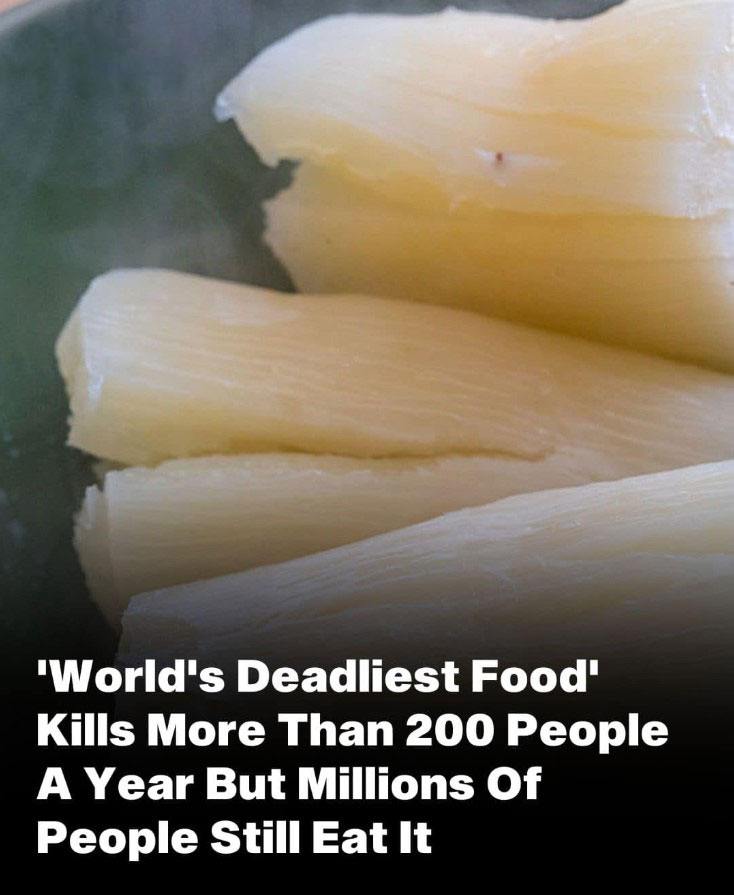
Cassava (manioc, yuca) feeds over 800 million people. In its raw form, it contains compounds that can release cyanide.
When properly processed—soaked, fermented, dried, or cooked—it becomes safe and essential. When rushed or neglected, it can be dangerous.
2. Fugu: Japan’s Deadly Delicacy
Fugu (pufferfish) contains tetrodotoxin, a powerful neurotoxin.
Improper preparation can lead to paralysis and respiratory failure. That’s why only licensed chefs prepare it after years of training.
3. Starfruit: Bright but Risky
For most people, starfruit is harmless. But for those with kidney disease, its toxins can build up in the body, causing serious neurological symptoms.
4. Cherry Pits and Apple Seeds
These seeds contain amygdalin, which can release cyanide when crushed or chewed.
Swallowing a seed accidentally is usually harmless, but regularly chewing or consuming large amounts can be risky.
5. Green Potatoes
Potatoes exposed to light produce solanine, a natural toxin.
Lightly green areas can be peeled away, but heavily green or sprouted potatoes should be discarded.
6. Raw Cashews
Raw cashews contain urushiol—the same compound found in poison ivy.
Cashews sold in stores as “raw” are actually heat-treated. Truly raw cashews are unsafe to eat.
7. Nutmeg
In small culinary amounts, nutmeg is safe. In large doses, it can cause hallucinations, nausea, rapid heartbeat, and even seizures.
8. Death Cap Mushrooms
One of the most dangerous mushrooms, capable of causing liver failure.
The risk lies in misidentification—only experts should forage wild mushrooms.
9. Rhubarb Leaves
The stalk is safe to eat, but the leaves contain oxalic acid, which can cause kidney damage and digestive issues.
10. Raw Kidney Beans
Kidney beans contain a toxin that is only neutralized by proper boiling.
Cooking them improperly—especially in slow cookers without boiling—can increase toxicity.
Why People Still Eat These Foods
- Necessity: Cassava sustains millions where alternatives are limited
- Tradition: Some foods are deeply rooted in culture
- Lack of awareness: Not everyone knows the risks
- Controlled risk: Some foods are consumed with strict preparation methods
Most dangers come from improper handling—not the foods themselves.
Nature’s Quiet Warning
Many plants produce toxins as a natural defense. Humans learned to make them safe through cooking, soaking, fermenting, and careful preparation.
Safety Tips
- Follow proper cooking methods
- Avoid wild foraging without expertise
- Store food correctly
- Use ingredients in moderation
Final Thought
Food can nourish or harm—the difference is knowledge.
Handled correctly, even the most dangerous foods can be part of daily life. Handled carelessly, even common ingredients can become a problem.
The lesson is simple: awareness turns risk into safety.
💬 Which of these surprised you the most?
{"post":98668,"page":1,"next":[{"id":98635,"title":"Donald Trump Jr. makes a private decision regarding Vanessa after Tiger Woods crash","url":"https:\/\/new24.info\/98635"},{"id":98631,"title":"Trump and Obama Clash Live on Air: A Historic Moment in Political Discourse","url":"https:\/\/new24.info\/98631"},{"id":98626,"title":"Israel\u2019s Secret Operation Sparks Chaos \u2014 Families Left in Shock","url":"https:\/\/new24.info\/98626"},{"id":98623,"title":"UNEXPECTED MOMENT WITH A FORMER PRESIDENT","url":"https:\/\/new24.info\/98623"},{"id":98619,"title":"Donald Trump Points to a Country That Could Be Next on the Global Stage","url":"https:\/\/new24.info\/98619"},{"id":98616,"title":"From Dream Wedding to Tragedy What Happened That Shook a Whole Community","url":"https:\/\/new24.info\/98616"},{"id":98612,"title":"I Married a Waitress in Spite of My Demanding Parents","url":"https:\/\/new24.info\/98612"},{"id":98609,"title":"Food Stamp Program Changes You Need to Know About This.","url":"https:\/\/new24.info\/98609"},{"id":98606,"title":"Heartbreaking School Bus Incident Leaves 32 Children Lost, Country in Mourning","url":"https:\/\/new24.info\/98606"},{"id":98603,"title":"Trump and Obama Exchange Heated Words During Live Appearance","url":"https:\/\/new24.info\/98603"},{"id":98600,"title":"The Long Road Home: How Recovery After 60 Is Changing What We Know About Healing-","url":"https:\/\/new24.info\/98600"},{"id":98590,"title":"Willow Smith Breaks Silence \u2014 Emotional Family Announcement on Will and Jada","url":"https:\/\/new24.info\/98590"},{"id":98584,"title":"Aging Biker Discovers His Missing Daughter When She Arrests Him Unexpectedly","url":"https:\/\/new24.info\/98584"},{"id":98581,"title":"Remembering a Legendary Country Music Artist and Storyteller","url":"https:\/\/new24.info\/98581"}]}