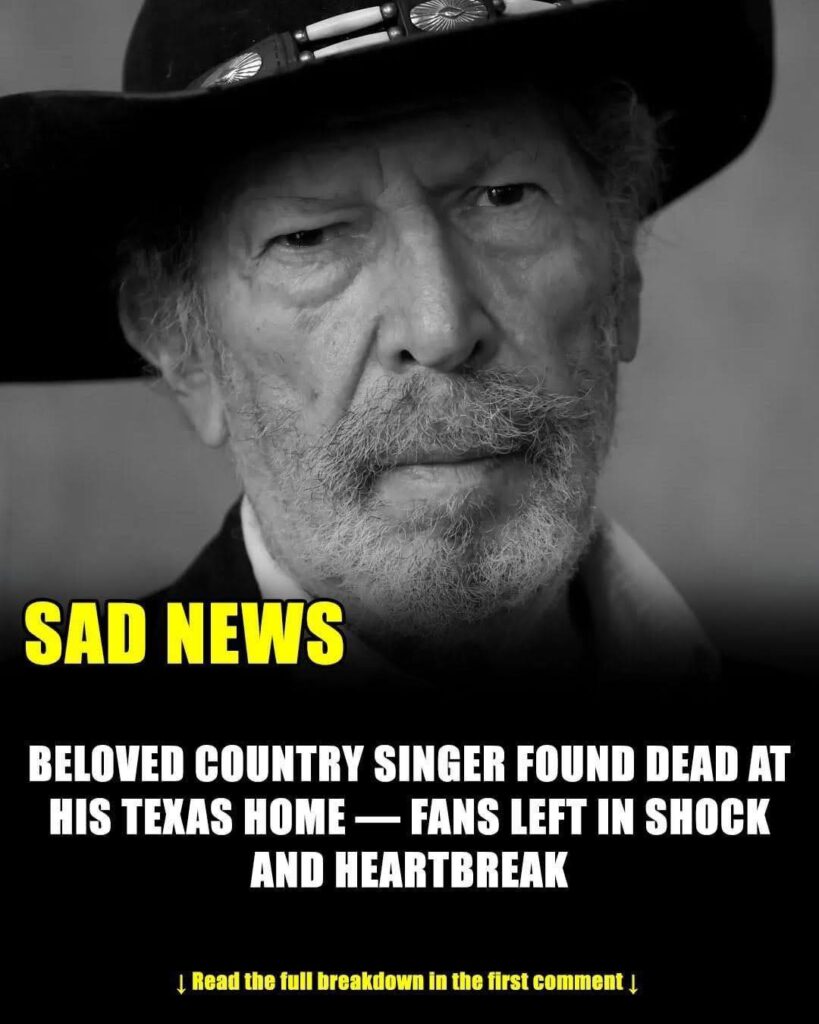
Richard ‘Kinky’ Friedman: A Distinct Voice from Texas
The passing of Richard ‘Kinky’ Friedman at the age of 79 marks the end of a uniquely unconventional career—one that blended music, writing, humor, and politics in ways few others attempted.
A Career That Didn’t Follow a Template
Friedman first gained attention as the frontman of Kinky Friedman and The Texas Jewboys, a band known for combining country music with satire and provocative lyrics.
His style wasn’t designed to appeal to everyone.
It was intentionally sharp, often controversial, and rooted in commentary on culture and society.
Beyond music, he became a successful author, writing detective novels that mixed fiction with elements of his own personality—dry humor, irony, and a strong narrative voice.
Public Figure Beyond Entertainment
Friedman also stepped into politics, most notably running for governor of Texas in 2006.
His campaign reflected the same traits seen in his creative work:
- Direct communication
- Unconventional messaging
- A mix of humor and serious commentary
While he didn’t win, the campaign reinforced his reputation as someone willing to challenge norms rather than conform to them.
Why He Stood Out
What made Friedman different wasn’t just what he did—it was how he did it:
- He blurred the line between satire and sincerity
- He addressed uncomfortable topics without softening them
- He built a persona that was consistent across music, writing, and public life
For some, that made him refreshing.
For others, difficult to categorize.
A Legacy That Isn’t Simple
Friedman’s legacy isn’t one of universal appeal—and that’s part of the point.
He represents a type of public figure that:
prioritizes expression over approval.
His work continues to be remembered not because it fit neatly into a genre or ideology, but because it didn’t.
Final Thought
Richard ‘Kinky’ Friedman leaves behind a body of work that reflects individuality, contradiction, and a willingness to say things others avoided.
Not everyone agreed with him—but very few ignored him.
If you know his work—was it his music, writing, or political voice that stood out most to you?
{"post":98581,"page":1,"next":[{"id":98558,"title":"Spilled Purple Backpack Reveals A Heartbreaking Secret About My Daughters Classmate","url":"https:\/\/new24.info\/98558"},{"id":98555,"title":"Husband Returns Home Early And Plans A Brilliant Party To Expose Betrayal","url":"https:\/\/new24.info\/98555"},{"id":98552,"title":"Couple adopts child and when coming home with the baby he ate\u2026 See more","url":"https:\/\/new24.info\/98552"},{"id":98549,"title":"Vanessa Trump Confronts Boyfriend Tiger Woods Following DUI Arrest","url":"https:\/\/new24.info\/98549"},{"id":98546,"title":"All the Celebrities Who Attended the \u2018No Kings\u2019 Protest","url":"https:\/\/new24.info\/98546"},{"id":98539,"title":"How to maintain a healthy level of phlegm and mucus","url":"https:\/\/new24.info\/98539"},{"id":98534,"title":"Injured Military Daughter Uncovers Family Financial Fraud And Takes Total Control","url":"https:\/\/new24.info\/98534"},{"id":98531,"title":"Photo of Karoline Leavitt Draws Attention After Being Removed From Distribution","url":"https:\/\/new24.info\/98531"},{"id":98527,"title":"Starbucks barista\u2019s \u2018secret message\u2019 to customer completely backfires","url":"https:\/\/new24.info\/98527"},{"id":98524,"title":"Bullet in Charlie Kirk killing could not be linked to suspect\u2019s rifle, new court filing claims","url":"https:\/\/new24.info\/98524"},{"id":98518,"title":"Inside the Secret Story of Pennsylvania\u2019s Barn Stars-","url":"https:\/\/new24.info\/98518"},{"id":98515,"title":"What Your Nails Are Trying to Tell You \u2013 And How to Strengthen Them Naturally-","url":"https:\/\/new24.info\/98515"},{"id":98511,"title":"The Biker Who Became Her Guardian How an Old Woman Counting Pennies Changed My Life","url":"https:\/\/new24.info\/98511"},{"id":98508,"title":"The Truth Behind A Suspicious DNA Test That Saved My Son","url":"https:\/\/new24.info\/98508"}]}