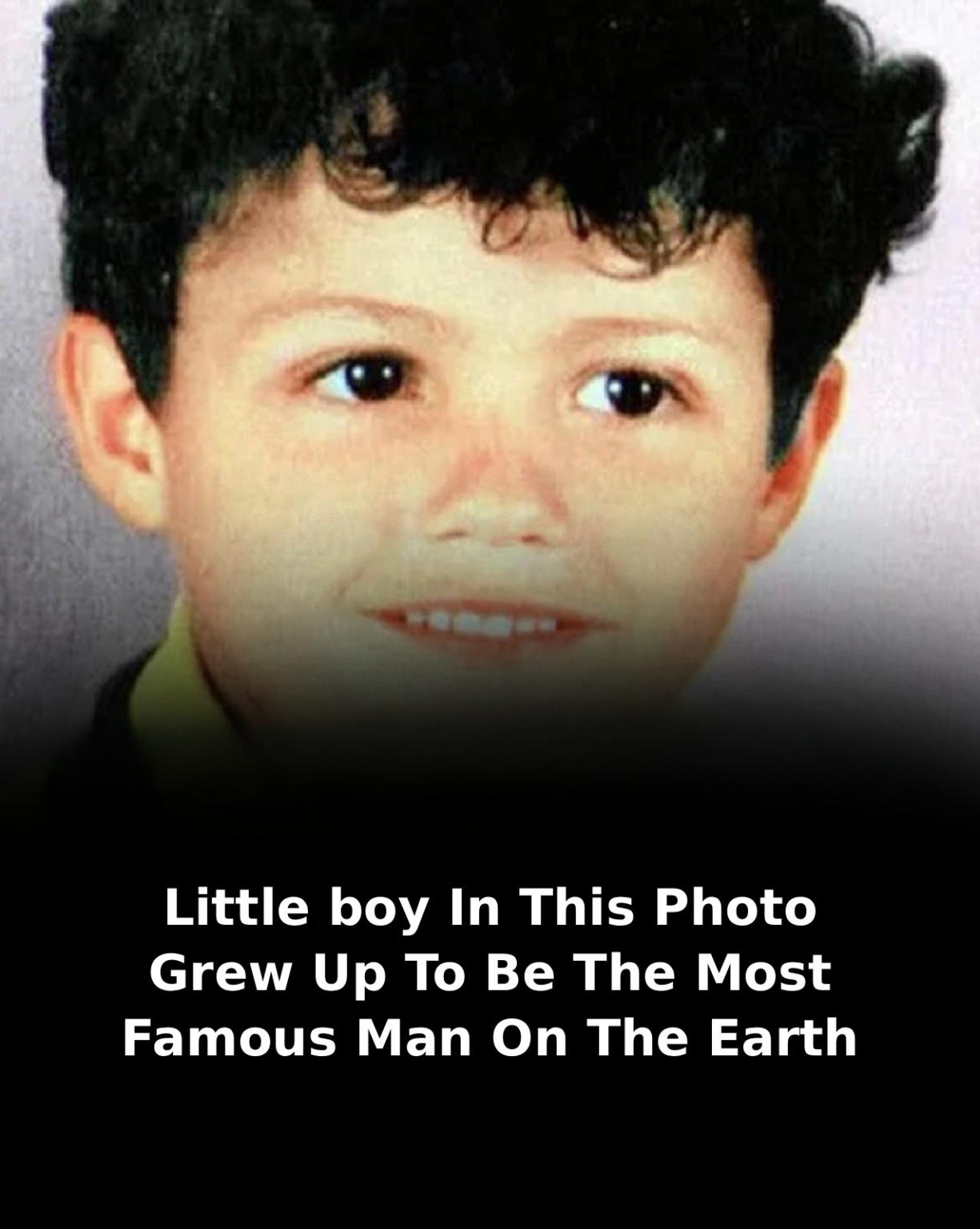
He grew up on a small, windswept island in the Atlantic Ocean — far from the stadium lights and global headlines that would later define his life. A recent viral childhood photo has reminded fans that even the most recognizable athletes once began as wide-eyed children with uncertain futures.
The boy in that photo is Cristiano Ronaldo.
A Humble Beginning in Madeira
Born on February 5, 1985, in Funchal, Madeira, Portugal, Ronaldo was the youngest of four children in a modest household. His father, José Dinis Aveiro, worked as a municipal gardener and part-time kit man, while his mother, Maria Dolores dos Santos Aveiro, managed the home and worked as a cook.
Ronaldo has spoken openly about the financial hardship his family faced. In interviews, his mother has acknowledged that the pregnancy was difficult emotionally and financially, and that she once considered not continuing it. Ultimately, she did — a decision that would alter sporting history.
He was partly named after U.S. President Ronald Reagan, an actor his father admired. Yet Ronaldo has described his relationship with his father as complicated due to alcoholism. His father passed away in 2005, before witnessing the full magnitude of his son’s global rise.
Leaving Home at 12
At just 12 years old, Ronaldo left Madeira to join the academy of Sporting CP in Lisbon. The move was emotionally taxing. He has described loneliness and homesickness during those early years.
School was secondary to football. By his own account, academics did not hold his attention the way the sport did. His temper and intensity sometimes got him into trouble, but that same intensity fueled his competitive drive.
A Heart Scare That Nearly Ended It
At 15, Ronaldo was diagnosed with a heart condition known as tachycardia — an irregular heartbeat that could have forced him to stop playing. He underwent a procedure using laser surgery to correct the issue.
He recovered quickly and returned to training within days.
For many young athletes, such a scare might derail momentum. For Ronaldo, it became another obstacle to overcome.
Rise to Global Stardom
Ronaldo’s professional breakthrough came with Sporting CP before a move to Manchester United in 2003 introduced him to global audiences. His speed, discipline, and relentless training ethic transformed him into one of football’s elite.
His transfer to Real Madrid in 2009 broke records and cemented his reputation as one of the greatest goal scorers in history. Over the years, he has won multiple Ballon d’Or awards and helped lead Portugal to international success.
In 2024, he became the first male player to reach 900 official career goals — a milestone reflecting longevity as much as talent.
Beyond Football
Ronaldo’s influence extends beyond the pitch. He has repeatedly ranked among the world’s highest-paid athletes and remains one of the most followed public figures globally, surpassing one billion followers across social media platforms.
Yet the viral childhood photo resonates for a simpler reason: it captures the distance between where he began and where he arrived.
From Island Boy to Global Icon
Behind every global icon is a child shaped by circumstance — by struggle, by ambition, by family, by loss.
Cristiano Ronaldo’s story is not just about trophies and records. It is about leaving home early, enduring hardship, surviving a health scare, and channeling intensity into discipline.
The small boy from Madeira did not look like a legend.
But legends rarely do — at first.