Facebook Twitter Instagram
    Trending
    • Former Grey’s Anatomy Co-Star Levels Allegations Against Eric Dane Following His Passing
    • He was in his cell, waiting to be executed, and he asked as a last…See more
    • This was the horse that devoured his du…See more
    • Women and Intimacy: Embracing New Seasons of Connection
    • “‘Baywatch’ Star and David Hasselhoff’s Former Wife Dies at 61”
    • You won’t be fooled again after seeing this
    • A LEGEND OF STAGE AND SCREEN!
    • The Resilience of an Icon: The Career and Courage of Bill Bixby
    Facebook Twitter Instagram
    Daily Stories
    • Home
    • News
    • Conservative
    • Magazine
    • Health
    • Animals
    • English
    Daily Stories
    Home » He was in his cell, waiting to be executed, and he asked as a last…See more
    News

    He was in his cell, waiting to be executed, and he asked as a last…See more

    Kelly WhitewoodBy Kelly WhitewoodFebruary 26, 20264 Mins Read
    Facebook Twitter Pinterest LinkedIn Tumblr Email
    Share
    Facebook Twitter LinkedIn Pinterest Email

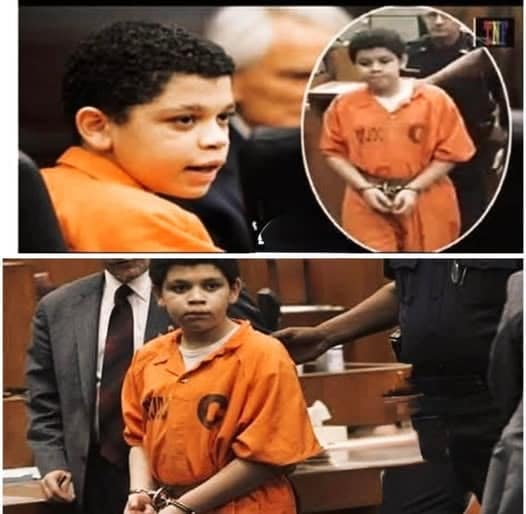
    In the United States — a nation with one of the highest incarceration rates in the world — the question of how to sentence children who commit serious crimes remains one of the most morally complex debates in the justice system. Reports from organizations such as Human Rights Watch and the Equal Justice Initiative have documented cases in which individuals received life sentences for crimes committed before the age of 14. Those findings have intensified national reflection on where accountability ends and mercy must begin.

    Behind statistics are deeply varied stories. Some cases involve acts of severe violence, including homicide. Others involve accomplice liability, where a minor did not directly carry out a fatal act but was legally held responsible. Many of these young defendants came from environments shaped by poverty, instability, trauma, abuse, or limited educational opportunity.

    These factors do not erase harm. But they complicate it.

    Advocates point to developmental science showing that children’s brains — especially areas governing impulse control, risk assessment, and long-term judgment — are still forming. Youth, by its nature, carries immaturity. The legal question becomes whether permanent punishment should be imposed on a person whose capacity for change was not yet fully developed.

    The Supreme Court’s Intervention

    Over the past decade, the Supreme Court of the United States has addressed this issue directly. In 2012, the Court ruled that mandatory life without parole sentences for juveniles are unconstitutional. In 2016, it determined that this ruling must apply retroactively, opening the door for sentence reviews across the country.

    These decisions did not eliminate life sentences for juveniles altogether. Instead, they required individualized consideration. Judges must examine the circumstances, the age of the offender, and the possibility of rehabilitation before imposing the harshest penalties.

    Implementation, however, has varied by state. Some jurisdictions have moved quickly to review cases and expand parole eligibility. Others have proceeded more cautiously. As a result, outcomes differ widely depending on geography.

    Accountability and Capacity for Change

    The debate is not simple. Crimes that result in death or serious harm leave families devastated. Communities demand safety. Victims deserve justice. These realities cannot be minimized.

    At the same time, the justice system must confront a profound question: Should a decision made at age 13 permanently define a life at age 40 or 50?

    Civil rights groups argue that fairness requires recognizing both responsibility and human development. They advocate for sentence reviews, restorative justice approaches, and meaningful parole opportunities — not automatic release, but structured evaluation of growth, rehabilitation, and transformation.

    Public safety and second chances need not be opposites. A system can hold individuals accountable while still acknowledging that children are not fully formed adults.

    A Deeper Reflection

    From a broader moral lens, this debate touches something foundational: how a society understands childhood itself.

    If children are developmentally different, should punishment reflect that difference? If growth is possible, should the law leave space for it? If justice is only retribution, what happens to redemption?

    These are not easy questions. They demand balance — between compassion and protection, between consequence and hope.

    An Ongoing National Conversation

    The national discussion continues because the stakes are high. Each case carries not only legal weight, but human weight — victims seeking closure, families seeking mercy, communities seeking safety.

    Ultimately, the debate over juvenile life sentences asks a deeper question about the kind of justice system a nation wants to uphold: one that closes doors permanently at childhood mistakes, or one that leaves room for the possibility that even those who commit grave wrongs at a young age may grow into different people.

    The answer is still being shaped — case by case, courtroom by courtroom, and conscience by conscience.

    Share. Facebook Twitter Pinterest LinkedIn Tumblr Email
    Previous ArticleThis was the horse that devoured his du…See more
    Next Article Former Grey’s Anatomy Co-Star Levels Allegations Against Eric Dane Following His Passing

    Related Posts

    Former Grey’s Anatomy Co-Star Levels Allegations Against Eric Dane Following His Passing

    February 26, 2026

    This was the horse that devoured his du…See more

    February 26, 2026

    Women and Intimacy: Embracing New Seasons of Connection

    February 25, 2026
    Search
    Categories
    • News (5,249)
    Categories
    • News (5,249)
    • Contact Us
    • Privacy Policy
    • Terms of Service
    Copyright © 2026, News24. All Rights Reserved.

    Type above and press Enter to search. Press Esc to cancel.