When Every Word Is Watched: Public Speculation, Leadership, and Responsibility in the Digital Age
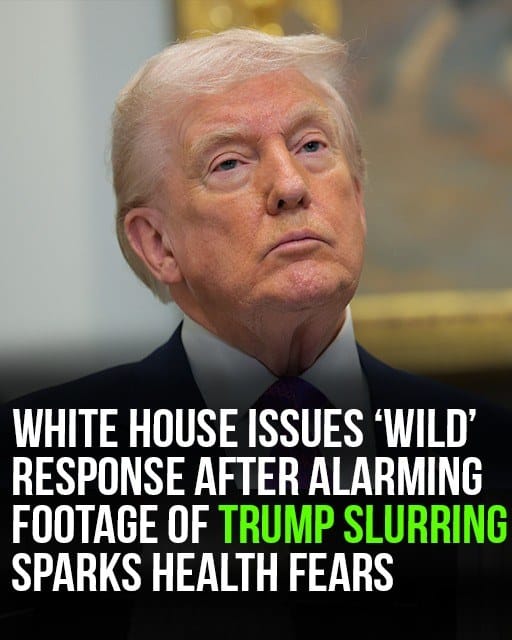
Another week has passed, and once again, public discussion has turned toward the health and stamina of Donald Trump.
In today’s media environment, no gesture is too small to escape notice. A pause, a stumble, a tired expression—each is replayed, analyzed, and debated within minutes. What once might have gone unnoticed now becomes fuel for speculation.
This reality raises a deeper question:
How should society evaluate leadership without losing fairness, dignity, and moral balance?
Life Under Constant Scrutiny
Holding the office of President of the United States places a person under relentless observation. Every public appearance is documented. Every sentence is archived.
For someone who has spent decades in the spotlight, the pressure is even greater.
As leaders grow older, natural questions arise about stamina, memory, and resilience. These concerns are not unreasonable. But when they turn into instant judgments and online mockery, something important is lost.
Respect.
The February 11 Speech and Online Reaction
Recent attention focused on a speech delivered at the White House during a “Champion of Coal” event in February.
During the address, some viewers claimed portions of the speech sounded unclear. Within hours, clips spread across social media, accompanied by commentary ranging from concern to ridicule.
Platforms like X amplified the moment, as users offered personal interpretations and emotional reactions.
Some expressed worry.
Others mocked.
Many speculated without evidence.
This is the modern cycle: observe, assume, spread.
Official Response and Media Tensions
The administration responded quickly, issuing a statement defending the president’s energy and competence, while criticizing media coverage.
The response drew further attention, especially after being reported by outlets such as The Daily Beast.
Supporters viewed the statement as strong and decisive.
Critics saw it as defensive.
Once again, the focus shifted away from facts and toward emotional reactions.
Why Speculation Is Dangerous
Medical professionals consistently warn against “armchair diagnosis.”
Without full medical evaluation, no outside observer can responsibly assess someone’s health.
Speech patterns may change due to:
-
Fatigue
-
Stress
-
Dehydration
-
Medication
-
Environment
-
Long work hours
Not every irregular moment signals decline.
When speculation replaces evidence, misinformation grows.
And misinformation weakens trust.
Leadership, Age, and Human Limits
Age brings wisdom.
It also brings physical limits.
Both are part of being human.
Leadership does not require perfection.
It requires responsibility, honesty, and accountability.
Strong leaders are not those who never tire.
They are those who continue serving despite fatigue.
Public life should not erase human dignity.
Media, Clicks, and Moral Responsibility
Modern media thrives on speed and engagement.
Controversy generates clicks.
Outrage spreads faster than nuance.
But responsible journalism requires restraint.
True reporting asks:
Is this verified?
Is this fair?
Does this serve the public good?
When those questions are ignored, society becomes reactive instead of thoughtful.
A Test of Public Maturity
Moments like this test not only leaders—but citizens.
Do we:
-
Seek truth or entertainment?
-
Practice patience or rush to judgment?
-
Value dignity or drama?
A mature society does not build narratives on fragments.
It waits for facts.
Faith, Character, and Public Life
From a values-centered perspective, leadership is not about image alone.
It is about:
-
Integrity
-
Responsibility
-
Service
-
Accountability
-
Endurance
Public servants are answerable not only to voters, but to conscience.
And conscience is shaped by humility.
Beyond One Speech
This episode is about more than a single appearance.
It reflects:
-
Anxiety about aging leaders
-
Distrust in institutions
-
Media polarization
-
Public impatience
-
Digital amplification
All of these forces intersect in moments like this.
And they will continue to do so.
Conclusion: Choose Wisdom Over Noise
The February 11 event became a case study in how quickly observation becomes speculation—and how quickly speculation becomes narrative.
Without verified medical information, no responsible conclusion can be drawn.
What can be concluded is this:
Leadership deserves scrutiny.
It also deserves fairness.
Citizens deserve transparency.
They also owe restraint.
In an age where every second is recorded, wisdom means slowing down.
Before judging.
Before sharing.
Before assuming.
Truth is rarely found in viral clips.
It is found in patience, evidence, and moral clarity.
And those qualities matter—now more than ever.