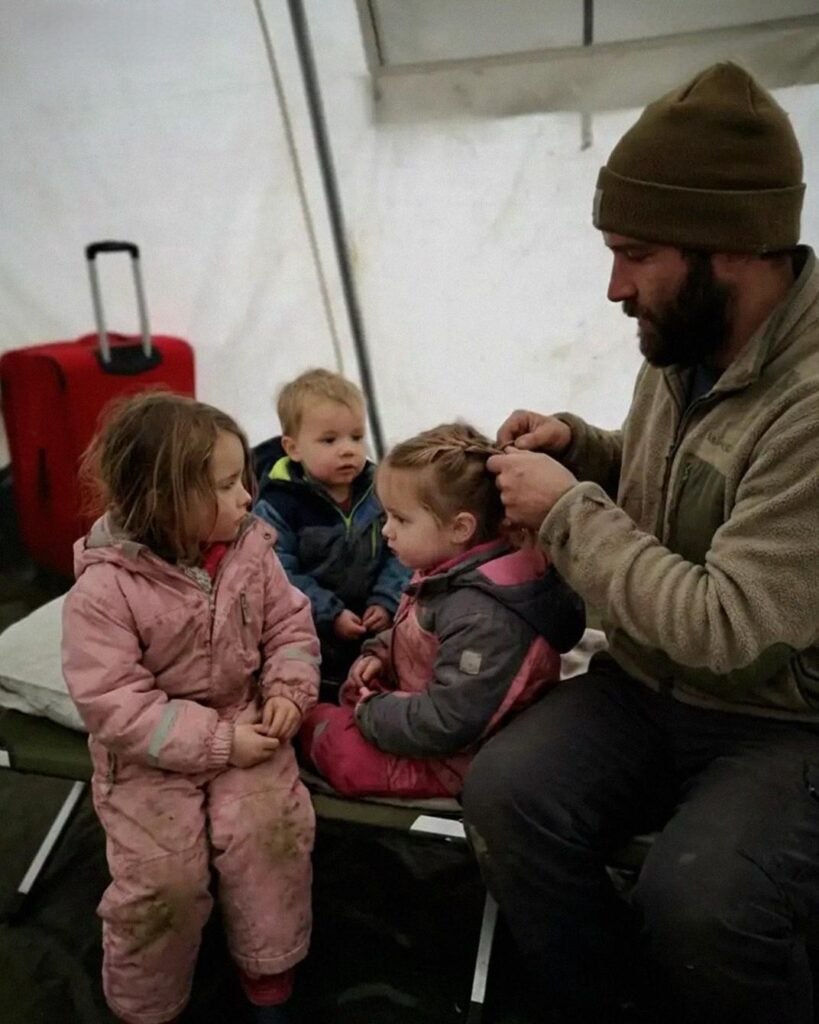
Two years ago, my life was measured in small calculations. How much gas remained in our old van. How long the heat could stay on. How to stretch hope so my three children wouldn’t feel its absence.
I was Colton. Out of work. Out of a marriage. Out of a home.
Our world had narrowed to a Ford Econoline where Jace, Lily, and Noah slept beneath thin blankets, braver than I felt most nights.
Survival wasn’t dramatic. It was quiet and constant.
The night everything shifted began at a convenience store on Route Nine. It was past midnight. I was counting our last three dollars, trying to turn it into breakfast, when I noticed an older man struggling at the counter. He’d forgotten his wallet and needed water for medication.
Without weighing it, I slid the money forward.
“I’ve got this.”
He thanked me softly, the way people do when pride and relief meet at once.
I didn’t know his name was Walter.
I didn’t know what he owned.
I only knew someone needed help.
He passed away hours later.
Weeks after, I learned who he had been — a man who had built a large manufacturing company, who had spent his life surrounded by wealth but had met his final hours with a stranger’s kindness. In his will, he left me responsibility for the company, explaining that character mattered more to him than blood.
The shift was dizzying. My children touched real beds like they might disappear. Warm showers felt unreal. Safety arrived faster than understanding.
But inheritance doesn’t erase human nature.
Walter’s son, Preston, saw the decision not as generosity but as theft. His anger grew into intimidation — then into something darker. Threats turned into actions. And one night, my children were taken.
Fear has a way of stripping everything else away.
What followed wasn’t heroics. It was patience, evidence, and careful help from Walter’s attorney, who refused to look away. Preston was convinced I would trade control of the company to get my children back. Instead, the documents he demanded were statements tying him to every crime he’d committed.
Law enforcement was waiting.
My kids came home.
Preston went to prison.
The company didn’t survive the fallout. Lawsuits and investigations dissolved the empire almost entirely. On the surface, it looked like everything we’d been given disappeared.
But Walter had known something like this might happen.
Before his death, he’d placed money into a separate trust for the children — not wealth for excess, but enough for stability, education, and a future that wouldn’t depend on luck again.
Today, we live simply. A small house. Bikes in the driveway. Music through open windows. No luxury — just peace.
And that has been more than enough.
I learned that kindness doesn’t always return as comfort.
Sometimes it returns as responsibility.
Sometimes as trial.
Sometimes as a second chance.
But it never returns empty.
We aren’t rich in possessions.
We are rich in safety.
In togetherness.
In waking up without fear.
And I would give my last three dollars again without hesitation — not because it led to money, but because it reminded me who I want my children to become.
Sometimes what saves you isn’t what you receive.
It’s the choice you made when you had almost nothing left.
That kind of wealth lasts.