
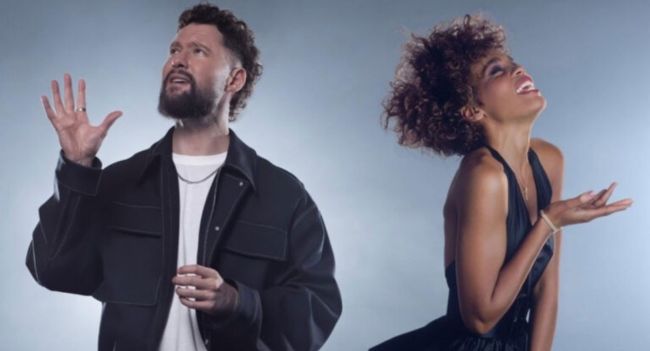
A New Whitney Houston Duet? How Calum Scott Reimagined “I Wanna Dance with Somebody” With the Late Icon
It sounds almost unbelievable—but that’s exactly what makes it special. Thirteen years after her passing, a new Whitney Houston song is being released.
The voice beside hers belongs to Calum Scott.
The new single is a duet that pairs Scott with Houston on a stripped-back, emotional reinterpretation of “I Wanna Dance with Somebody (Who Loves Me)”, created using Houston’s original vocal stems—the individual audio elements that make up the original recording.
For Scott, the moment is surreal.
“It’s not something I ever could have imagined,” he said in an interview. “To be able to do this—it’s honestly one of the greatest honors of my career.” Houston’s voice, he explains, shaped his childhood, thanks largely to his mother’s love for her music. To him, Whitney Houston isn’t just influential—she’s timeless.
Here’s how the unlikely collaboration came together.
Turning an Icon Into a Collaboration
A project of this scale required careful approval. The green light came from Pat Houston, Whitney’s sister-in-law and the executor of her estate, along with Primary Wave, which acquired the rights to Houston’s catalog in 2022.
Interestingly, the idea originated with Primary Wave. They were already familiar with Scott’s live version of the song from his 2024 tour opening for Ed Sheeran. During that run, Scott transformed the upbeat 1987 classic into a slow, emotional ballad—blending it with Robyn’s “Dancing On My Own.”
Once Pat Houston heard Scott’s approach—especially with 2025 marking the 40th anniversary of Whitney Houston’s recording career—she didn’t hesitate.
“It just made sense,” she said. “Whitney was a balladeer at heart. That’s why people fell in love with her. And Calum turned this song into something truly beautiful.”
From Dance Floor Anthem to Emotional Ballad
Scott was given access to Houston’s original vocal stems, produced by her longtime collaborator Narada Michael Walden. He then recorded his parts in the U.K. alongside producers Jon “MAGS” Maguire, Andrew Yeates, and Charlie T, completing the track in roughly a week. A live string section was added to deepen the emotional weight.

Scott jokes that his specialty is “taking a pop song and making it sad,” but he points out that the lyrics themselves have always carried a sense of longing. Wanting to dance with someone who loves you, he notes, implies that love is missing.
An early demo leaned too heavily into melancholy, using a minor key for the chorus. That was quickly adjusted—because even in its softer form, the song needed to retain some of Whitney’s joy.
One decision was never in question: the song would open with Houston alone.
“This is her song,” Scott says. “I would never step in front of Whitney for that first verse.”
Listeners may notice subtle imperfections, like a faint snare bleed in her vocal—an artifact of the original analog recording. Scott insisted those details remain.
“You can’t erase that,” he explains. “It’s part of her voice, part of the song’s soul.”
The iconic key change in the final chorus also stayed intact, despite Scott admitting it pushed him vocally. “Those notes were earned,” he laughs. “Just getting to harmonize with her was an honor.”
Earning the Songwriters’ Trust
Scott also sought approval from the original songwriters, George Merrill and Shannon Rubicam—and they were immediately supportive.
They praised Scott for resisting the temptation to embellish the song for his own spotlight. Instead, he stripped it down, centered Whitney’s voice, and let the emotion lead.
“That shows incredible respect,” Merrill said. “He didn’t try to compete with her—he honored her.”
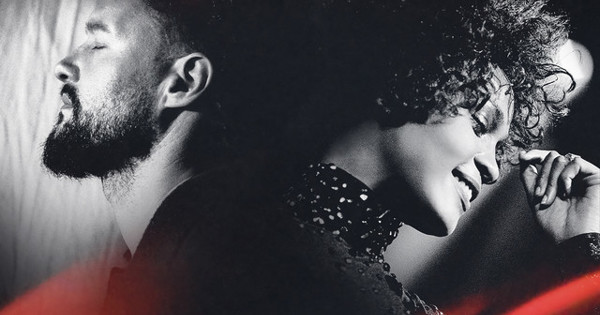
Rubicam added that Scott was one of the few vocalists capable of standing beside Houston without being overwhelmed. “They meet each other emotionally,” she said. “There’s power, control, and vulnerability on both sides.”
A Living Song, Not a Tribute
Scott is clear about one thing: this isn’t meant to be a tribute.
“I felt like I was walking gently alongside her,” he said. The goal was to make the song feel alive—not memorialized.
That’s why the duet will appear on Scott’s upcoming album Avenoir, set for release on October 10.
“This song is part of my story now,” he says. “Being trusted with it—I could honestly die a very happy man.”
Pat Houston agrees. “The song was a hit forty years ago, and it’s still powerful today,” she said. “This was the right artist, the right moment, and the right way to keep Whitney’s legacy moving forward.”
And somehow, impossibly, it does—dancing between past and present, with two voices meeting across time.