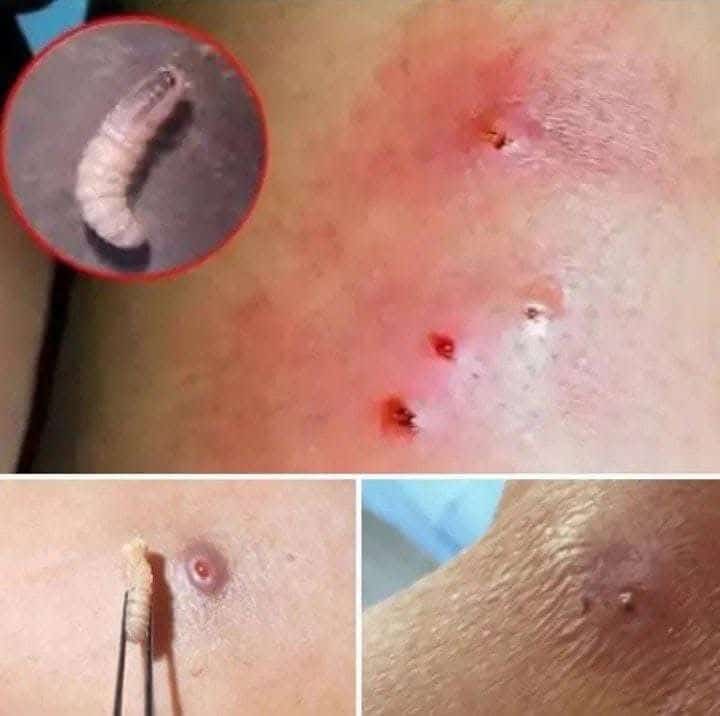
Most people deal with skin issues from time to time — an itch, a red spot, or a small swelling that disappears as quickly as it comes. In most cases, these are harmless and linked to insect bites, allergies, or temporary skin irritations. But in rare situations, persistent or unusual changes under the skin may signal something more unusual: a parasitic infection. Though uncommon, documented cases remind us of the importance of paying attention to the body’s signals.
In 2018, for example, a 32-year-old woman in Russia sought medical care after noticing a small bump on her face. At first, she assumed it was a harmless mosquito bite. But over the next two weeks, she observed something strange: the bump appeared to shift position, moving from below her left eye to her upper lip. Alarmed, she visited a clinic. Doctors discovered the cause — Dirofilaria repens, a roundworm normally found in dogs and transmitted through mosquito bites. Humans are accidental hosts, meaning the parasite cannot complete its life cycle inside the body, but it can cause temporary skin swellings and movement beneath the skin. Surgeons removed the worm through a minor procedure, and the patient recovered fully. The case, published in the New England Journal of Medicine, became widely discussed in medical circles because of how subtle the presentation had been.
Subcutaneous Parasitic Infections: What They Are
Subcutaneous parasitic infections occur when organisms that usually infect animals or thrive in certain environments find their way under human skin. Humans are often “dead-end hosts,” meaning the parasites cannot reproduce in our bodies. But their temporary presence can cause itching, swelling, redness, or even a crawling sensation. While rare, such cases are important reminders for clinicians and travelers alike.
Documented examples include:
-
Onchocerciasis (River Blindness) – Spread by blackflies in parts of sub-Saharan Africa. It leads to itchy skin nodules and, if untreated, can damage the eyes and cause blindness.
-
Cutaneous Larva Migrans – Hookworm larvae acquired by walking barefoot on contaminated soil. They appear as winding, red, snake-like lines on the skin, often shifting location as the larvae migrate.
-
Loiasis (African Eye Worm) – Found in Central and West Africa, transmitted by deerflies. People may experience sudden localized swelling or, in rare moments, see the worm move across the eye’s surface.
-
Schistosomal Dermatitis (Swimmer’s Itch) – A temporary rash caused by schistosome larvae in freshwater lakes and ponds. It usually resolves without treatment.
-
Dracunculiasis (Guinea Worm Disease) – Now nearly eradicated, this waterborne parasite once caused intense skin symptoms when adult worms emerged slowly through painful blisters.
Recognizing Warning Signs
Most skin irritations disappear within days. But parasitic infections may leave behind certain red flags:
-
Persistent or unexplained itching.
-
Small, firm bumps that appear to move or change location.
-
Swelling without an obvious injury or insect bite.
-
Red lines or lesions that slowly shift position.
-
Symptoms after travel to areas where parasites are common.
-
History of exposure to untreated water, soil, or insect bites.
Keeping a diary of when symptoms started, whether they spread or moved, and any recent travel can be invaluable when seeking medical advice.
How Doctors Diagnose
Diagnosing subcutaneous parasites requires careful evaluation, because the signs can mimic allergies or infections. Doctors may:
-
Perform a physical examination, checking for movement or unusual swelling.
-
Use imaging tools like ultrasound or MRI to spot organisms under the skin.
-
Order blood tests to detect antibodies or immune responses to specific parasites.
-
Take a tissue biopsy to examine under a microscope.
Treatment often involves physically removing the parasite through a minor procedure. In other cases, antiparasitic medications are prescribed to ensure the infection is fully cleared.
Prevention and Protection
While the idea of parasites sounds alarming, prevention is often simple and effective:
-
Use insect repellents containing DEET, picaridin, or other approved ingredients.
-
Wear protective clothing in areas with biting insects.
-
Avoid walking barefoot on soil or beaches where animal waste is present.
-
Only swim in safe, well-managed freshwater sources.
-
Drink bottled, boiled, or filtered water in areas with poor sanitation.
-
Research local health risks before traveling internationally.
Good hygiene and protective habits significantly reduce the already small risk of contracting such infections.
What To Do if You Notice Changes
If you notice a lesion that persists for more than a few days, or one that seems to grow, shift, or worsen, it is worth seeking medical attention. Take photos over time to track progression, as this can help doctors identify unusual patterns. Always share recent travel details, environmental exposures, and any insect bites or water contact. Early evaluation can prevent complications and provide peace of mind.
Final Takeaway
Subcutaneous parasitic infections are rare, treatable, and preventable. For most people, skin irritations will never be more than a passing nuisance. But awareness matters. Knowing the warning signs and taking preventive steps ensures that unusual cases are identified early and managed effectively. With medical attention and preventive care, individuals can stay safe while continuing to enjoy travel, outdoor activities, and everyday life with confidence.
{"post":89286,"page":1,"next":[{"id":89258,"title":"Riley Green Shocks Fans With A Private, Unplanned Concert From His Sofa","url":"https:\/\/new24.info\/89258"},{"id":89255,"title":"R.I.P Young woman d!es at the hands of her\u2026See more","url":"https:\/\/new24.info\/89255"},{"id":89252,"title":"Federal Court Ruling Reshapes Presidential Authority Over Domestic Military Operations","url":"https:\/\/new24.info\/89252"},{"id":89232,"title":"Former Ilhan Omar Associate Pleads Guilty in $2.9 Million Fraud Scheme","url":"https:\/\/new24.info\/89232"},{"id":89229,"title":"5 surprising causes of weak legs in seniors\u2014and how to fix them!","url":"https:\/\/new24.info\/89229"},{"id":89226,"title":"BREAKING NEWS: Trump Declares War in Portland","url":"https:\/\/new24.info\/89226"},{"id":89223,"title":"Old Biker Carried Abandoned Heart Baby Through Blizzard When Everyone Else Gave Up","url":"https:\/\/new24.info\/89223"},{"id":89220,"title":"Here\u2019s What You Need To Know About Chronic Constipation: A Silent Killer To Your Digestive Health","url":"https:\/\/new24.info\/89220"},{"id":89217,"title":"Minn. Catholic Leaders Previously Warned Tim Walz On School Safety: Letter","url":"https:\/\/new24.info\/89217"},{"id":89211,"title":"A Year After My Mom Died, Her Ex with His New Girlfriend Tried to Kick Me Out of My Own House, But I Gave Them a Reality Check They Didnt See Coming","url":"https:\/\/new24.info\/89211"},{"id":89209,"title":"My Aunt Kicked Me Out of My Childhood Home After My Parents Died \u2013 Just as I Left Crying, a Black Limo Pulled Up","url":"https:\/\/new24.info\/89209"},{"id":89206,"title":"My Husband Said \u2018My Win, My Money\u2019 When He Won $50,000 in the Lottery \u2013 He Went Pale Returning Home One Day","url":"https:\/\/new24.info\/89206"},{"id":89201,"title":"The Hidden Consequences of Sleeping with the Wrong Person","url":"https:\/\/new24.info\/89201"},{"id":89198,"title":"No President Ever Tried This. Trump Just Did \u2014 On Live Camera","url":"https:\/\/new24.info\/89198"}]}