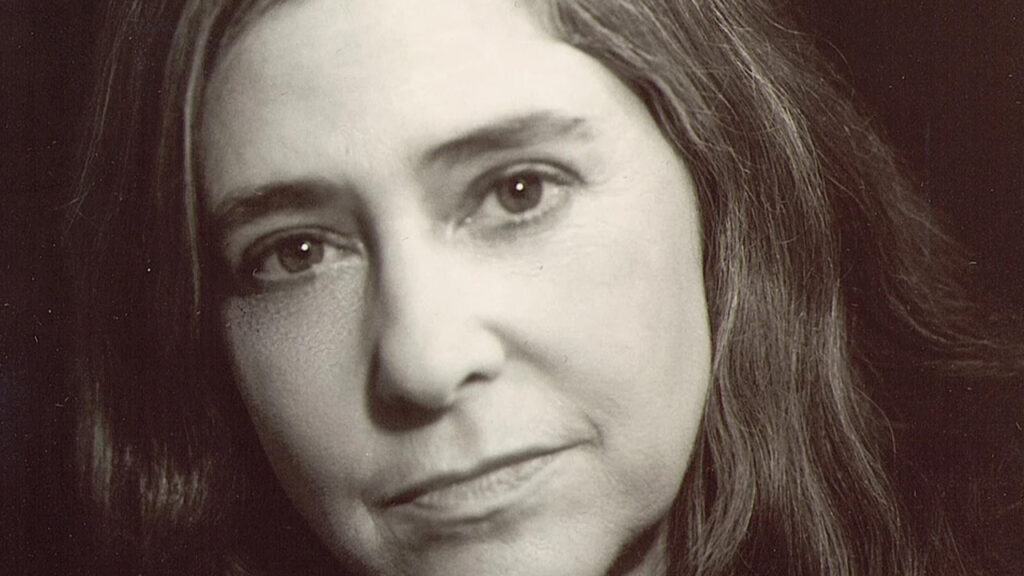
Outside the laboratory, she was also raising her daughter, Lauren, from her first marriage, which ended in 1967.
Hamilton spoke openly about balancing motherhood with a demanding career.
She once said of her daughter:
“My daughter is more of a female liberationist than I am. She believes that a woman should work and fulfill herself.”
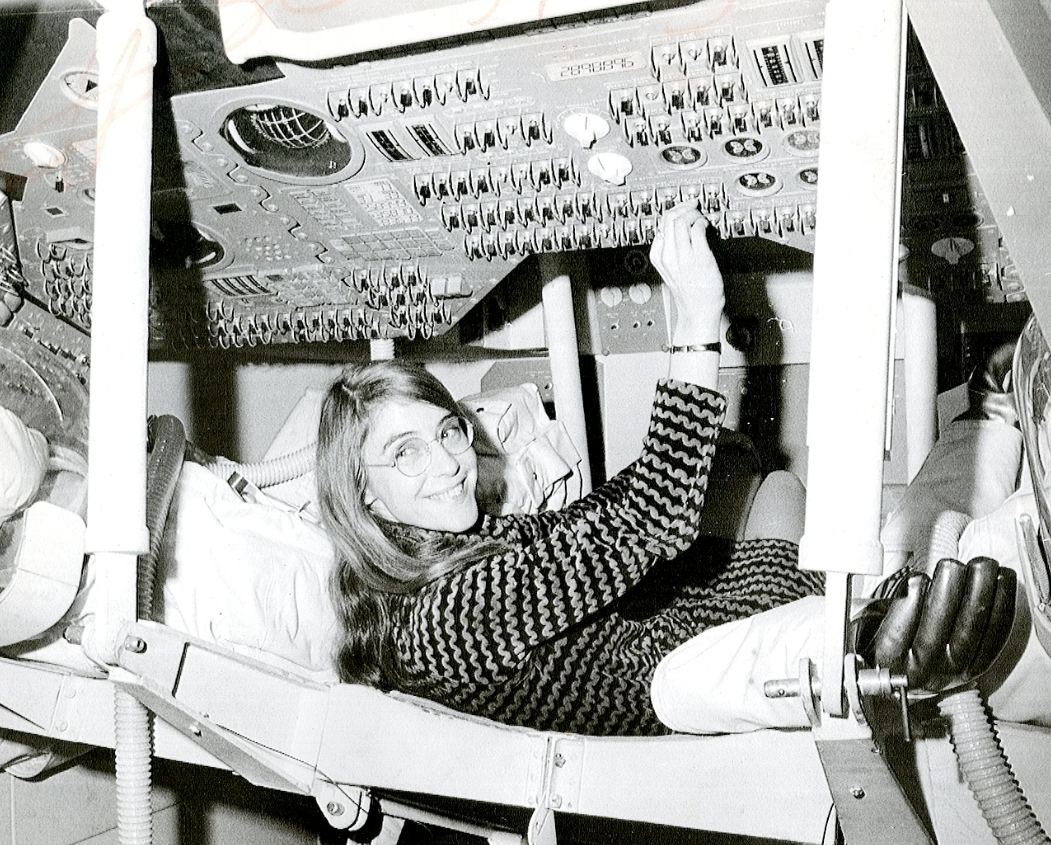
The Apollo program placed Hamilton and her colleagues in a situation that is almost difficult to imagine today.
They were developing software for something humanity had never attempted.
There was no earlier moon-landing program they could copy.
No decades of previous missions to study.
They were creating many of the solutions as the program developed.
Hamilton later remembered that atmosphere with pride.
“Looking back, we were the luckiest people in the world. There was no choice but to be pioneers.”
One of Hamilton’s most important beliefs was that computer systems should not be designed under the assumption that everything would always go perfectly.
People make mistakes.
Hardware fails.
Unexpected situations happen.
Software, she believed, should be prepared.
That philosophy would prove enormously important.
Years before Apollo 11, Hamilton’s young daughter Lauren was playing with a simulator at MIT when she accidentally activated a program in a way that caused the system to crash.
Hamilton immediately recognized something important.
If a child could accidentally trigger that sequence in a simulator, an astronaut could theoretically make a similar mistake during a mission.
She reportedly recommended modifying the software to protect against it.
Initially, the concern was dismissed on the grounds that trained astronauts would not make such an error.
Then Apollo 8 happened.
During that mission, command module pilot Jim Lovell accidentally triggered the type of problem Hamilton had warned about.
Critical navigational information was lost, forcing Hamilton and her colleagues to help devise a solution.
Afterward, protections against that type of error were incorporated into the software.
It was a powerful example of a concept that would become increasingly important in computing: design systems that expect human beings to make mistakes.
Then came July 20, 1969.
Neil Armstrong and Buzz Aldrin were descending toward the moon.
With millions of people following the mission from Earth, alarms suddenly began appearing from the Apollo Guidance Computer.
The system was overloaded.
Under different circumstances, that could have forced the landing to be abandoned.
But Hamilton’s team had designed the software so that the computer could recognize which tasks were essential.
When overloaded, it could temporarily discard or delay lower-priority work while continuing to process the calculations required for the landing.
Instead of simply freezing under pressure, the computer prioritized what mattered most.
Mission Control determined that the landing could continue.
Minutes later, Armstrong and Aldrin reached the lunar surface.
Hamilton later described just how seriously the software team understood its responsibility.
“There was no second chance. We knew that. We took our work seriously, many of us beginning this journey while still in our 20s. Coming up with solutions and new ideas was an adventure. Dedication and commitment were a given. Mutual respect was across the board. Because software was a mystery, a black box, upper management gave us total freedom and trust. We had to find a way, and we did.”
For decades, Hamilton’s name remained far less famous than those of the astronauts her work helped support.
Then one photograph introduced her to a new generation.
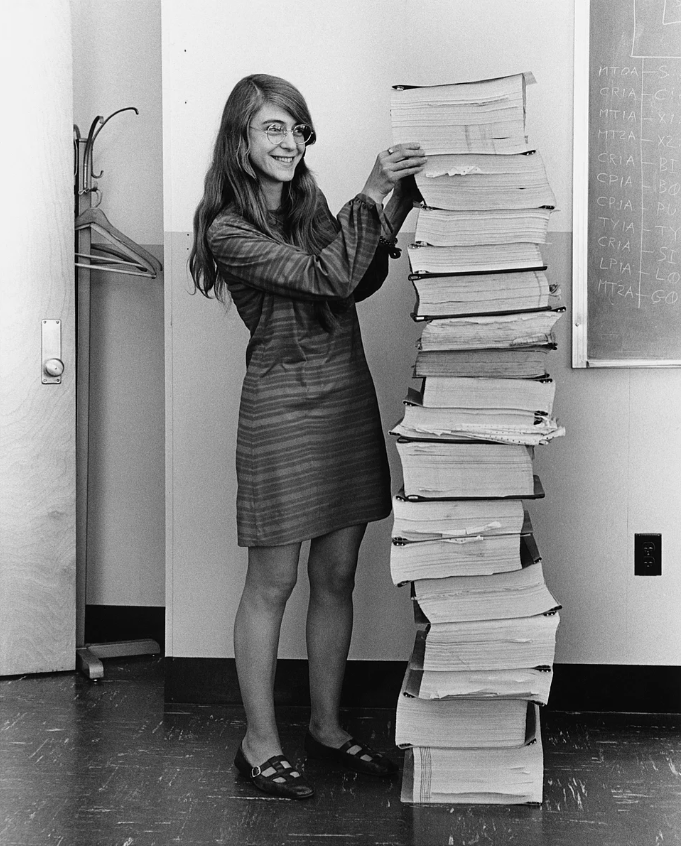
The image showed the 5-foot-4 computer scientist standing beside an enormous stack of printed Apollo software.
The stack towered above her.
It became a striking visual representation of something usually invisible: the enormous amount of work hidden inside a computer system.
As the photograph spread online, Hamilton increasingly became recognized as one of the most important figures behind Apollo’s technological success.
The honors followed.
She received NASA’s Exceptional Space Act Award and was named a fellow of the Computer History Museum.
She was also inducted into the National Aviation Hall of Fame.
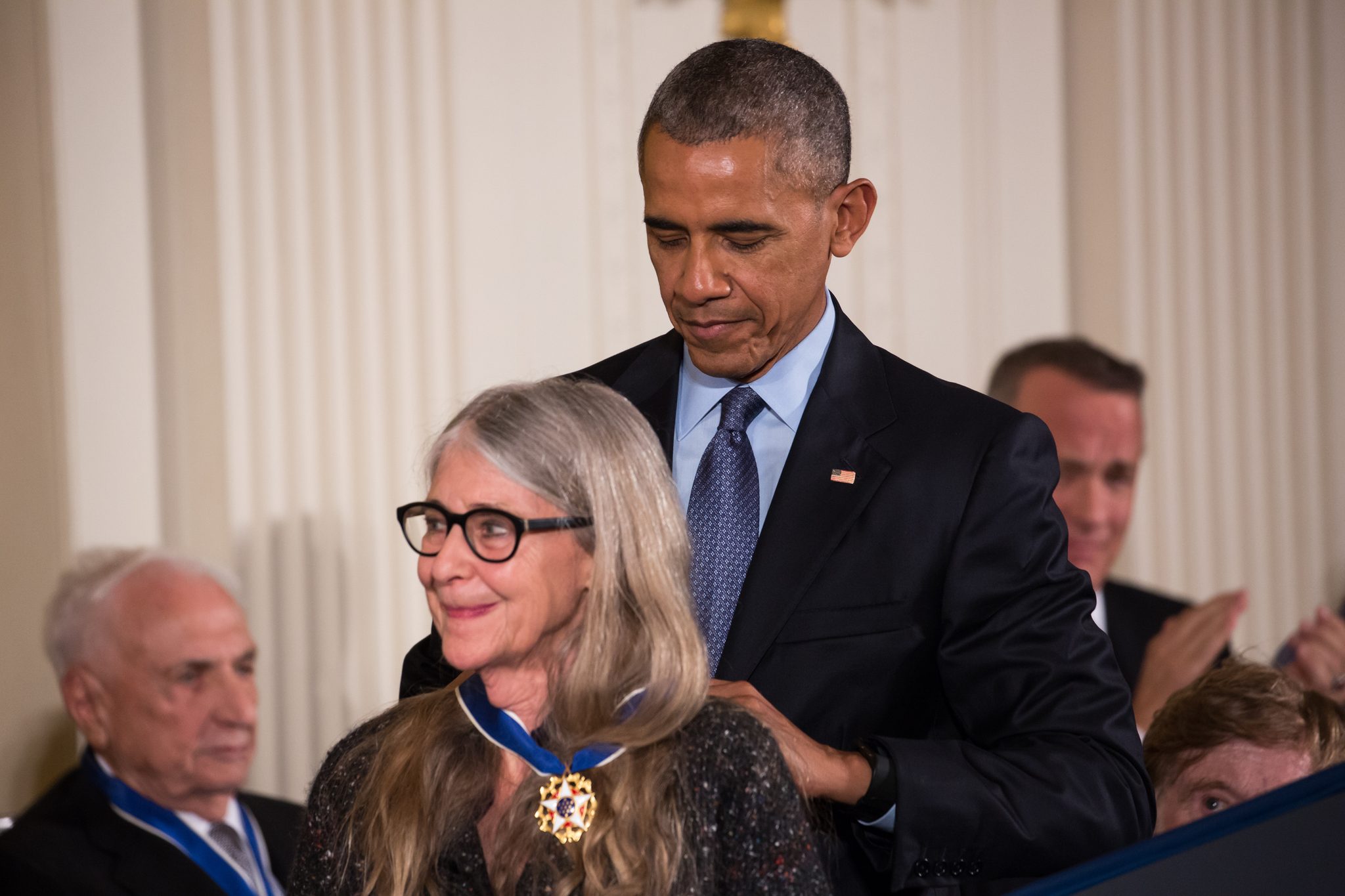
Then, in 2016, President Barack Obama presented Hamilton with the Presidential Medal of Freedom, one of the highest civilian honors in the United States.
The citation recognized the importance of her work, stating that Hamilton had “defined new forms of software engineering and helped launch an industry that would forever change human history.”
Her influence eventually reached audiences far outside engineering.
She became an important symbol for women pursuing careers in science and technology.
She was turned into an official LEGO minifigure.
And the Apollo guidance software she helped develop was eventually made publicly accessible through GitHub, allowing modern programmers to examine code written for one of humanity’s most ambitious technological projects.
Hamilton’s story is also a reminder of something that is easy to forget when we look back at major moments in history.
We remember the people who stood on the stage.
The astronauts.
The presidents.
The commanders.
The faces captured in famous photographs.
But accomplishments on the scale of Apollo are created by enormous teams.
They depend on people working long nights behind computers.
People testing systems.
People finding mistakes before they become disasters.
People asking what could go wrong before anyone else thinks to ask.
Margaret Hamilton was one of those people.
She was a programmer, computer scientist, engineer, leader, mother, and pioneer whose work helped carry human beings farther than they had ever traveled before.
She never took that famous first step onto the lunar surface.
But part of the reason Armstrong and Aldrin could take it was that Hamilton and her team had spent years preparing computers for the moment when something unexpected happened.
And something did.
The software kept working.
The mission continued.
History was made.
Margaret Hamilton is survived by her daughter, Lauren Hamilton; her son-in-law, Richard Selesnick; two grandsons; four great-grandchildren; and her siblings, John, David, and Kathryn.
The astronauts became legends.
But the people behind them mattered too.
Margaret Hamilton was one of them.
And her contribution deserves to be remembered every time humanity looks back at the footprints left on the moon.