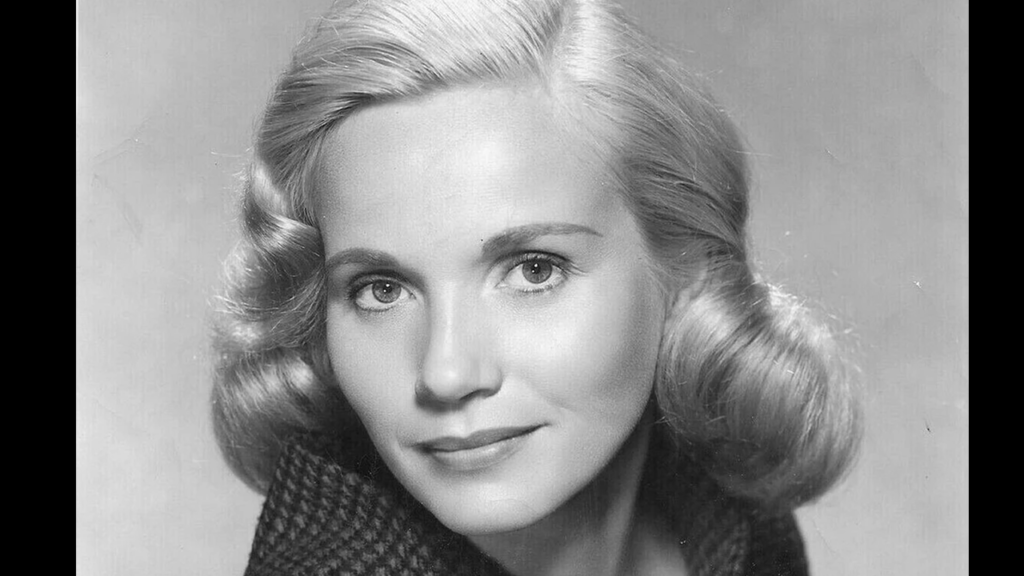
Whatever Kazan did clearly worked.
Saint’s performance immediately established her as a major dramatic talent.
In 1955, she won the Academy Award for Best Supporting Actress for *On the Waterfront*, turning her first major film appearance into one of the defining performances of her career.
But by the time Hollywood discovered her, Saint had already spent years working in entertainment.
She was born in Newark, New Jersey, in 1924 and raised in a Quaker family.
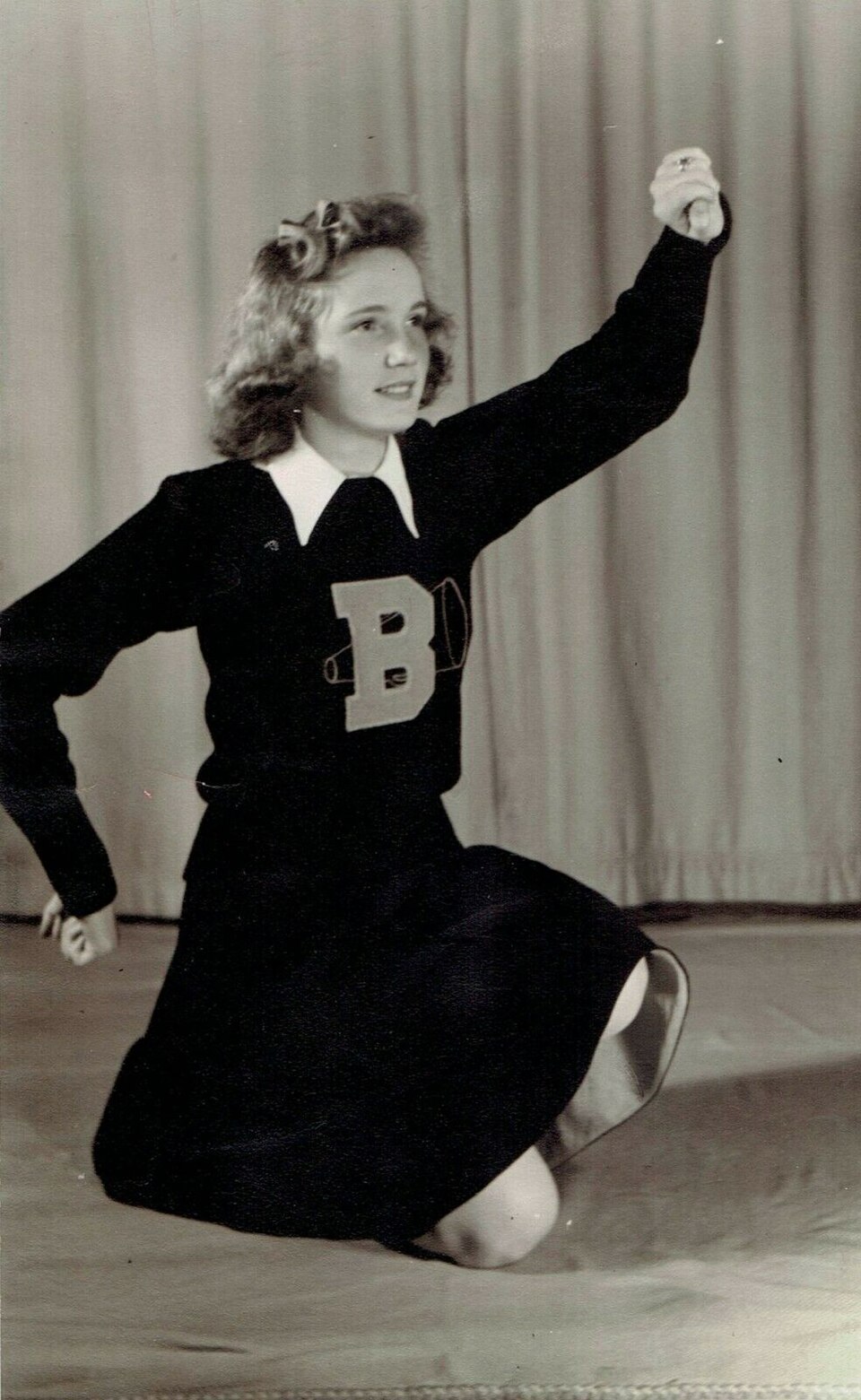
Acting had not initially been her plan.
Saint first intended to become a teacher, but her path gradually led toward radio, modeling, television and eventually film.
Her earliest entertainment work was far from glamorous.
Her first paycheck was reportedly just $10 for working as an off-camera applauder on *The Borden Show*.
She continued taking whatever jobs she could find while building experience, including modeling assignments and appearances in radio serials.
Television eventually gave her the opportunity to show what she could do.
During the early 1950s, Saint appeared in productions including *One Man’s Family*, *Philco Playhouse*, *Robert Montgomery Presents* and *Studio One*.
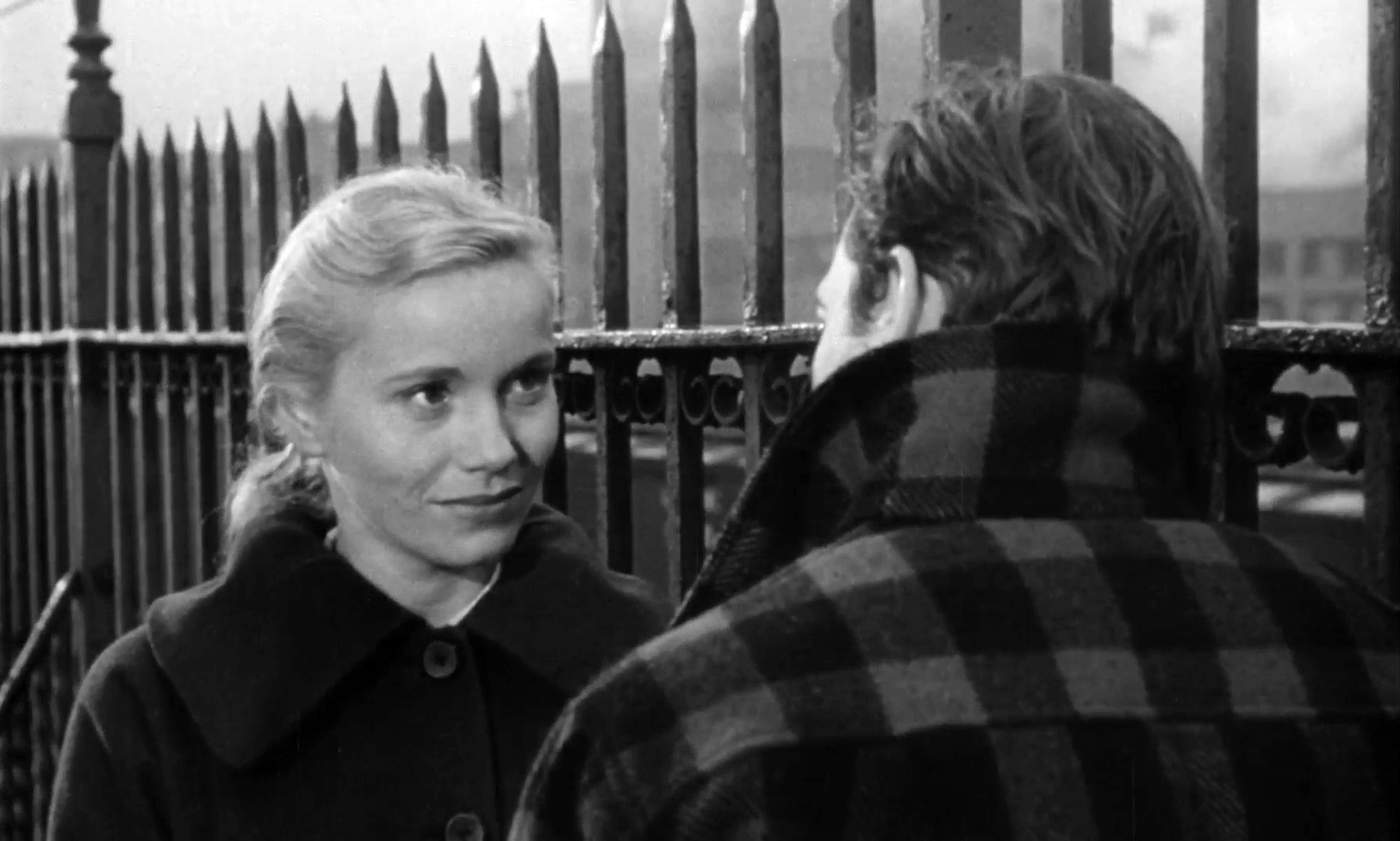
Her performance in *The Trip to Bountiful* ultimately caught Elia Kazan’s attention.
He invited her to audition for *On the Waterfront*, asking her to improvise a scene with Marlon Brando.
Saint later admitted the audition was difficult and unsettling.
But she got the role.
And Hollywood history followed.
After *On the Waterfront*, Saint continued appearing alongside some of the biggest stars of the era, including Bob Hope, Warren Beatty, Elizabeth Taylor and Richard Burton.
Then came the role that would permanently connect her with another legendary filmmaker.
In 1959, Alfred Hitchcock cast Saint opposite Cary Grant in *North by Northwest*.
She played Eve Kendall, the mysterious, sophisticated woman drawn into an international espionage story involving Grant’s character.
The role required Saint to be glamorous, witty, secretive and dangerous all at once.
It became one of the most memorable performances of her career and helped establish her as one of the defining actresses of the period.
Saint later recalled that something surprisingly small may have helped catch Hitchcock’s attention.
She believed the director noticed her partly because she wore beige and white gloves to a lunch meeting with him.
Saint continued working steadily through the 1960s, appearing in films including *Exodus*, *All Fall Down*, *The Sandpiper*, *Grand Prix* and *Loving*.
Her accomplishments were eventually recognized with two stars on the Hollywood Walk of Fame — one honoring her television career and another recognizing her work in film.
Yet at the height of her success, Saint made a decision that was unusual in an industry where stars were often expected to remain constantly visible.
She stepped back.
Family became more important.
Rather than endlessly chasing the next major film role, Saint chose to spend more time raising her children.
Her appearances became less frequent during the 1970s and 1980s, although she continued performing in television productions and on stage.
Eventually, she returned to the big screen.
In 1986, Saint appeared in *Nothing in Common* alongside Tom Hanks and Jackie Gleason.
She continued taking television roles as well, and in 1990, after receiving multiple previous nominations, she finally won an Emmy for the miniseries *People Like Us*.
Decades after *On the Waterfront*, another unusual connection with Marlon Brando appeared in her career.
In 2006, Saint played Martha Kent, Superman’s adoptive mother, in *Superman Returns*.
The film also used archival footage of Brando as Superman’s biological father, Jor-El.
More than half a century after the two actors helped create *On the Waterfront*, their images were once again connected on screen.
Saint’s final big-screen appearance came in 2014 with *Winter’s Tale*.
By then, she had lived through almost every major transformation modern Hollywood had experienced.
She watched black-and-white cinema give way to color.
She saw television become one of the dominant forces in entertainment.
She watched the studio system change, generations of actors rise and disappear, and filmmaking technology transform repeatedly.
Yet she remained closely associated with the era that first made her famous.
Saint also had a simple philosophy about longevity and staying youthful.
“You know how to stay young? Go with the flow.”
Then she added another piece of advice:
“It’s today and tomorrow, and don’t get cranky.”
Even decades after her greatest films were released, she continued celebrating the history she had helped create.
In 2000, Saint hosted a Turner Classic Movies documentary about the making of *North by Northwest*.
Then, in 2009, she returned to the Academy Awards stage to present the Oscar for Best Supporting Actress — fifty-five years after winning that same award herself.
Few careers could connect old Hollywood and modern Hollywood quite like hers.
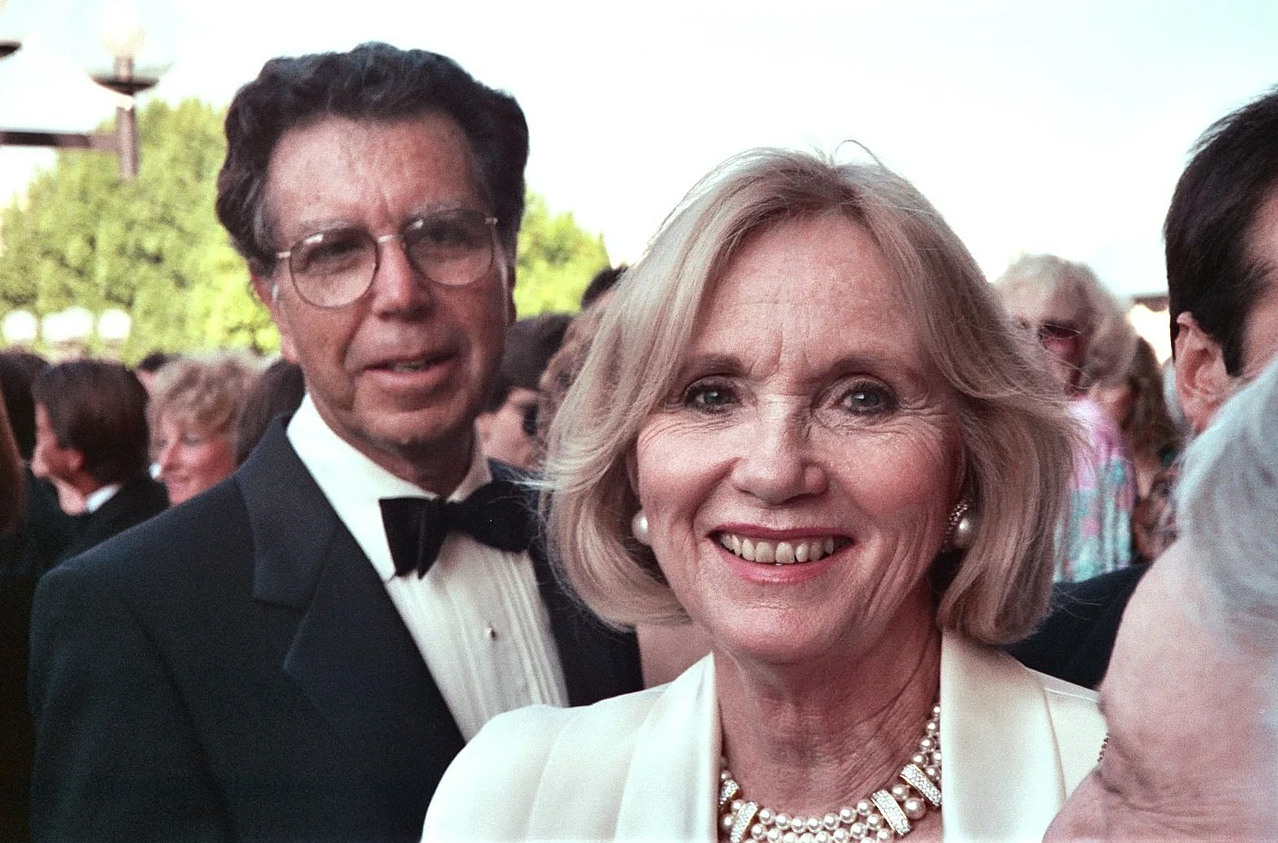
Saint married television director Jeffrey Hayden in 1951.
Their marriage lasted until Hayden’s death in 2016.
Together, they had two children, Darrell and Laurette, and their family later grew to include four grandchildren and two great-grandchildren.
With Eva Marie Saint’s death, Hollywood has lost another living link to one of cinema’s most celebrated eras.
But the films remain.
The photographs remain.
Her performances remain.
There is still Edie Doyle standing opposite Marlon Brando in *On the Waterfront*.
There is still Eve Kendall stepping into Cary Grant’s life in *North by Northwest*.
And across decades of film and television, there remains the work of an actress who began with a $10 job behind the scenes and eventually became part of Hollywood history.
Eva Marie Saint was 102 years old.
Her career lasted more than six decades.
And in that extraordinary lifetime, she became far more than a surviving star of Hollywood’s Golden Age.
She became one of the women who helped define it.