He added:
“I can tell you that all the things that I warn about, that I’ve written in the past, have all come to fruition in the case of Christa Pike.”
Zivot has argued that successfully placing an intravenous catheter requires medical training and experience.
He said the difficulties encountered during Pike’s execution illustrate what can happen when IV access is not properly established.
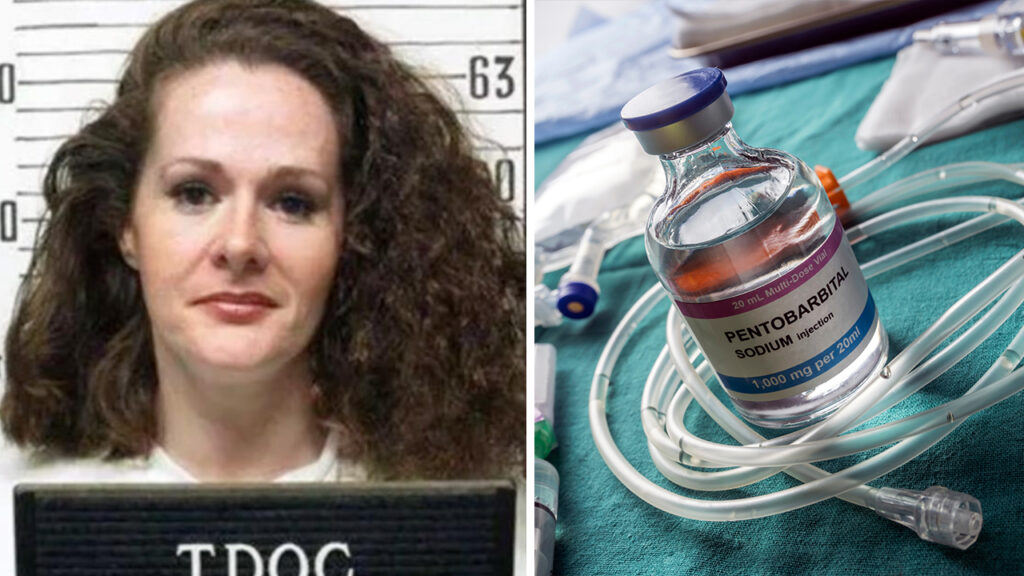
According to current reporting, the most likely problem appears to have involved the pentobarbital entering tissue around the veins rather than flowing correctly into Pike’s bloodstream.
The Associated Press reported that Pike suffered severe blistering injuries to her arms and that the drugs were apparently injected into tissue instead of directly into her circulation.
Zivot offered a similar assessment.
“She very likely has a significant burn on one or both arms from the pentobarbital that I expect went into the tissues and not into the circulation.”
Pike’s lawyers have reported blistering and burning on her arms.
Zivot said injuries of that type could potentially require significant medical treatment, including skin grafting.
He has also raised the possibility of cardiac complications or other long-term health effects, although the full extent of Pike’s injuries has not yet been publicly established.
The medical aftermath could also become important if Tennessee ever attempts to execute Pike again.
Zivot said:
“If Christa Pike’s health should be such a thing that it can never be restored to some degree, then she may not face [execution] again.”
He continued:
“If the death penalty goes wrong, which it has done in this case, it becomes the duty of the state to restore the prisoner to health. So they’re bound to do it.”
That does not mean Pike has automatically been removed from death row.
Her death sentence remains in place, and no court has ruled that Tennessee is permanently barred from attempting another execution.
Any future attempt, however, would almost certainly face new litigation focused on her medical condition and what she endured during the failed procedure.
For now, the immediate concern is her health.
Latest reporting says Pike has remained unconscious and on a ventilator while receiving intensive medical treatment after the failed execution.
Her attorneys have also argued that the failed procedure left her with injuries they had warned the state could occur because of her difficult vein access and other medical concerns.
The situation has intensified scrutiny of Tennessee’s lethal-injection system.
Pike’s case was not even the first execution problem the state experienced this year.
In May, Tennessee officials abandoned the planned execution of Tony Carruthers after they were unable to establish adequate IV access.
That meant Tennessee experienced two major execution failures within only a few months.
Following Pike’s failed execution, Gov. Bill Lee suspended the state’s remaining executions for 2026 and ordered an independent review of what happened.
The consequences have already extended beyond Pike’s individual case.
On October 3, Tennessee Department of Correction Commissioner Frank Strada announced his resignation following growing scrutiny over the failed execution.
Investigators must now determine exactly why the IV lines failed, how the pentobarbital was administered, whether the state’s protocol was followed correctly and what changes may be necessary before Tennessee attempts another execution.
For Pike, however, the most immediate question is no longer when another execution might be scheduled.
It is whether she will recover from the first one.
Two doses of the drug Tennessee intended to use to end her life instead left her critically injured and hospitalized.
And until doctors know the extent of those injuries, nobody can say with certainty whether the state will ever be legally or medically able to place Christa Pike back on an execution gurney.