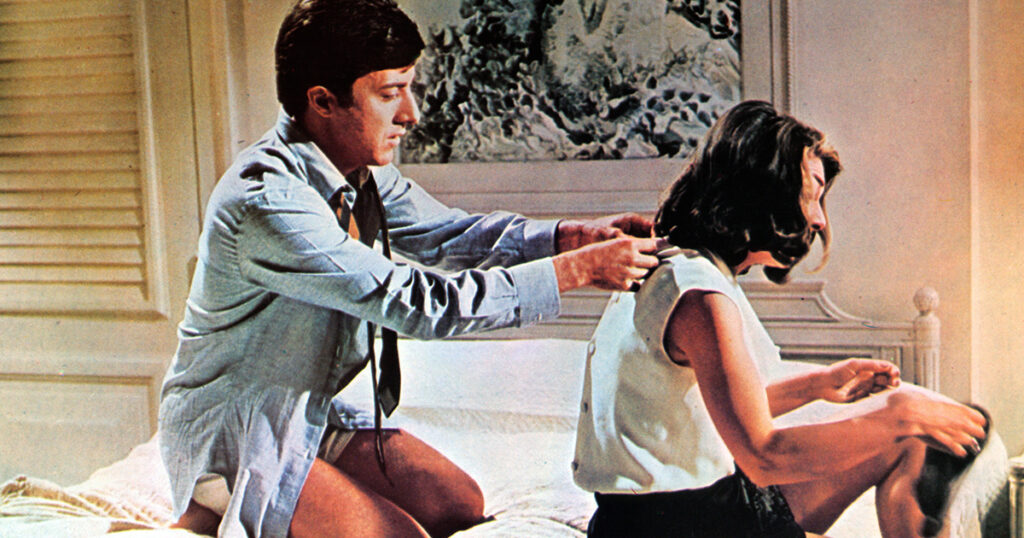
Few exchanges from the era are as instantly recognizable as Benjamin’s nervous realization:
“Mrs. Robinson, you’re trying to seduce me. Aren’t you?”
Nearly six decades later, The Graduate remains one of the defining films of the 1960s.
But behind those famous scenes are casting surprises, improvisations, clever camera tricks, continuity mistakes and uncomfortable moments that viewers might never notice.
And one of the film’s most memorable bedroom scenes contains a spontaneous moment that wasn’t supposed to happen at all.
When The Graduate arrived in 1967, American culture was changing dramatically.
The Beatles dominated popular music. Opposition to the Vietnam War was growing. Hippie and counterculture movements were challenging traditional ideas surrounding authority, relationships, sex, marriage and success.
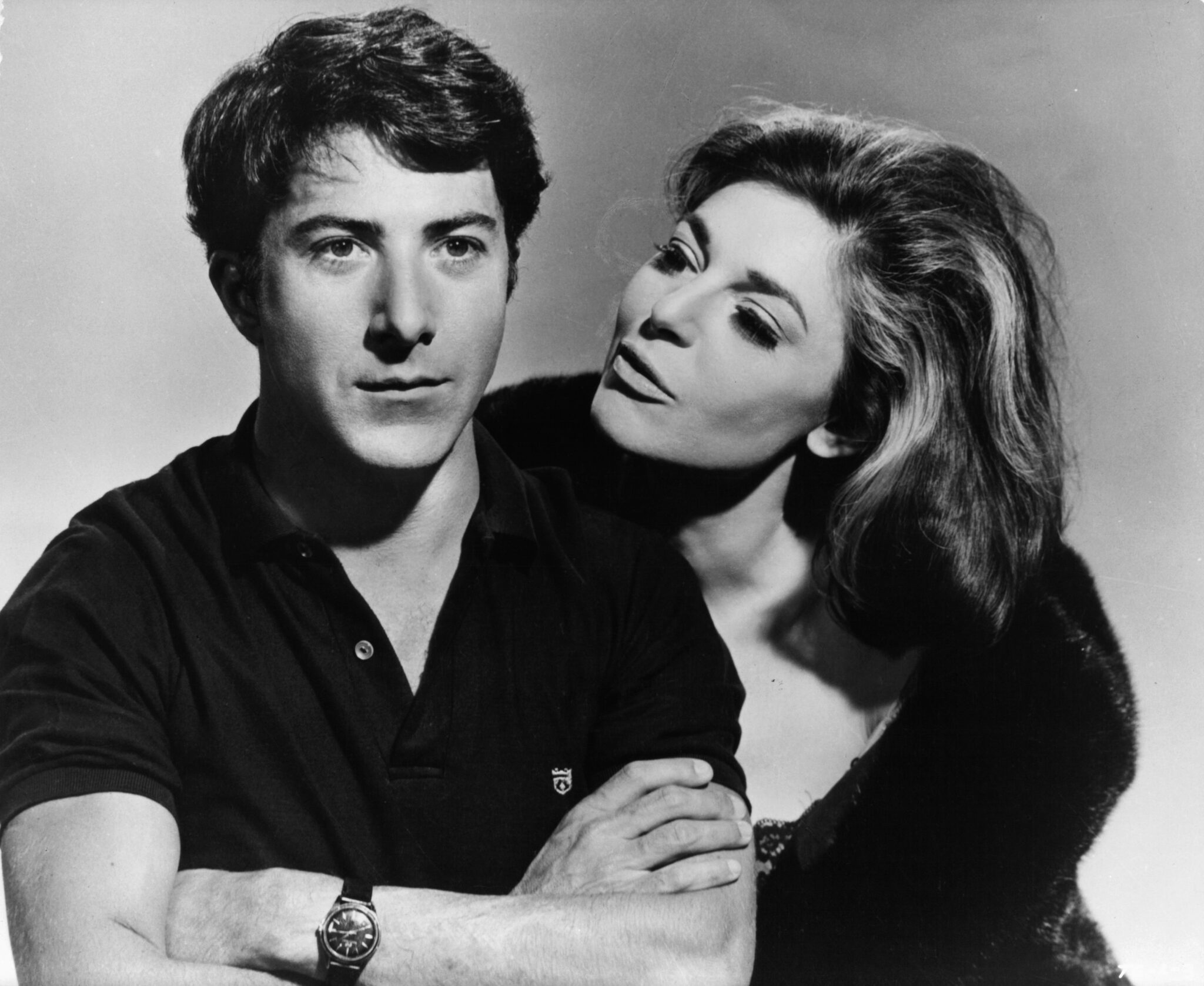
Into that atmosphere walked Benjamin Braddock.
He had graduated from college.
Everyone around him seemed to have an opinion about what he should do next.
Benjamin himself had almost no idea.
That uncertainty became one of the reasons audiences connected so strongly with the movie.
Yet Dustin Hoffman hardly seemed like the obvious choice to play him.
Hoffman was approaching 30 and was still relatively unknown to movie audiences.
According to one famous story surrounding his audition, producer Joseph E. Levine initially mistook Hoffman for someone who had arrived to clean the windows.
Instead of immediately correcting him, Hoffman reportedly played along and began cleaning one.
Eventually, everyone figured out who he actually was.
The misunderstanding was strangely appropriate.
Hollywood wasn’t looking at Hoffman and immediately seeing a conventional leading man.
And that was exactly why director Mike Nichols needed him.
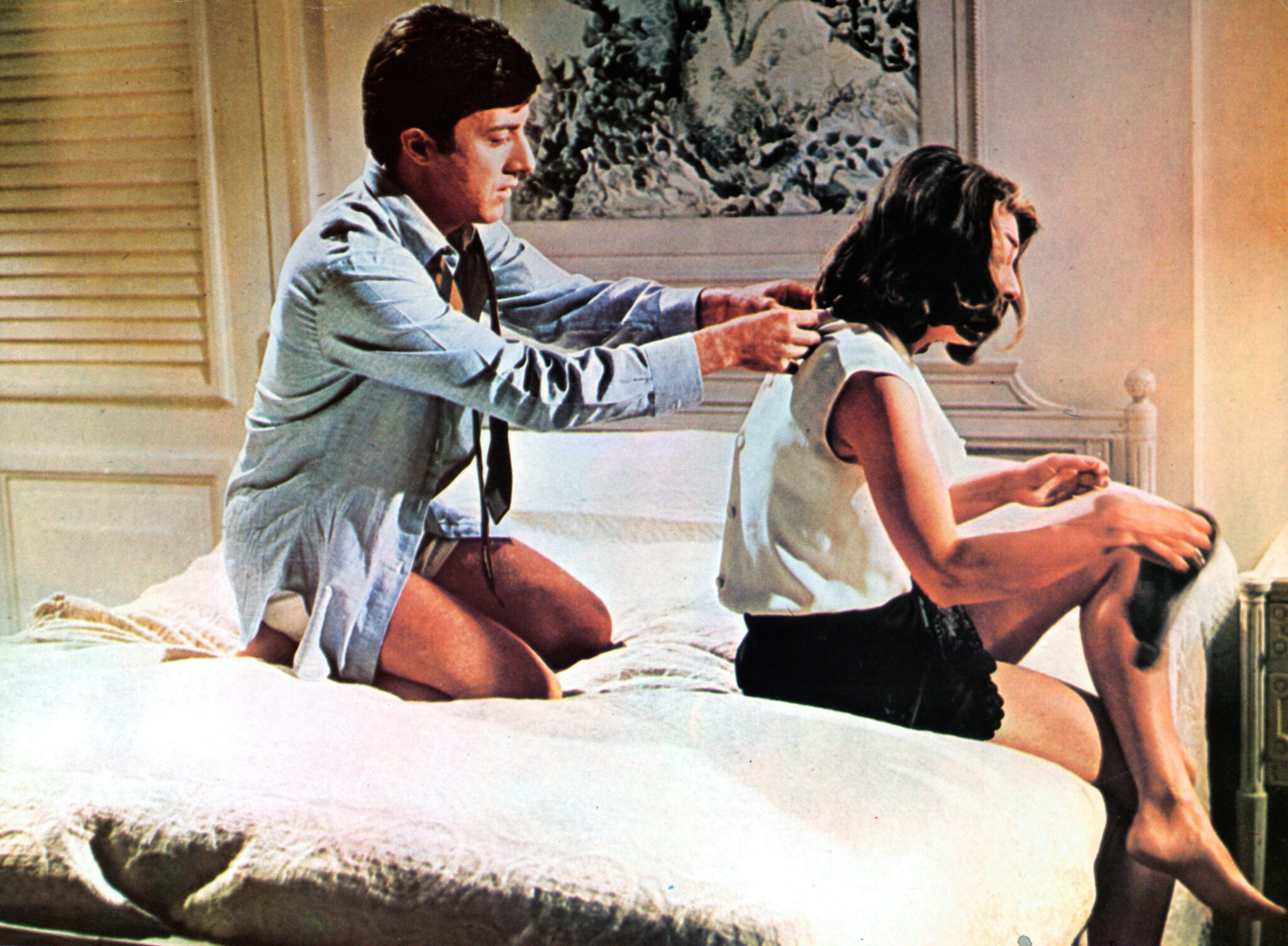
Before Hoffman landed the part, Robert Redford had been considered for Benjamin and reportedly screen-tested with Candice Bergen.
On paper, Redford had virtually everything Hollywood traditionally wanted in a romantic leading man.
That was also the problem.
Nichols reportedly questioned whether audiences could believe Redford as a young man who struggled romantically and felt socially out of place.
Redford argued that he understood Benjamin’s insecurity.
Nichols reportedly responded with a brutally simple question:
“Bob, look in the mirror. Can you honestly imagine a guy like you having difficulty seducing a woman?”
The point was difficult to argue with.
Redford looked like Robert Redford.
Benjamin wasn’t supposed to enter a room looking like the man every woman would immediately notice.
Hoffman brought something very different.
He looked uncomfortable.
He sounded nervous.
He could make silence funny.
And he seemed entirely capable of saying exactly the wrong thing at exactly the wrong moment.
Even Hoffman wasn’t convinced he belonged opposite Katharine Ross.
He later admitted that he couldn’t imagine someone who looked like Ross being interested in someone who looked like him.
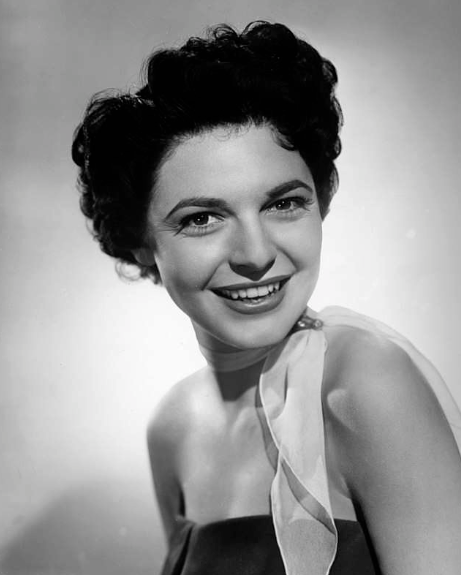
Ross apparently wasn’t immediately reassured either.
She remembered thinking Hoffman looked extremely short and unkempt and feared the pairing might become a disaster.
Nichols saw something different.
He saw Benjamin.
Hoffman later described the director’s decision to cast him as courageous, particularly because Hoffman was Jewish and did not fit the conventional image Hollywood had imagined for the character.
Some reviews attacked his appearance, making comments about his nose and voice that Hoffman later described as thinly disguised antisemitism.
But audiences responded.
And the movie became enormous.
The Graduate ultimately earned more than $100 million during its original theatrical run, an extraordinary figure for the period.
Hoffman, however, did not suddenly become wealthy.
He reportedly earned around $20,000 for the movie.
After taxes and living expenses associated with making it, he later said he was left with only a few thousand dollars.
Despite starring in one of the year’s biggest movies, he returned to New York, lived modestly in the West Village and reportedly collected unemployment benefits.
His life had changed.
His bank account hadn’t quite caught up.
Then there was Mrs. Robinson.
It is nearly impossible today to imagine anyone other than Anne Bancroft playing the role.
But she was not the only actress considered.
Nichols was reportedly interested in French actress Jeanne Moreau, influenced partly by European cultural attitudes surrounding relationships between younger men and older women.
Doris Day was also approached.
She declined.
The sexual content and nudity associated with the role reportedly made it unacceptable to her.
Eventually, Bancroft became Mrs. Robinson.
And cinema history changed.
Bancroft did not play her as a simple seductress.
There was sadness beneath the confidence.
Anger beneath the glamour.
And a sense that Mrs. Robinson herself had once been trapped by expectations she never chose.
That complexity made the character far more interesting than a conventional movie temptress.
It also created the perfect contrast with Hoffman’s Benjamin.
He could barely navigate a hotel lobby without appearing overwhelmed.
She seemed capable of controlling the entire room.
Which brings us to one of the film’s most famous behind-the-scenes stories.
During the hotel sequence, Benjamin is overwhelmed by Mrs. Robinson’s sexual confidence.
According to Hoffman, while rehearsing one moment, he spontaneously reached toward Bancroft’s breast.
The gesture was not something she had been expecting.
Hoffman later explained that the action reminded him of the juvenile behavior of schoolboys who might try to sneak an inappropriate touch while pretending to do something innocent.
The moment immediately destroyed his composure.
Nichols began laughing.
Hoffman began laughing too.
But the camera was still rolling.
Unable to maintain Benjamin’s expression, Hoffman turned toward the wall and began banging his head against it as he tried to suppress his laughter.
Nichols loved what happened.
Rather than seeing the broken take as useless, he recognized that Hoffman’s embarrassment perfectly captured Benjamin.
The awkward reaction remained in the movie.
What looks like another brilliant piece of physical comedy therefore contained something genuine: Hoffman really was struggling not to laugh.
It is exactly the sort of accident that can make a performance feel more authentic than anything carefully rehearsed.
Another surprise involves the supposedly enormous age difference between Benjamin and Mrs. Robinson.
Bancroft became such a powerful symbol of the “older woman” that viewers could easily assume she was decades older than Hoffman.
She wasn’t.
Bancroft was only 36 when the film was released.
Hoffman was 30.
Only about six years separated them.
Even more surprisingly, Bancroft was only around eight years older than Katharine Ross, who played her daughter Elaine.
Hollywood styling, makeup, costuming and the actors’ natural appearances helped create the illusion of a much larger generational gap.
Hoffman’s youthful appearance made Benjamin seem younger than the actor actually was, while Bancroft’s sophisticated styling emphasized Mrs. Robinson’s maturity.
The result worked so convincingly that Mrs. Robinson became an archetype.
For Bancroft, that was both a triumph and a frustration.
She had already established herself as an enormously accomplished actress and had won an Academy Award years before The Graduate.
Yet Mrs. Robinson became the character people mentioned everywhere she went.
Bancroft later acknowledged that the role sometimes overshadowed her other work.
Young men would approach her years afterward and tell her that Mrs. Robinson had been one of their earliest fantasies.
The role she created had become bigger than the film itself.
Bancroft died from uterine cancer on June 6, 2005, at the age of 73.
The famously private actress had kept her illness largely out of public view.
Broadway theaters dimmed their lights in her honor, recognizing a performer whose accomplishments stretched far beyond one famous movie.
But inevitably, Mrs. Robinson remained part of the farewell.
Paul Simon performed the song forever associated with her.
And that soundtrack contains another fascinating story.
Simon & Garfunkel’s music became so inseparable from The Graduate that imagining the film without it feels almost impossible.
But that wasn’t originally the plan.
Nichols and editor Sam O’Steen initially used existing Simon & Garfunkel recordings such as “The Sound of Silence” while editing the film.
They worked so perfectly that Nichols became reluctant to replace them.
Using contemporary popular songs so prominently as emotional storytelling devices was still relatively unusual.
The decision helped transform the movie.
Paul Simon was also asked to produce original material.
Songs including “Punky’s Dilemma” and “A Hazy Shade of Winter” were reportedly considered but ultimately not used for the film in that way.
Then came “Mrs. Robinson.”
The funny thing is that the song wasn’t originally “Mrs. Robinson” at all.
Simon had been developing material involving “Mrs. Roosevelt,” referring to Eleanor Roosevelt.
The idea evolved after Nichols heard it, and Mrs. Robinson eventually became immortalized not only as a movie character but as the subject of one of Simon & Garfunkel’s most recognizable songs.
The version heard in the film was not yet the complete hit recording audiences would later know.
The fully developed song arrived afterward and became a major success in its own right.
Music was only one area where The Graduate experimented.
Its cinematography also did remarkable things without calling attention to itself.
Near the end of the movie, Benjamin desperately runs toward the camera.
He is moving as fast as he can.
Yet visually, he seems to make almost no progress.
The effect was created using a long telephoto lens, which compresses distance and makes his forward movement appear strangely ineffective.
It is a perfect visual metaphor.
Benjamin is running desperately but seems stuck.
That feeling defines much of his life.
Elsewhere, the film uses directional movement to create subtle discomfort.
Characters commonly move across the screen in ways Western viewers instinctively perceive as natural.
Benjamin sometimes moves against that visual flow.
You may never consciously notice it.
But you can feel it.
He is literally going the wrong way.
Even the famous seduction imagery required some filmmaking tricks.
Bancroft reportedly established boundaries regarding nudity, including not wanting to appear topless.
For shots that required nudity, body doubles were used.
Finding the appropriate stand-in apparently became its own behind-the-scenes adventure.
One potential double reportedly would not remove her pasties, meaning another woman had to be brought in to complete the required shots.
So even some of the film’s most provocative imagery wasn’t necessarily Bancroft on screen.
And despite the meticulous filmmaking, The Graduate contains its share of continuity errors.
At Benjamin’s welcome-home party, for example, a woman leaves a visible lipstick mark on his cheek.
Later, it disappears without any clear explanation.
Then there is the nighttime drive involving Mrs. Robinson.
The sequence is supposed to occur after dark, yet certain shots around the greenhouse appear suspiciously bright, almost as though they were filmed during the afternoon.
And attentive viewers have noticed another curious moment involving the stereo.
Mrs. Robinson turns on music while she is with Benjamin.
But when Benjamin rushes downstairs to avoid Mr. Robinson, the music conveniently seems to vanish.
Tiny mistakes?
Absolutely.
But spotting them is part of the fun of revisiting a classic.
Then there is perhaps the movie’s most recognizable visual composition.
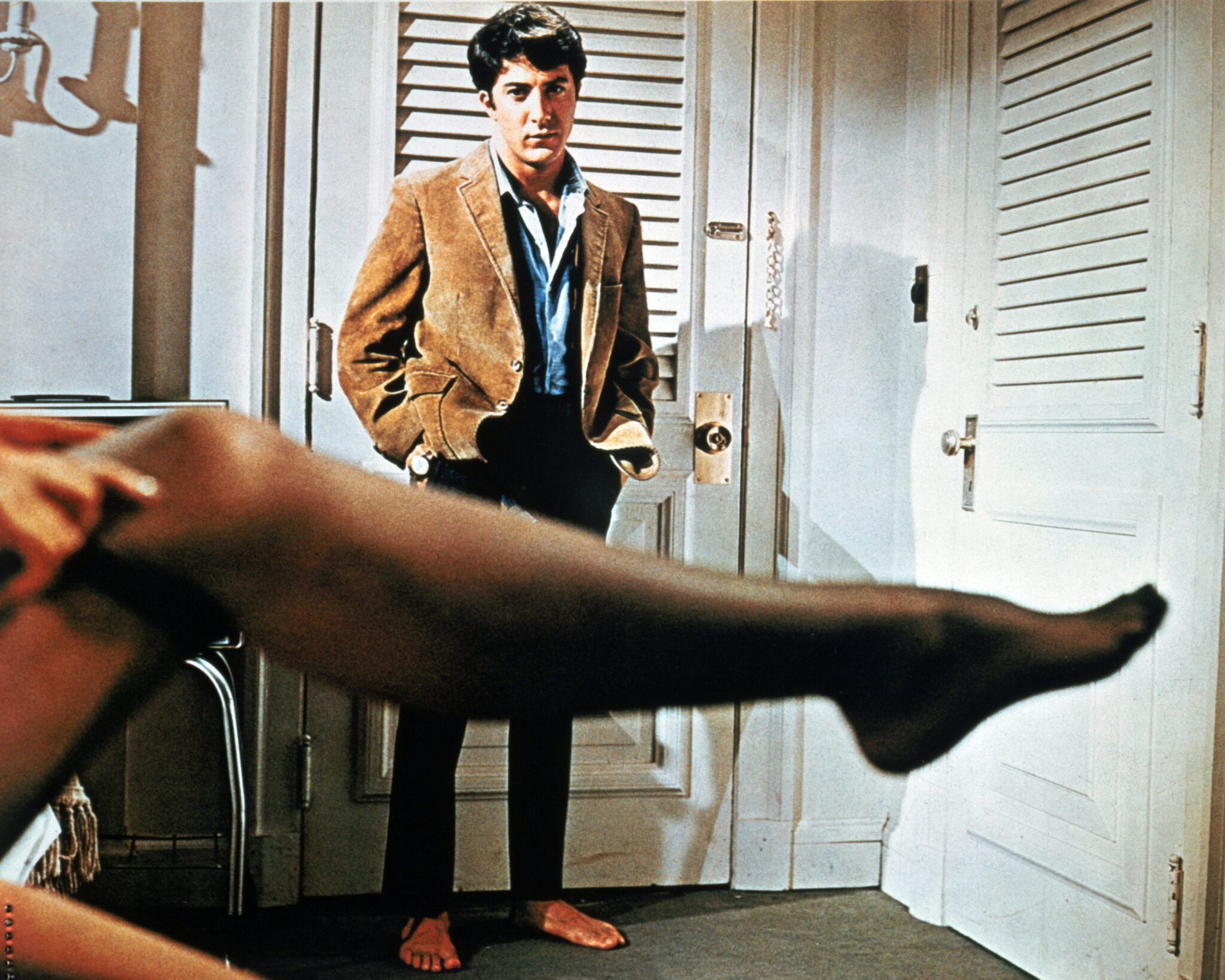
Mrs. Robinson’s leg dominates the foreground while Benjamin appears framed in the distance.
The image instantly communicates the entire power dynamic.
She is confident.
He is trapped.
And sex has become something enormous and intimidating standing between Benjamin and whatever he thinks adulthood is supposed to be.
The shot became so iconic that television shows spent decades parodying it.
Roseanne recreated the visual joke in a fantasy sequence.
The Simpsons also referenced The Graduate in an episode involving Mrs. Krabappel attempting to seduce substitute teacher Mr. Bergstrom.
The joke contained an especially clever detail.
Mr. Bergstrom was voiced by Dustin Hoffman himself.
It was another example of just how deeply The Graduate entered popular culture.
Its lines became references.
Its soundtrack became timeless.
Its cinematography was imitated.
Mrs. Robinson became cultural shorthand for a seductive older woman.
And Benjamin’s uncertainty became recognizable to generations of young people who reached adulthood only to discover that nobody had provided instructions for what came next.
That may ultimately explain why the movie has survived so well.
Strip away the scandalous affair and famous seduction scenes, and The Graduate is really about confusion.
Benjamin has achieved everything he was told to achieve.
He went to college.
He graduated.
His parents are proud.
People are asking about his future.
And he has absolutely no idea what he wants.
The adults surrounding him offer advice, expectations and opportunities, but very little understanding.
Even his rebellion becomes confused.
He doesn’t necessarily know what he is rebelling toward.
The movie’s famous ending captures that uncertainty perfectly.
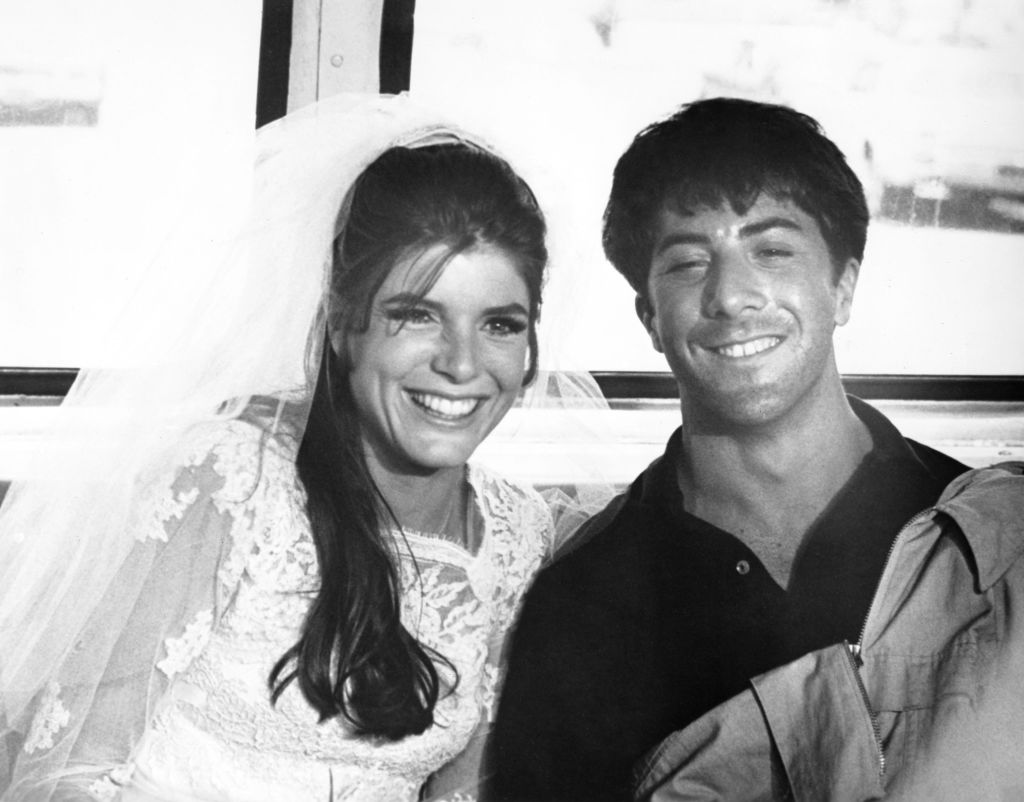
Benjamin and Elaine have seemingly achieved their dramatic romantic escape.
They run away together.
They climb onto the bus.
At first, they are thrilled.
Then they sit.
The smiles slowly disappear.
Neither says anything.
They stare forward.
They got what they wanted.
Now what?
That final question is why The Graduate remains more than a collection of famous scenes.
Dustin Hoffman brought awkwardness and vulnerability to a leading role that Hollywood could easily have filled with a conventional heartthrob.
Anne Bancroft created a character so powerful that Mrs. Robinson followed her for the rest of her life.
Mike Nichols used framing, editing, music and performance to capture a generation beginning to question the life it had inherited.
And Simon & Garfunkel provided music that became inseparable from the images.
Nearly 60 years later, the little imperfections only make the film more fascinating.
The disappearing lipstick.
The strange lighting.
The mysteriously silent stereo.
The body doubles.
The casting choices that almost gave audiences a completely different movie.
And that unforgettable hotel moment when Dustin Hoffman lost his composure, turned toward the wall and tried desperately not to laugh.
A mistake that should have ruined the take ended up making it better.
Perhaps that’s fitting.
Because so much of The Graduate is about people who don’t know what they’re doing, pretending that they do.
And somehow, out of all that uncertainty, Hollywood created a classic.