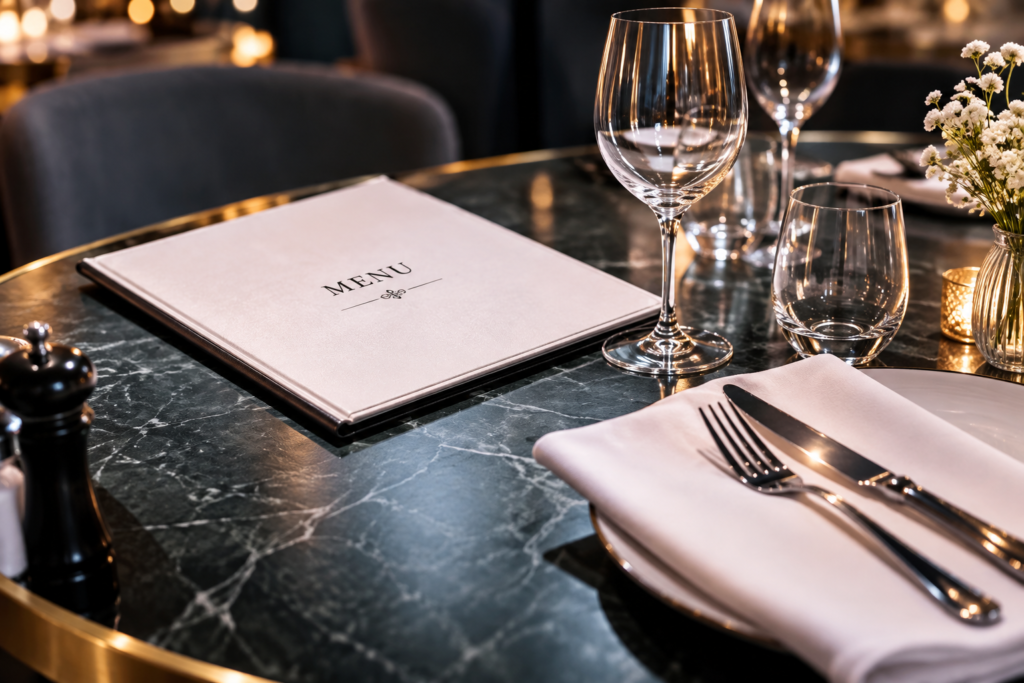
By the following morning, I would realize it was the luckiest $400 I’d ever spent.
Because the couple had left something behind.
And it belonged to my mother, who had been missing for four months.
Four hundred dollars was a lot of money in my world.
It was nearly two weeks of groceries if I was careful.
It was my electric bill with enough left over to put toward tuition.
It was gas.
Textbooks.
A train ticket home.
Four hundred dollars was not dinner.
At least not to people like me.
I was attending college one state away from home and working evenings at Bellamy’s, an expensive restaurant near campus where a bottle of wine could cost more than my weekly grocery budget.
Normally, I sent whatever money I could spare home.
But for the previous four months, nearly every spare dollar had gone toward finding my mother.
Her name was Evelyn.
If you’d met her, you’d understand why her disappearance made absolutely no sense.
My mother did nothing spontaneously.
She scheduled dentist appointments six months in advance.
Receipts went into labeled folders.
She called me every Sunday at exactly eight.
Not around eight.
Eight.
Her kitchen towels had designated hooks.
She planned grocery trips.
She wrote lists.
She checked lists.
Then she checked them again.
And one morning, Evelyn simply vanished.
No suitcase was missing.
Her purse was still home.
So was her phone.
Her clothes.
Her medication.
There was no note.
Nothing.
I rushed home as soon as I heard.
For days, I spoke to police officers and repeated the same facts.
No, she hadn’t mentioned traveling.
No, she wasn’t having relationship problems.
No, she wouldn’t leave without her medication.
No, she would never disappear without calling me.
But there was no obvious evidence of violence.
No reliable witness.
No clear direction to search.
The investigation seemed to stall almost immediately.
I contacted a private investigator.
His price might as well have been a million dollars.
So I did what I could afford.
I made posters.
Hundreds of them.
MISSING.
EVELYN MERCER.
Her photograph.
Her description.
My phone number.
I taped them inside supermarkets.
Laundromats.
Bus stations.
Coffee shops.
Gas stations.
Diners.
I covered my college campus with them.
My coworkers had copies.
I carried several folded inside my bag so that if I met somebody new, I could hand them one.
Every morning, I checked my phone expecting a miracle.
Every night, I went to sleep without one.
Then came that Friday.
Shortly after seven, a couple was seated in my section.
They looked wealthy.
Not flashy.
Comfortably wealthy.
The kind of people who didn’t look at the right side of a menu before ordering.
The man had silver hair and wore an expensive-looking jacket.
The woman wore a dark green dress and a gold bracelet.
“Anniversary,” she told me when I asked whether they were celebrating anything.
“Thirty-two years,” her husband added.
“Congratulations.”
“Thank you.”
They were polite.
Kinder than many of Bellamy’s regular customers, actually.
But something about them seemed off.
The man kept checking his phone beneath the table.
Every time he did, his wife stopped speaking and watched his face.
“Everything okay?” I eventually asked.
The woman forced a smile.
“Yes. We’re just waiting on some news.”
I didn’t pry.
They ordered oysters.
Filet mignon.
Lobster.
Three cocktails.
Then a bottle of Bordeaux from the locked wine cabinet.
They barely touched the wine.
By the time they declined dessert, their total was $407.63.
“Could we have the check?” the man asked.
“Of course.”
I brought the leather folder.
Then another table flagged me down because their drinks hadn’t arrived.
I couldn’t have been away more than three minutes.
When I returned, table twelve was empty.
At first, I wasn’t worried.
Restroom, I thought.
Maybe outside for a phone call.
Then I saw the payment tray.
Empty.
I checked the restrooms.
Nothing.
I hurried toward the entrance.
Gone.
My stomach dropped.
I rushed into my manager’s office.
“Jett.”
He barely looked up.
“What?”
“Table twelve left.”
“Okay?”
“They didn’t pay.”
That got his attention.
He sighed.
“Maybe they stepped outside.”
“They’re gone.”
“You sure?”
“Yes.”
“Did you check the bathrooms?”
“Yes.”
“Parking lot?”
“Yes.”
I pointed toward the security monitors.
“Check the cameras.”
Jett leaned back.
“Laura, we’re slammed.”
“It’s over four hundred dollars.”
“You know the policy.”
My stomach twisted.
“What policy?”
He gave me a look.
I knew exactly what he meant.
Walkouts came out of the server’s pocket.
“Jett, I didn’t do anything wrong.”
“You were responsible for the table.”
“I can’t physically stop people from leaving.”
“Then take it as a lesson.”
A lesson.
I stared at him.
As though I’d invited two strangers into the restaurant and asked them to steal from me.
“Four hundred dollars is almost everything I have.”
His expression softened slightly.
But not enough.
“I’m sorry.”
I paid the bill at the end of my shift.
$407.63.
My hands shook while I signed the paperwork.
Then I went outside, climbed into my car, and cried.
Not just because of the money.
Because of everything.
My mother was missing.
The police had no answers.
I was falling behind in school.
I was working constantly.
And now more than $400 had disappeared because two strangers couldn’t be bothered to pay for lobster and wine.
Eventually, I drove home.
I slept maybe three hours.
At eight the next morning, my phone rang.
Jett.
I almost ignored him.
“What?”
“Laura, can you come in?”
“My shift starts at five.”
“I know.”
Something in his voice made me sit up.
“What happened?”
“The cleaners found something.”
“What?”
“Just come here.”
Twenty minutes later, I walked into Bellamy’s wearing yesterday’s jeans.
Jett was waiting beside table twelve.
He looked nervous.
That frightened me more than anything.
“What happened?”
He held up a small clear plastic bag.
“The cleaning crew found this wedged behind the booth.”
Inside was a ring.
Gold.
Three tiny diamonds.
A pale blue stone.
My heart stopped.
Jett didn’t have to ask.
He knew.
I’d shown that ring to everyone who worked there.
It was in photographs of my mother.
It was mentioned on the missing-person posters.
I took the bag.
My fingers trembled.
“No.”
“Laura?”
I stared closer.
There was a scratch along the band.
One prong beside the blue stone bent slightly inward.
I knew that ring.
I’d watched it flash beneath the kitchen light while Mom kneaded bread.
I’d seen her twist it around her finger when she was nervous.
She’d worn it every day for twenty-three years.
After she disappeared, we found almost all of her jewelry at home.
But not this.
This ring had disappeared with her.
“It’s hers.”
Jett swallowed.
“Your mom’s?”
I nodded.
The room blurred.
“The couple had it.”
Suddenly, the missing $407 didn’t matter.
Nothing mattered except the ring in my hand.
“Show me the cameras.”
Jett didn’t argue.
We went into his office.
He pulled up the previous night’s footage.
There they were.
Table twelve.
We watched them eat.
Watched the man check his phone.
Watched the woman reach into her purse.
“Stop.”
Jett froze the footage.
“Back up.”
He did.
“Play it slowly.”
The woman dug through her purse.
As she withdrew her hand, something caught briefly against the clasp.
A tiny object fell onto the booth.
My mother’s ring.
It rolled into the narrow gap between the cushion and the wall.
The woman never noticed.
“Oh my God.”
A minute later, the man’s phone lit up.
He answered.
His expression changed instantly.
He listened.
Then went pale.
He turned the phone toward his wife.
Her hand flew to her mouth.
They stood.
Fast.
So fast she nearly knocked over her chair.
The man grabbed her coat.
The woman grabbed her purse.
And they rushed out.
Jett leaned closer to the screen.
“They weren’t trying to skip the check.”
“What?”
“Look at them.”
He replayed it.
“They forgot it.”
I didn’t care why they’d left.
I cared where they’d gone.
We found the valet who’d been working the night before.
“Do you remember this couple?”
I showed him a still from the footage.
“Yeah.”
“Where did they go?”
“How would I know?”
“Did they say anything?”
He frowned.
Then nodded.
“The guy was on his phone.”
“What did he say?”
“Something like…”
The valet thought.
“Call the hospital. Tell them we’re coming.”
My heart slammed against my ribs.
“Which hospital?”
“I don’t know.”
There were only a few nearby.
I grabbed my bag.
Jett reached for his keys.
“I’m coming.”
“No.”
“Laura, you have no idea who these people are.”
“Exactly.”
“Then don’t go alone.”
But I was already moving.
For four months, I’d waited.
Waited for police.
Waited for phone calls.
Waited for someone to recognize a poster.
Waited for somebody else to find the clue that would bring my mother home.
Now I had one.
I wasn’t waiting anymore.
The closest hospital was twelve minutes away.
I made it in eleven.
At reception, I pulled one of Mom’s missing-person posters from my bag.
“Please.”
The receptionist looked up.
“I’m trying to find my mother.”
I flattened the poster.
“Evelyn Mercer. She’s been missing for four months.”
The woman studied the photograph.
“I’m sorry, but I can’t disclose patient information.”
“I understand.”
I held up the ring.
“But this belonged to her.”
Her expression changed.
“Two people had it last night. They left the restaurant where I work after receiving a call from a hospital.”
The receptionist looked at the ring.
Then the poster.
Then her computer.
“Can you describe them?”
I did.
She typed.
Seconds passed.
Then:
“We don’t have anyone registered under Evelyn Mercer.”
My hope collapsed.
“Oh.”
Then the receptionist frowned.
“Wait.”
She typed again.
“What?”
“An unidentified woman was admitted several weeks ago.”
I stopped breathing.
“She was found confused and unable to provide her name or address. She’s currently under neurological care.”
“How old?”
The receptionist hesitated.
“Approximately the same age.”
“What does she look like?”
“I can’t confirm identity from here.”
“Please.”
I pushed the poster closer.
“Please just look.”
She studied it again.
“The description is similar.”
My knees weakened.
“Where is she?”
“She’s currently being treated.”
“Why?”
“She had a seizure yesterday.”
Yesterday.
The phone call.
The couple abandoning dinner.
Everything connected.
“Are there two people with her?”
The receptionist looked uncomfortable.
“I can’t—”
“A man with silver hair and a woman named—”
I stopped.
I didn’t know their names.
“Please.”
The receptionist glanced toward security.
“They could have hurt her.”
That wasn’t based on evidence.
It was fear.
Four months of it.
“They had her ring.”
My voice cracked.
“I’m her daughter.”
The receptionist made a phone call.
After a quiet conversation, she printed a visitor badge.
“Third floor.”
I grabbed it.
“Room 318.”
“Thank you.”
“A nurse will meet you.”
I turned.
“Miss?”
I looked back.
The receptionist’s expression softened.
“Prepare yourself. She may not recognize you.”
The elevator took forever.
A nurse met me upstairs.
She walked me toward room 318.
Through the narrow window in the door, I saw them.
The couple from Bellamy’s.
They were standing beside the bed.
The woman’s green dress was wrinkled.
The man’s silver hair was disheveled.
Neither looked wealthy or elegant anymore.
They looked exhausted.
I pushed open the door.
The woman turned.
Her eyes immediately dropped to the plastic bag in my hand.
“That ring.”
“Where did you get it?”
She blinked.
“What?”
“You had my mother’s ring.”
The man raised both hands.
“Please. Keep your voice down.”
I stepped closer.
“What did you do to her?”
“Your mother?”
The woman’s face changed.
Then I saw the patient.
Everything else disappeared.
My mother lay beneath a white blanket.
Thin.
Pale.
Smaller than I remembered.
An IV was taped to her hand.
“Mom?”
She didn’t respond.
I grabbed the bedrail.
For four months, I’d imagined finding her.
In some versions, she ran toward me.
In others, she explained everything.
I had never imagined this.
The woman began crying.
“We didn’t hurt her.”
I turned.
“Then explain the ring.”
Her name was Margaret.
Her husband was Thomas.
Several weeks earlier, they had been driving home outside town when they saw a woman wandering beside the road.
Barefoot.
Confused.
Alone.
It was my mother.
“She couldn’t tell us her name,” Margaret said.
“She didn’t know where she lived.”
They called an ambulance.
Margaret rode with her.
“Why?”
“She wouldn’t let go of my hand.”
Margaret wiped her eyes.
“Every time I tried to move away, she became frightened.”
They followed Mom to the hospital.
Doctors suspected an injury or neurological event had affected her memory.
She had no identification.
No phone.
Nothing connecting her to home.
The hospital registered her as unidentified.
And because she had been found outside the jurisdiction handling Mom’s missing-person case, nobody made the connection.
“But the ring?”
Thomas answered.
“Hospital staff removed it during an examination.”
“It had become loose,” Margaret explained.
“She kept trying to put it back on.”
Margaret offered to keep it safe.
“I didn’t want it sitting around the room.”
She swallowed.
“There are so many people coming and going. I thought somebody might take it.”
“So you kept it?”
“In my purse.”
I looked at my mother.
“You’ve been visiting her?”
Margaret nodded.
“Almost every day.”
“Why?”
She seemed surprised by the question.
“Because she didn’t have anyone.”
Those words hit me.
“She did.”
My voice cracked.
“She had me.”
“I know that now.”
“I was looking for her.”
“I believe you.”
“I never stopped.”
Margaret began crying again.
“We kept hoping somebody would find her.”
The previous night had been Margaret and Thomas’s thirty-second wedding anniversary.
After weeks of hospital visits, they decided to go out for dinner.
That was why Thomas kept checking his phone.
They’d asked hospital staff to call immediately if anything changed.
Halfway through dinner, it did.
Mom suffered a seizure.
“When the hospital called, we panicked,” Thomas said.
“We forgot everything.”
“Including the bill.”
He looked embarrassed.
“Yes.”
Margaret suddenly reached into her purse.
“Oh my God.”
She looked at me.
“We never paid.”
I almost laughed.
The sound came out more like a sob.
“No.”
“We’ll reimburse you.”
I shook my head.
“I don’t care.”
And I didn’t.
Not anymore.
Because if they had paid normally, Margaret might have noticed the missing ring.
She might have searched the booth.
She might have found it.
She might have slipped it back into her purse.
And I might never have known she’d been there.
The $407 walkout had made the booth memorable.
It brought Jett back to table twelve.
It made him pay attention when the cleaners found the ring.
That awful bill had become the first real clue I’d had in four months.
Then a faint sound came from the bed.
Everyone stopped.
My mother’s fingers moved.
I rushed toward her.
“Mom?”
Her eyelids fluttered.
Opened.
Her gaze drifted around the room.
Then settled on me.
I held my breath.
For several seconds, there was nothing.
No recognition.
The receptionist’s warning came back.
She may not recognize you.
Then Mom’s brow furrowed.
Her lips moved.
“Laura?”
One word.
That was all it took.
Everything inside me broke.
“Yes.”
I bent over her.
“Yes, Mom.”
I started laughing and crying at the same time.
“It’s me.”
Her hand slowly lifted.
I pressed my cheek into her palm.
“I knew…”
Her voice was weak.
“What?”
“I knew you were somewhere.”
I laughed through my tears.
“Mom, I’ve been looking everywhere.”
She closed her eyes.
“I couldn’t remember.”
“It’s okay.”
“I couldn’t remember the way back.”
I took the ring from the plastic bag.
Carefully, I slid it onto her finger.
It was loose.
Mom curled her fingers around mine to hold it in place.
“Take me home, Laura.”
“I will.”
“Promise?”
I remembered how many promises I’d made to myself during those four months.
That I’d find her.
That I wouldn’t stop.
That someday my phone would ring and somebody would finally say:
We found Evelyn.
“I promise.”
Behind me, Margaret was crying.
Thomas wrapped an arm around her.
I looked at them differently now.
Hours earlier, I’d believed they might have taken my mother from me.
Instead, they’d done the opposite.
They’d found her barefoot beside a road.
Called for help.
Followed her to the hospital.
Held her hand.
Visited when they had absolutely no obligation to return.
They stayed beside a woman whose name they didn’t even know because somebody needed to.
I would never forget that.
And I would never forget table twelve.
The oysters.
The lobster.
The Bordeaux.
The empty payment tray.
The $407.63 that I’d cried over because I couldn’t imagine how I would replace it.
Thomas reimbursed every cent.
Jett apologized too and returned the money Bellamy’s had taken from me.
But none of that was why I eventually began calling it the luckiest $400 I’d ever spent.
It was lucky because of what happened after the couple walked away.
If Margaret hadn’t dropped the ring, the cleaners wouldn’t have found it.
If the couple hadn’t rushed out, Jett might never have paid special attention to their booth.
If Jett hadn’t called me, I wouldn’t have watched the security footage.
If we hadn’t watched the footage, I wouldn’t have learned they’d rushed to a hospital.
And if I hadn’t followed that tiny chain of accidents, I don’t know how much longer my mother might have remained Evelyn Mercer to nobody.
Just an unidentified woman in room 318.
It took time before she could come home.
Her memory didn’t return all at once.
Recovery came in pieces.
Names.
Rooms.
Recipes.
Sunday phone calls.
Some things returned quickly.
Others didn’t.
Margaret and Thomas kept visiting.
This time, they knew Mom’s name.
Eventually, I asked Margaret why she’d stayed with a complete stranger that first day.
She shrugged.
“She was frightened.”
“As simple as that?”
“What other reason do you need?”
I thought about that answer for a long time.
Four months of searching had taught me how easily people could become invisible.
A face on a poster.
A police report.
An unidentified patient.
Someone else’s problem.
Margaret and Thomas had refused to let my mother become that.
And strangely enough, a $407 restaurant bill had led me straight to them.
I used to think luck looked like winning something.
Money.
A scholarship.
A perfect opportunity arriving at exactly the right moment.
Now I know it can look completely different.
Sometimes luck looks like two strangers forgetting to pay for dinner.
Sometimes it looks like a ring falling into the narrow space behind a restaurant booth.
Sometimes it costs you $407.63 and makes you cry in your car.
And sometimes, the thing you think has just made your life worse turns out to be the first breadcrumb leading you home.