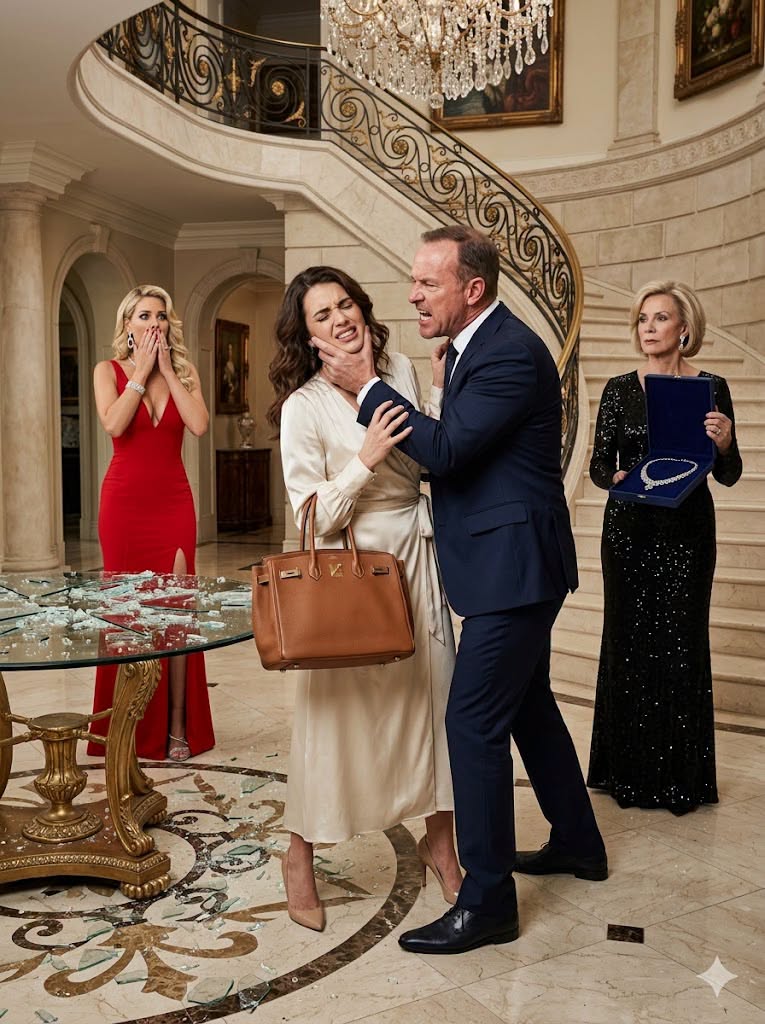
What they didn’t know was that Sterling Global had survived because of me.
Years earlier, when the company was drowning in debt and struggling to secure financing, I had quietly brought the problem to my family’s investment firm, Escalante Holdings. We provided restructuring capital and guarantees through entities Andrew never bothered tracing back to me. He believed banks had regained confidence in him. In reality, my family’s money had given him the opportunity to rebuild.
So when he demanded that I leave our marriage while openly choosing Brenda, I didn’t argue.
I packed a suitcase and called my father.
“I’m done protecting him.”
That didn’t magically freeze every dollar Andrew possessed. But Escalante Holdings controlled significant financing Sterling Global still depended upon. Our lawyers immediately began reviewing what could be suspended, terminated or restricted under the agreements already in place.
What they found was worse than infidelity.
Andrew had used versions of my signature on financial documents I had never approved. There were also suspicious transactions connected to jewelry Andrew and Brenda had previously claimed was stolen, along with company expenses that appeared to have benefited them personally.
The next morning, Andrew and his mother arrived at Escalante Tower demanding an explanation for the sudden scrutiny around Sterling’s financing.
Then they saw me sitting with the legal team.
Andrew stared at the Escalante name behind me and finally understood.
“You?”
“My family,” I corrected.
His mother went pale.
For years, she’d treated me as though I had entered their family with nothing. Now she was learning that much of the stability surrounding her had depended on money originating from mine.
But I wasn’t there to humiliate them. The documents mattered more than the revelation.
Our attorneys explained that Escalante would no longer provide discretionary financial support while suspected forgery, misuse of funds and contractual breaches were investigated. Andrew’s board and other lenders would have to decide what happened to Sterling Global from there.
Without the protection he’d taken for granted, his position weakened quickly.
The board opened an independent review. Questionable transactions were examined, and Andrew eventually lost control of the company through a much longer process involving lenders, shareholders and directors—not because I could simply take it from him.
My marriage ended through the same less-dramatic process.
Lawyers.
Financial disclosures.
Property disputes.
Divorce proceedings.
Brenda disappeared from Andrew’s life once the money and status surrounding him began collapsing. Whatever role she had played in questionable financial matters was investigated separately rather than being resolved through some dramatic confrontation in our living room.
I thought that would be the end of the Sterling story.
Instead, the corporate review uncovered something my father had never fully explained to me.
Decades earlier, Sterling Motors had not been created solely by Andrew’s father.
My mother had been involved.
So had Andrew’s aunt, Evelyn.
Old incorporation documents, correspondence and design records suggested the two women had played substantial roles in developing the original business. Later changes in ownership had pushed both of them out under circumstances my father had always considered suspicious.
That history was one reason he had agreed to rescue Sterling years earlier.
Not because he had secretly planned some elaborate revenge, but because he knew our family had unfinished history with the company and wanted Escalante protected if Sterling failed again.
Now attorneys began examining that history properly.
Some claims were too old or difficult to pursue. Others were supported by surviving agreements and records. The truth was more complicated than simply declaring that Sterling had been “stolen,” but one fact became increasingly difficult to deny: the company’s official family history had minimized the women who helped create it.
Then we found Clara.
Evelyn’s daughter was still alive.
She had grown up hearing an entirely different version of Sterling Motors—one in which her mother had helped build something important before being pushed aside and eventually giving up the fight.
Meeting Clara changed what I wanted.
I no longer cared about replacing Andrew’s family name with mine and declaring victory. I wanted the company that emerged from the restructuring to acknowledge the people who had actually built it.
Over the following months, Sterling’s assets and ownership were reorganized. Escalante Holdings participated as an investor alongside others, and Clara became involved in preserving Evelyn’s contribution to the company’s history.
Among Evelyn’s surviving possessions were old drawings, notebooks and correspondence documenting her early work. They didn’t magically establish ownership by themselves, but they gave us something almost as valuable: a record of a woman whose contribution had nearly disappeared.
Six months later, we reopened the company’s original facility under new leadership.
Former employees attended. So did investors, my father, Clara and her young daughter Lily.
A display near the entrance contained reproductions of my mother’s and Evelyn’s early work, with both women finally identified by name.
I stood beside Clara as Lily examined one of her grandmother’s drawings.
“Grandma made this?” she asked.
Clara smiled.
“She helped.”
Those two words meant more to me than putting Escalante across the building in enormous letters ever could.
Andrew had believed throwing me out would remove me from his life while allowing him to keep everything else unchanged.
Instead, his betrayal forced me to stop protecting a system that had depended on my silence.
I lost a marriage.
He lost control of a company he’d treated as his birthright.
But what emerged afterward wasn’t really a story about me defeating my husband.
It was about finally examining who had built the things our families inherited—and making sure the women whose work had been pushed into the background were no longer missing from the story.