Once.
Five times.
Ten.
Eventually, thirty times.
Nothing.
I stood beside his mother’s bed alone as doctors explained there was little more they could do.
Shortly before she died, Rosalind opened her hand and pressed something into mine.
A tiny silver key.
She couldn’t explain it.
She simply closed my fingers around it.
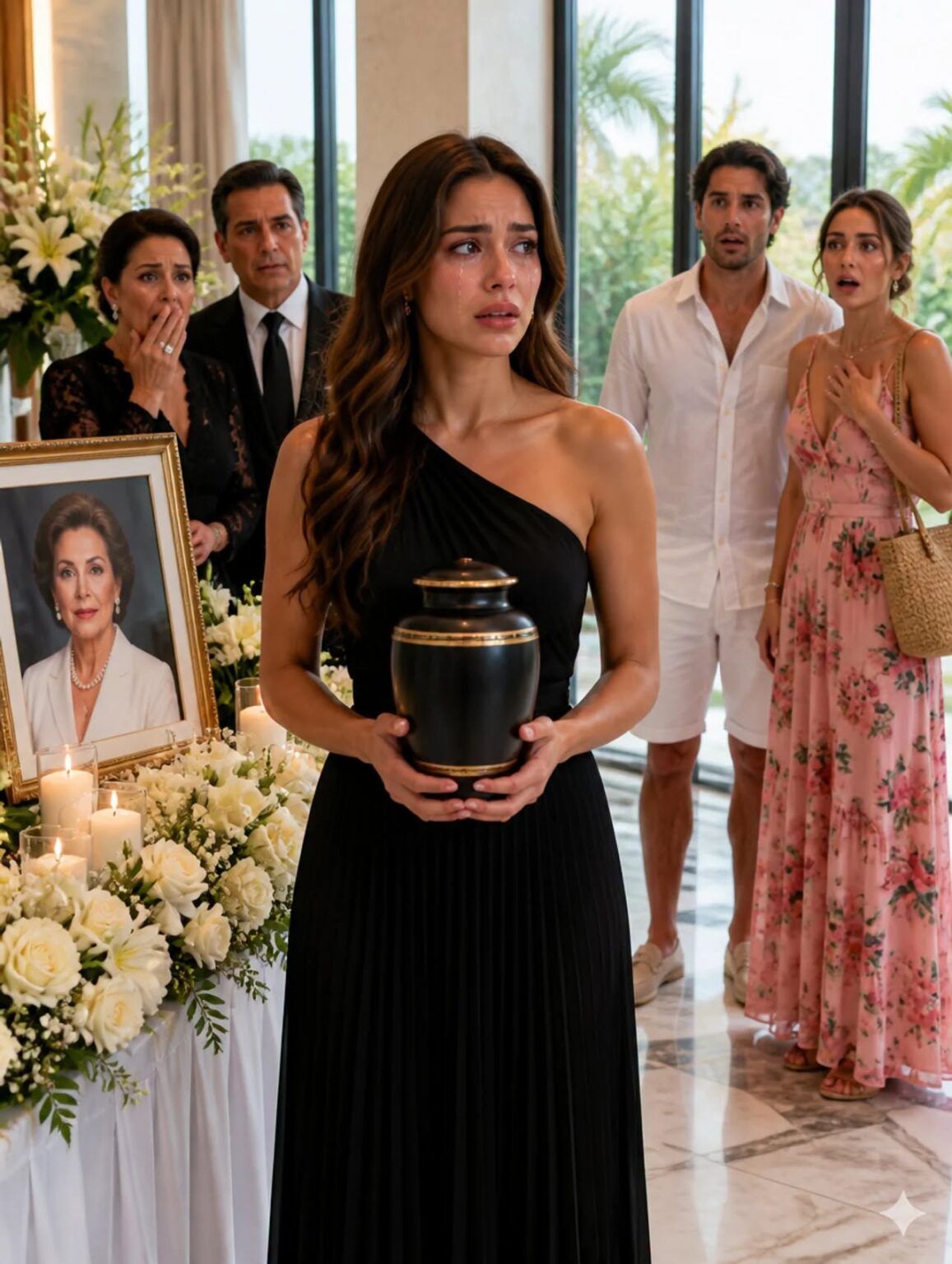
Over the next two days, I arranged the funeral while Brandon’s relatives questioned nearly every decision I made.
His aunt Florence criticized the flowers.
His uncle Gregory complained about the service.
And everyone kept asking the same question.
“Where is Brandon?”
I knew.
Days earlier, I’d found a reservation in his truck for a luxury resort in Honolulu.
Two guests.
There were also receipts for expensive jewelry I had never received.
While his mother was dying, my husband was in Hawaii with another woman.
I said nothing.
Not yet.
After the memorial, Rosalind’s attorney, Arthur Pendleton, asked me to visit his office.
On his desk sat a small wooden box secured with an old-fashioned lock.
“Rosalind told me you’d have the key.”
My hands began shaking.
I inserted the silver key.
Inside were financial records, a sealed letter and documents relating to her estate.
Arthur explained that Rosalind had revised her will.
To my astonishment, she had left the bulk of her estate to me rather than Brandon.
But the money wasn’t the most disturbing thing inside that box.
Rosalind had preserved records of unusual deposits into accounts associated with her.
Many appeared connected to Summit Crest Construction, a company controlled by Brandon’s uncle Gregory.
Brandon worked as a senior procurement manager.
According to Rosalind’s notes, she’d become suspicious months earlier that her accounts were being used in connection with payments she didn’t understand.
She had preserved statements and supporting records because she feared something improper was happening.
Whether those transactions amounted to fraud wasn’t something I could decide.
That was for auditors, lawyers and, if necessary, authorities.
But Rosalind clearly believed the records mattered.
Then I opened her letter.
She apologized for what I’d endured.
She thanked me for caring for her when her own son wouldn’t.
And near the end, she wrote something I read several times:
Take your life back.
The following morning, Brandon finally appeared at a family gathering.
He performed grief beautifully.
He talked about how devastated he was.
Then, once we were discussing legal matters, he presented divorce paperwork and accused me of taking documents that belonged to his mother.
Arthur stopped him.
He explained that Rosalind had made her own estate decisions while legally able to do so and that probate would determine how those instructions were carried out.
Brandon stared at me.
“You knew?”
“I knew your mother trusted me.”
Then I asked him where he’d been while she was dying.
The room went quiet.
Brandon tried to avoid the question.
So I told them.
Honolulu.
Florence’s expression changed immediately.
I also knew the name of the woman who’d been with him.
Chloe.
An old tablet Brandon had left behind contained messages and audio that appeared to show the two of them discussing Rosalind’s finances and wondering where she kept certain account information.
I didn’t need to play every recording for the room.
Arthur had already preserved anything potentially relevant.
Then Gregory saw the financial statements.
His face changed.
Payments connected to his construction company appeared repeatedly in Rosalind’s records.
He immediately began explaining that there were legitimate business reasons for the transfers.
Perhaps there were.
That was exactly why the records needed independent review.
Brandon became increasingly agitated.
He blamed his mother.
He blamed accounting.
Eventually, he blamed me.
But the situation had already moved beyond a family argument.
Concerns had also surfaced inside Brandon’s employer regarding procurement activity and vendor relationships.
He was placed on administrative leave while the company investigated.
Contracts involving Summit Crest were among the transactions reviewed.
That didn’t mean Brandon or Gregory was automatically guilty of a crime.
It meant people other than family members were finally examining the paperwork.
Brandon called me afterward.
For the first time, he sounded frightened.
“Please help me.”
I’d spent years helping him.
I’d cared for his mother while he complained.
I’d protected his reputation.
I’d made excuses for his absence.
And when Rosalind was dying, I’d called him thirty times.
He hadn’t answered once.
“I can’t fix this for you,” I said.
Our divorce proceeded.
So did the corporate investigation.
Where investigators believed records warranted further examination, the appropriate professionals and authorities handled them.
I stayed out of it as much as possible.
I had spent enough of my life managing Brandon’s problems.
Probate took time too.
Eventually, Rosalind’s valid estate instructions were carried out, and I received what she had legally chosen to leave me.
I used part of it to establish a small charitable fund supporting family caregivers—people who quietly organize medications, appointments, meals and sleepless nights while rarely being recognized for what they do.
Then I sold the large house.
I didn’t want another monument to responsibility.
I bought an apartment overlooking a green park.
The first piece of furniture I chose was a wooden dining table with four chairs.
Nothing extravagant.
I simply wanted a place where people could sit together and speak honestly.
Months later, on a bright Sunday afternoon, I visited Rosalind’s memorial garden carrying white lilies.
Before leaving, I opened my hand.
The tiny silver key was still there.
It had once opened a wooden box.
But that wasn’t why I kept it.
For three years, I thought caring for Rosalind meant enduring everything surrounding her too.
Her demanding relatives.
Her absent son.
My failing marriage.
Rosalind’s final gift wasn’t really the estate.
It wasn’t the financial records either.
It was permission to stop confusing loyalty with self-erasure.
My husband ignored thirty calls while his mother was dying.
She answered me with one small key.
And somehow, that was enough to finally open the door out of the life I’d been afraid to leave.