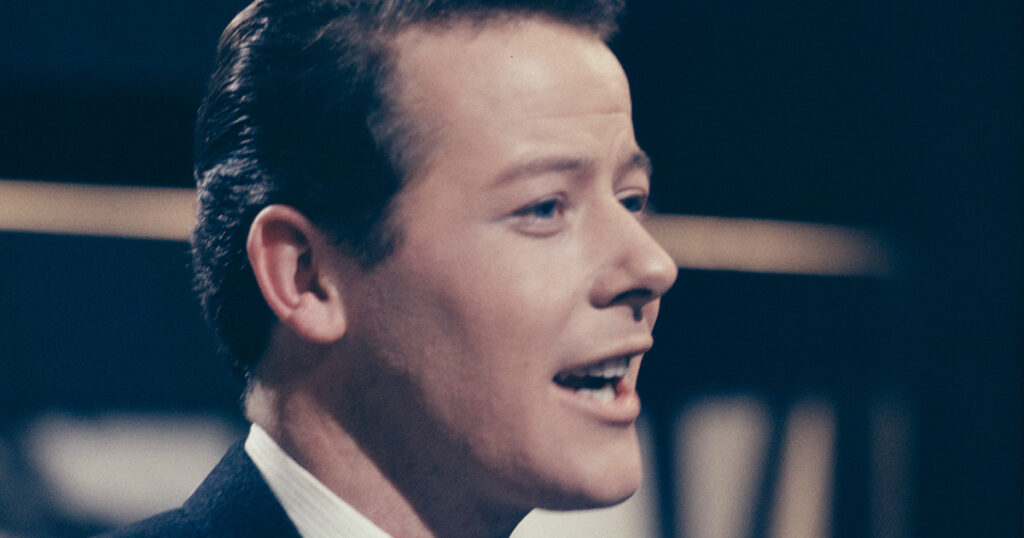
Best remembered for his chart-topping recording of “Only Sixteen,” Douglas died peacefully at his home on the Isle of Wight following a short illness, according to his family.
For generations of listeners, his death marks the passing of another performer whose music became woven into memories of a very different era.
Long before streaming services and smartphones, songs arrived through radios, record players and television appearances. A favorite single could become the soundtrack to a first romance, a school dance or a summer that remained vivid decades later.
Craig Douglas was one of the singers whose voice became part of that soundtrack.
Born Terence Perkins in Newport on the Isle of Wight, Douglas was a twin and grew up in a large family far removed from the glamorous world he would eventually enter.
As a teenager, there was little indication that international success was waiting for him.

He worked as a milkman and farm worker, earning the nickname that would follow him throughout his career: the “Singing Milkman.”
Music, however, was already becoming impossible to ignore.
When Douglas was around 15, his mother, Mildred, encouraged him to enter a local talent competition.
He agreed.
He won.
The prize itself was modest, but the performance proved far more valuable than the money. His singing attracted the attention of a local cinema manager, helping open a door that would eventually lead the teenager from the Isle of Wight into the British entertainment industry.
Even the name Craig Douglas was part of his transformation.
His manager, Bunny Lewis, reportedly decided that “Terence Perkins” was not quite right for a rising pop singer. Lewis later came across the name Craig Douglas while in Scotland and decided it would make a memorable stage name.
There were already plenty of performers called Terry, the reasoning went.
There were far fewer Craigs.
Before long, millions of music fans knew exactly who Craig Douglas was.
His breakthrough came during a remarkable period for British popular music.
Rock and roll had transformed youth culture, young singers were becoming national celebrities almost overnight, and television was helping turn recording artists into household names.
Douglas fit perfectly into that new world.
With his clean-cut appearance and smooth voice, he quickly won over young audiences.
In 1959, New Musical Express named him Best New Singer.
But it was another recording from that same year that would permanently define his career.
“Only Sixteen.”
The song had originally been associated with American soul legend Sam Cooke, but Douglas recorded his own version at Abbey Road Studios.
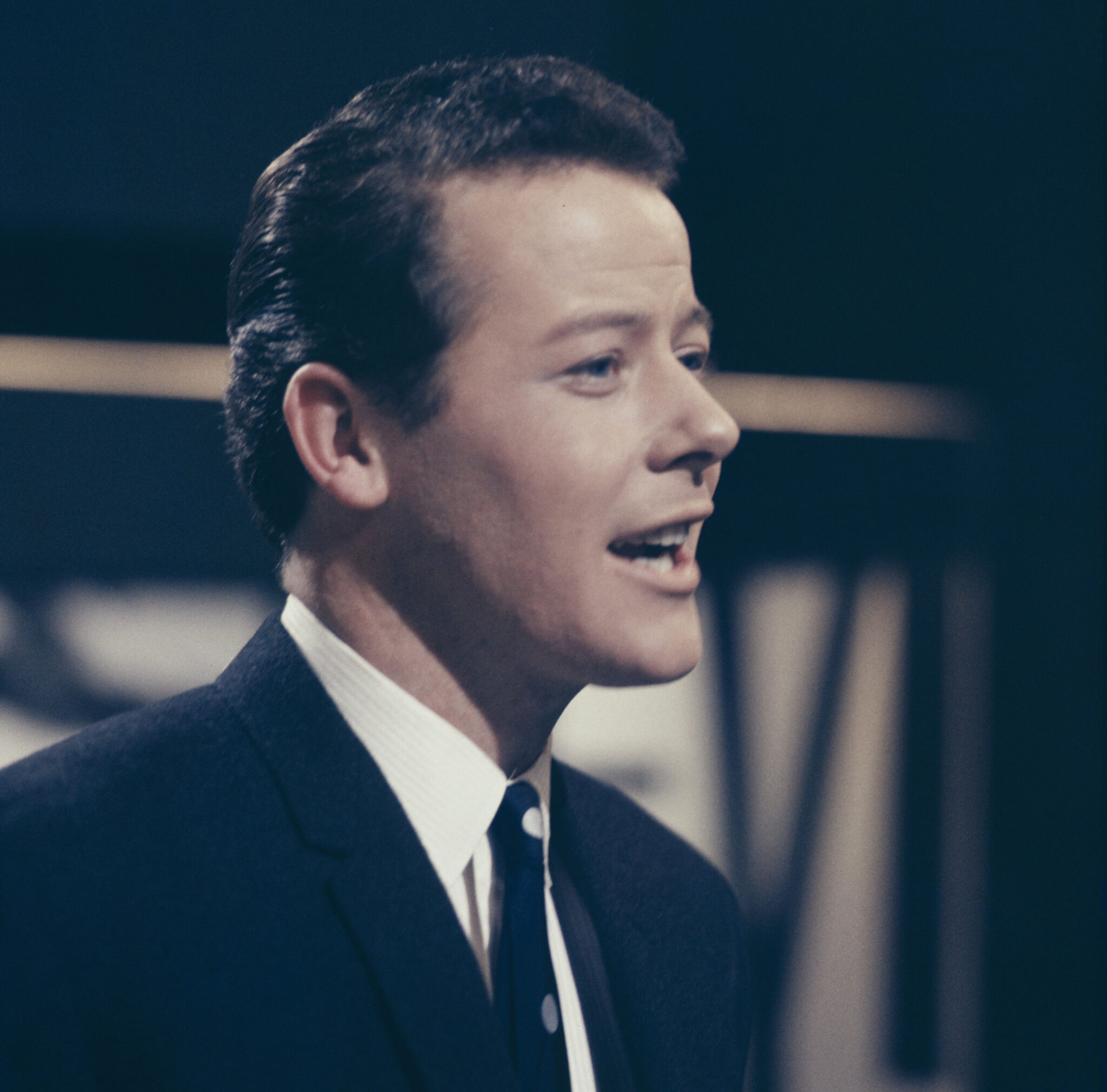
His recording became an enormous success in Britain.
It climbed all the way to No. 1 on the UK singles chart and even outsold Cooke’s original version in the country.
For Douglas, it was the song that changed everything.
Suddenly, the former milkman from the Isle of Wight was one of Britain’s biggest young pop stars.
And more than six decades later, “Only Sixteen” remained the song most closely associated with him.
Its enduring appeal came partly from its simplicity.
For listeners who heard it when it was new, the opening notes could instantly transport them back to the late 1950s—a time of record shops, jukeboxes, dance halls and radios playing the newest singles into family living rooms.
Douglas did not disappear after his signature hit.
He went on to place nine singles inside the UK Top 40 and achieved the unusual feat of scoring four consecutive No. 9 hits.
His popularity also led him toward another major European institution.
In 1961, Douglas attempted to become Britain’s representative at the Eurovision Song Contest with “The Girl Next Door.”
He was ultimately not selected, but by then his place among the recognizable faces of British pop was firmly established.
His final chart hit came in 1963 with “Town Crier,” which reached No. 36.
By that point, however, popular music was changing rapidly.
A new generation was arriving.
The Beatles were preparing to transform the industry, followed by countless other British groups who would dominate the decade.
Douglas had an intriguing connection to that history.
At one early major performance, he topped the bill over the Beatles—an extraordinary detail considering what the Liverpool group would soon become.
Douglas also appeared in the 1962 musical film “It’s Trad, Dad!,” further cementing his connection to one of the most exciting transitional periods in British popular culture.
Although his days as a regular chart star eventually ended, Douglas never entirely abandoned performing.
He continued entertaining audiences in nightclubs, theaters, cruise ships and venues around Britain.
For him, music was not simply something that belonged to his youth.
It remained part of his life for decades.

Remarkably, Douglas continued performing until 2010.
That meant audiences were still able to hear the “Singing Milkman” perform the songs associated with their youth more than half a century after his career began.
Away from the stage, Douglas also lived a colorful life.
He reportedly dated two Miss World winners during his years in the spotlight and sold more than 10 million records worldwide.
Yet one part of life remained missing.
Douglas never married and had no children.
Later in life, he admitted that this was something he sometimes regretted.
Speaking in a 2024 interview, he reflected on the possibility of having had a family of his own.
“I would have liked to have had a couple of children, but if I did, I’d miss them like mad while I was away,” he said.
Having grown up as one of nine children, Douglas explained that he would naturally have liked children himself, but the realities of constantly traveling as a performer complicated that possibility.
Eventually, he stepped away from the spotlight and returned to the Isle of Wight—the same island where his extraordinary story had begun.
There was something fitting about that.
Before the television appearances, chart records and screaming audiences, he had simply been Terence Perkins, a teenage milkman with a talent for singing.
Then one local competition changed the direction of his life.
From there came a new name.
A recording contract.
Abbey Road Studios.
A No. 1 single.
Millions of records sold.
And a song that would continue playing long after the young man who recorded it had grown old.
Now Craig Douglas is gone at 85.
But for those who remember Britain’s first great era of pop—and especially those who were young when “Only Sixteen” first came through their radios—his voice carries something that cannot be measured simply by chart positions or record sales.
It carries memories.
Memories of teenage years.
First dances.
Old record players.
Saturday nights.
And a moment in music when a 15-year-old milkman from the Isle of Wight could enter a talent contest and eventually find himself singing to millions.
The “Singing Milkman” may have sung his final song.
But whenever “Only Sixteen” plays again, Craig Douglas will be there too—a voice from a golden era that generations of listeners never completely forgot.
{"post":112170,"page":2,"next":[{"id":112168,"title":"The Cold War Origins of the World\u0027s Most Famous Household Lubricant","url":"https:\/\/new24.info\/112168"},{"id":112166,"title":"The Silent Guardian at Emily\u2019s Grave: A Husband\u2019s Discovery of a Hidden Act of Grace","url":"https:\/\/new24.info\/112166"},{"id":112160,"title":"My Daughter-in-Law Charged Me $2,000 After Inviting Me to Stay for One Week \u2013 But I Taught Her a Lesson That Wiped the Smile from Her Face","url":"https:\/\/new24.info\/112160"},{"id":112158,"title":"My Grandpa Left Every Grandchild $1\u2014Except the Granddaughter Who Visited Him Every Wednesday","url":"https:\/\/new24.info\/112158"},{"id":112153,"title":"The Private Choices Behind Dolly Parton\u2019s Final Chapter","url":"https:\/\/new24.info\/112153"},{"id":112149,"title":"A Familiar Tex-Mex Name Is Trying Again-","url":"https:\/\/new24.info\/112149"},{"id":112143,"title":"Why Refusing To Pay For Groceries Saved My Golden Retirement Years","url":"https:\/\/new24.info\/112143"},{"id":112139,"title":"My Parents Sold My Daughter\u2019s Heirloom for a Swimming Pool \u2013 Grandma Had One Crucial Document","url":"https:\/\/new24.info\/112139"},{"id":112136,"title":"I Was Breastfeeding My 5-Month-Old Baby When the Woman Sitting Next to Me on the Plane Said, \u0027Lock Yourself in the Toilet\u0027 \u2013 Then My Older Daughter Put Her in Her Place","url":"https:\/\/new24.info\/112136"},{"id":112128,"title":"Dolly Parton\u0027s Sister Stella Issues Urgent Public Message as Family Grieves","url":"https:\/\/new24.info\/112128"},{"id":112126,"title":"The Strained Relationship Between Kate and Oliver Hudson and Their Biological Father Bill Hudson","url":"https:\/\/new24.info\/112126"},{"id":112121,"title":"The Life and Tragic End of Dorothy Stratten: A Hollywood Promise Cut Short","url":"https:\/\/new24.info\/112121"},{"id":112116,"title":"Why Unplugging Your Idle Chargers Is a Simple Step Toward Better Home Electrical Safety","url":"https:\/\/new24.info\/112116"},{"id":112113,"title":"A Hidden Perspective: Rediscovering Long-Lost 9\/11 Footage Captured from a New York City Rooftop","url":"https:\/\/new24.info\/112113"},{"id":112099,"title":"Gwen Stefani, 56, Shares Emotional Statement About Blake Shelton\u0027s Dog That Has Fans Talking About His Ex \u2014 Video","url":"https:\/\/new24.info\/112099"},{"id":112097,"title":"The Digital Mirage: How Fabricated Headlines Exploit Our Collective Hunger for Celebrity Drama and Scandal","url":"https:\/\/new24.info\/112097"},{"id":112094,"title":"Paris Jackson: Defining Her Own Path Through Music, Resilience, and Personal Growth","url":"https:\/\/new24.info\/112094"},{"id":112090,"title":"My Daughter Left Home After Marriage, and What Happened Next Surprised Our Entire Family","url":"https:\/\/new24.info\/112090"},{"id":112087,"title":"My 7-Year-Old Son Started Sleeping Under His Newborn Sister\u0027s Crib \u2013 When I Heard What He Was Whispering to Her at 2 AM, I Went Pale","url":"https:\/\/new24.info\/112087"},{"id":112085,"title":"Separating Fact From Fiction: The Truth Behind Viral Claims of Extreme Juvenile Sentencing","url":"https:\/\/new24.info\/112085"}]}