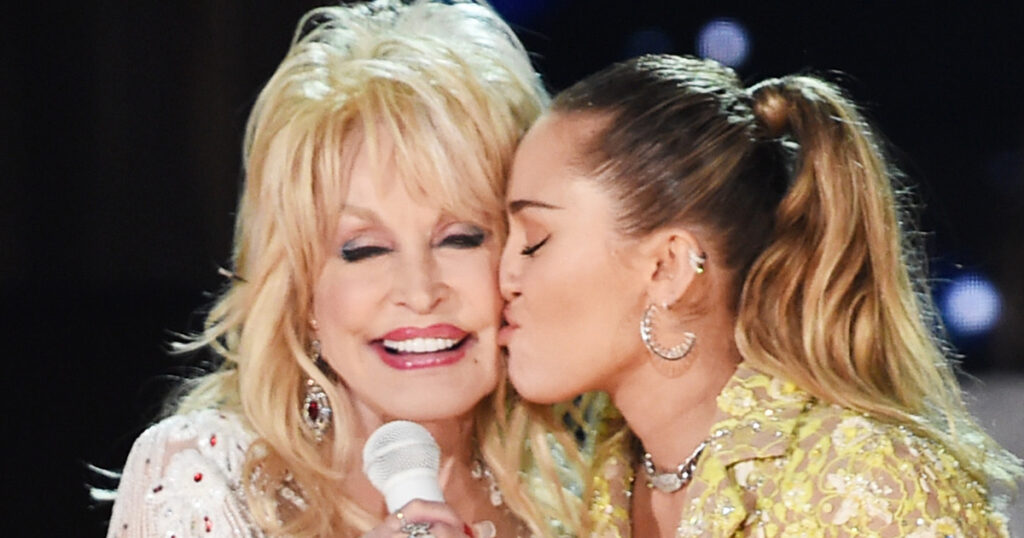
Billy Ray Cyrus has revealed a deeply personal message Parton sent him not long before her death, while his daughter, Miley Cyrus, has opened up about one of her final conversations with the woman she affectionately called “Aunt Dolly.”
Together, their memories reveal a relationship that stretched far beyond Hollywood, Nashville or the stage.
For Billy Ray, Dolly was a trusted friend who could turn an uncomfortable scandal into a joke.
For Miley, she became something closer to family — a godmother, mentor, protector and guiding presence throughout her life.
A Friendship That Survived Decades in the Spotlight
Billy Ray Cyrus has said his affection for Parton began long before he became famous himself.
“Like every little boy, I grew up loving Dolly Parton,” he wrote while remembering her.
Their personal friendship developed during the early 1990s, when Billy Ray was experiencing enormous success following the release of “Achy Breaky Heart.”
But one particular encounter in 1992 remained with him for the rest of Parton’s life.
Tabloids had begun circulating rumors that Billy Ray and Dolly were romantically involved.
Embarrassed that Parton had been dragged into the speculation, Billy Ray decided to address it personally. He walked into her dressing room expecting what could have been an uncomfortable conversation.
Instead, Dolly reportedly looked at him and responded with characteristic humor:
“Honey, this trash sells records!”
That was it.
There was no confrontation and apparently no resentment.
Rather than allowing tabloid gossip to interfere with their relationship, Parton laughed it off.
The moment became one of Billy Ray’s defining memories of her.
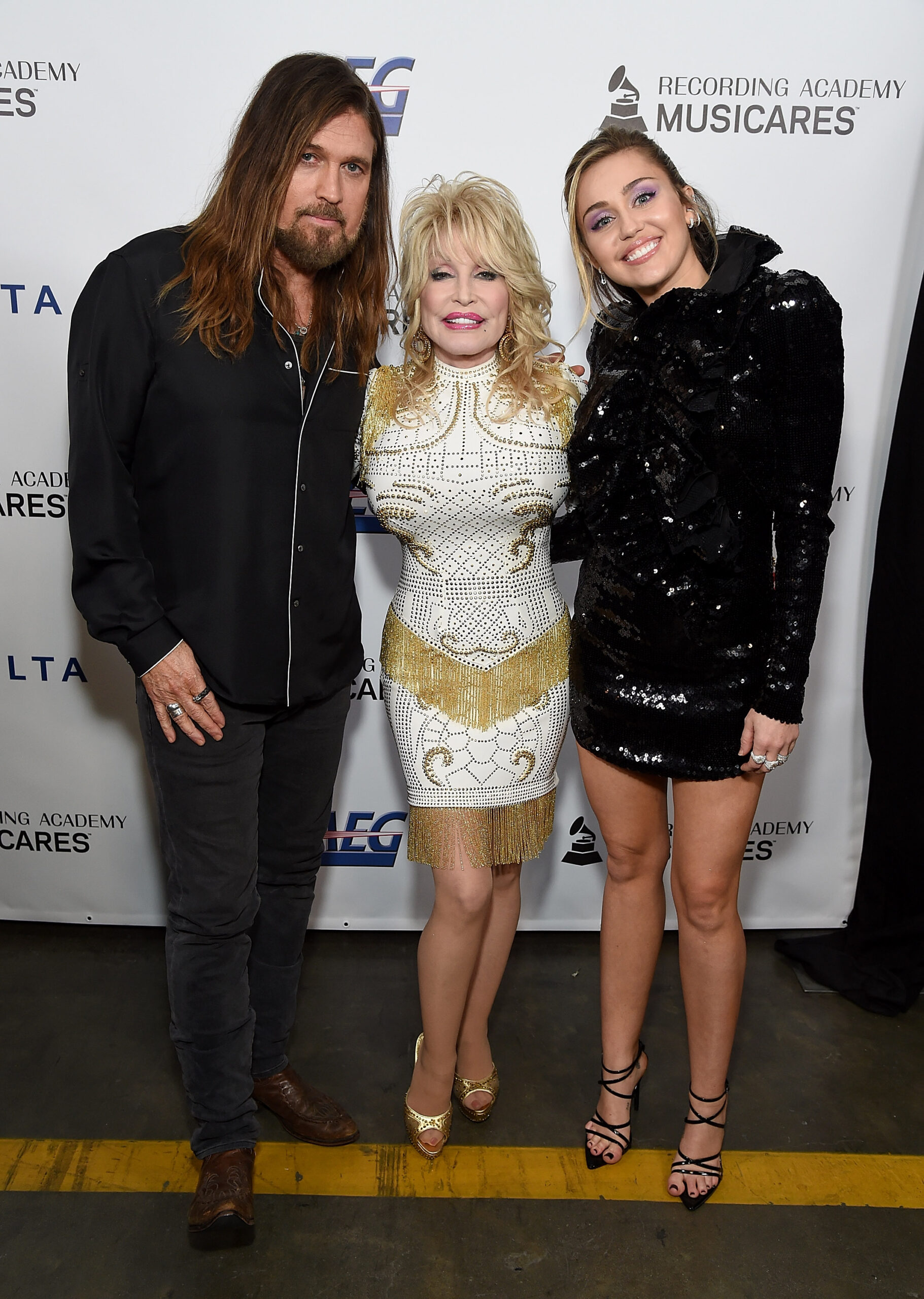
Their friendship continued for decades and eventually created an even deeper connection between Parton and the Cyrus family.
Dolly’s Final Message to Billy Ray
Years after that dressing-room conversation, Parton sent Billy Ray another message — one that now carries far greater emotional weight.
Billy Ray revealed after her death that she had recently reached out to tell him exactly how she felt.
“Dolly recently sent me a beautiful message, telling me she loved me with her whole heart.”
He didn’t reveal exactly when the message arrived or what prompted it.
Instead, he responded with his own declaration of affection.
“I will always love her in the same way … with my whole heart … and I always will.”
The wording inevitably evokes Parton’s legendary “I Will Always Love You,” but Billy Ray’s message was about something much more personal: losing a friend who had been part of his life for more than three decades.
He admitted that there were simply too many memories to know where to begin.
And among those memories was the extraordinary relationship Parton developed with his daughter.
How Dolly Became Miley Cyrus’ Godmother
Parton and Billy Ray connected partly through their shared Southern backgrounds.
She was famously proud of her Tennessee roots, while Billy Ray came from Kentucky.
Around the period when they were touring together, Billy Ray and Tish Cyrus were preparing to welcome a daughter.
Miley Cyrus was born on November 23, 1992.
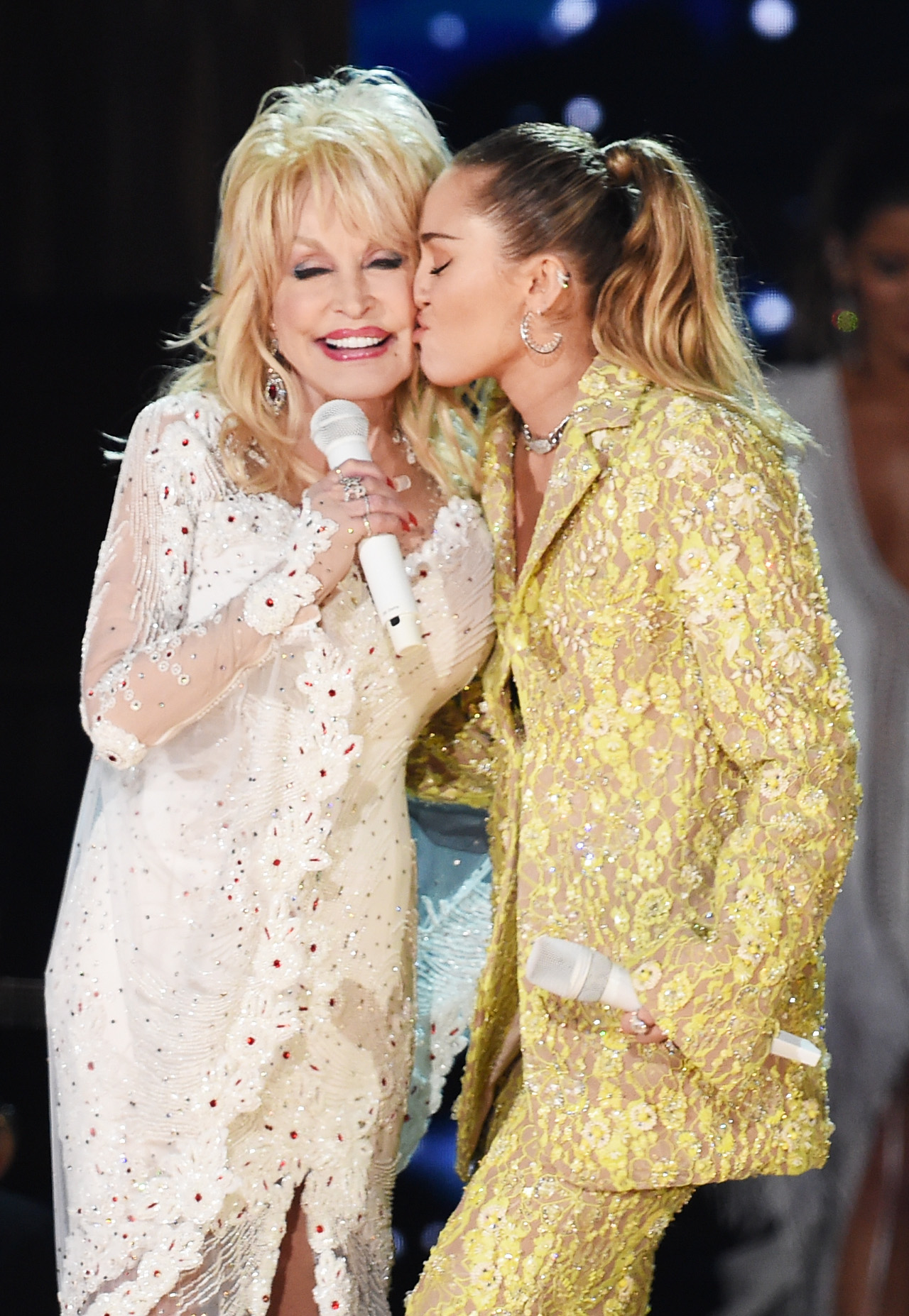
Parton soon became her godmother.
From there, a relationship began that would survive Miley’s childhood, her sudden rise to Disney fame, her controversial transition into adulthood and her eventual emergence as one of the biggest pop stars of her generation.
Miley grew up calling her “Aunt Dolly.”
But Parton wasn’t merely a famous family friend who occasionally appeared for photographs.
She became one of Miley’s most important mentors.
Miley Reveals One of Their Final Conversations
Following Parton’s death, Miley made clear that she wasn’t prepared to share everything they had said to each other.
Some memories, she explained, belonged only to them.
“Our most sacred moments were private and they’ll stay there behind the stage, beneath the glamour & between our hearts.”
Still, Miley offered one revealing glimpse into their final exchanges.
One of their last conversations centered on music and transformation.
It was an especially fitting subject for two women whose lives had been shaped by reinvention, songwriting and performance.
Miley also said she believes she knows exactly what Parton would expect from her now.
She would want her to experience the grief rather than run from it, transform those feelings into music and continue moving forward.
Miley ended with an especially poignant thought:
“I have an angel by my side. I always have.”
Dolly Never Had Children of Her Own
Parton’s maternal relationship with Miley carries additional meaning because the country legend never had children herself.
She and Carl Dean married in 1966 and remained together until his death in March 2025.
Earlier in their marriage, however, they had imagined becoming parents.
Parton once recalled wondering whether their children would be tall like Dean or short like her. They had even considered naming a daughter Carla.
Her health ultimately changed those plans.
Parton underwent a partial hysterectomy in the 1980s after experiencing serious gynecological problems. She later spoke about the emotional difficulty of realizing she would not become a biological mother.
Over time, her perspective changed.
Parton came to believe that perhaps motherhood wasn’t the role life had planned for her. Instead, she sometimes suggested that not having children gave her the freedom to devote herself to other people’s children.
That idea ultimately became much larger than her relationship with Miley.
Parton’s Imagination Library has provided free books to millions of children, creating a remarkable legacy centered on childhood literacy.
But with Miley, that maternal instinct became deeply personal.
Dolly and Miley Were Actually Distant Relatives
There was even a surprising twist to their family connection.
In 2024, Parton learned during an interview that genealogical research suggested she and Miley were distant relatives.
Ancestry research reportedly identified them as seventh cousins, once removed, through a common ancestor named John Brickey, who was born in Virginia in 1740 and later lived in Tennessee.
Parton was delighted by the discovery.
“Is that true? That’s amazing!”
She then joked that considering how close she and Miley already were, she would have expected a much nearer relationship.
But the discovery ultimately seemed appropriate to her.
“It doesn’t surprise me because she does feel like family.”
Long before anyone traced their genealogy, that was already how they treated each other.
Dolly Watched Miley Become Hannah Montana
When Miley landed the role that transformed her into a global child star, Parton was there.
Miley became famous through Disney Channel’s Hannah Montana, and Parton eventually appeared on the series as Aunt Dolly — essentially bringing their real-life relationship onto television.
For Parton, it also gave her an opportunity to watch her goddaughter work.
And she was impressed.
She once described observing Miley on set without the young actress realizing just how closely her godmother was watching.
“I was watching her like a proud mama, thinking you go, you little thing, I’m so proud of you.”
The phrase “proud mama” captured something important about their relationship.
Parton may not have been Miley’s mother, but she clearly felt a maternal pride in watching her succeed.
When Miley Changed, Dolly Didn’t Walk Away
That support became even more significant when Miley left her Disney years behind.
Her transformation from Hannah Montana into an adult pop star was dramatic and, at times, intensely controversial.
Miley changed her appearance, music and performances while deliberately distancing herself from her former child-star identity.
The criticism was relentless.
Parton could easily have joined those telling Miley to slow down or behave differently.
She didn’t.
Instead, Dolly defended her.
She understood that Miley needed to establish an identity separate from Hannah Montana and repeatedly praised her intelligence and talent.
Parton compared Miley to herself and described her as a gifted singer-songwriter who was finding her wings.
Her approach wasn’t to control Miley.
If Miley wanted advice, Dolly offered it.
Otherwise, she allowed her goddaughter to make her own choices.
That unconditional support became one of the defining qualities of their relationship.
From Godmother and Child to Musical Partners
Eventually, their relationship changed again.
Miley was no longer simply the little girl Parton had watched grow up.
She had become an established artist in her own right.
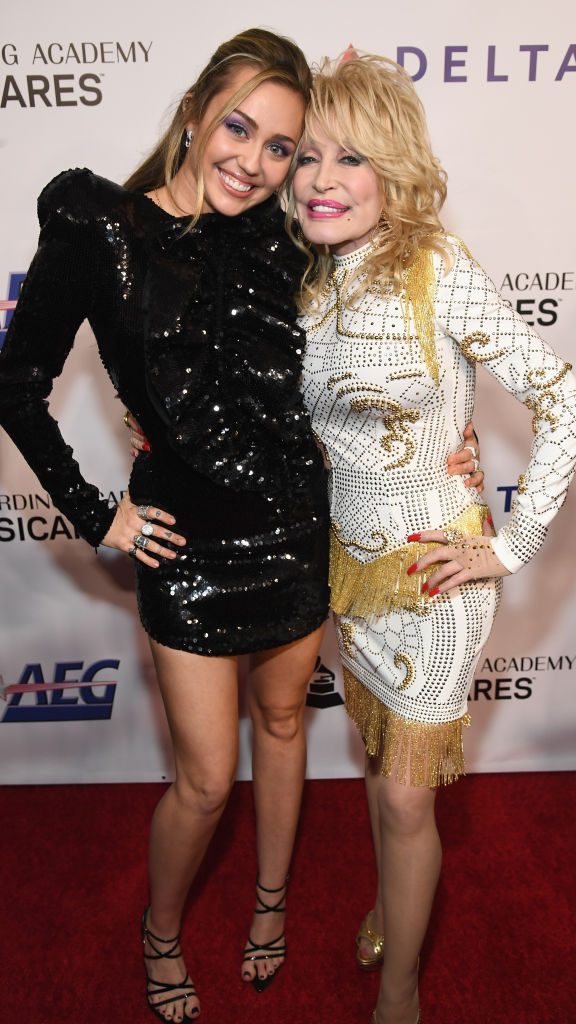
The two began sharing stages and recording music together.
They performed “Jolene,” collaborated on “Rainbowland,” appeared together on television and eventually recorded a powerful duet of Miley’s “Wrecking Ball.”
For Miley, hearing one of her greatest musical influences perform one of her own songs was deeply meaningful.
She described it as an honor and added simply:
“I love Aunt Dolly.”
Parton responded with equally enthusiastic praise, calling Miley extraordinarily gifted.
But Dolly emphasized something even more important.
As proud as she was of the music they created together, she said she was even prouder of their relationship.
The pair knew their public praise for each other could occasionally sound excessively sentimental.
Parton acknowledged that it might seem “gushy.”
But she insisted there was a simple explanation.
It was real.
The Legacy Behind the Rhinestones
Dolly Parton left behind an enormous body of work.
There are the songs.
The movies.
The awards.
Dollywood.
The businesses.
The Imagination Library.
And an unmistakable image — towering blonde hair, sparkling clothes and a personality large enough to fill any room.
But the memories shared by Billy Ray and Miley Cyrus reveal something awards cannot measure.
Billy Ray remembers walking nervously into a dressing room amid embarrassing rumors and finding a woman who responded with a wink and a joke.
More than three decades later, one of his final messages from that same woman told him she loved him “with her whole heart.”
Miley remembers something different.
She remembers a godmother who watched her become famous, defended her when the world criticized her, taught her how to treat people, encouraged her independence and eventually stood beside her as a musical equal.
Most of their final conversations will remain private.
Miley intends to keep them “behind the stage, beneath the glamour & between our hearts.”
Perhaps that is where the most important part of Dolly Parton’s legacy belongs.
Not under the lights.
Not inside a trophy case.
But with the people who knew her simply as a friend, a mentor — and “Aunt Dolly.”
{"post":110982,"page":2,"next":[{"id":110979,"title":"Doctors Reveal What Drinking Coffee Every Morning Really Does to Your Body \u2014 From Hormones and Heart Health to Digestion and Sleep","url":"https:\/\/new24.info\/110979"},{"id":110977,"title":"The Enduring Legacy and Global Appeal of the Name Sophia","url":"https:\/\/new24.info\/110977"},{"id":110974,"title":"Miley Cyrus Makes First Public Appearance Following the Passing of Her Godmother Dolly Parton","url":"https:\/\/new24.info\/110974"},{"id":110971,"title":"Finding Grace and Perspective During a Challenging First Flight with My Daughter","url":"https:\/\/new24.info\/110971"},{"id":110959,"title":"Miley Cyrus Makes First Public Appearance Since Dolly Parton\u0027s Death \u2014 Fans Notice Something on Her Arm \u2014 Photos","url":"https:\/\/new24.info\/110959"},{"id":110956,"title":"The Forged Deed On My Porch That Exposed My Son-In-Law\u2019s Entire Cri.minal Scheme","url":"https:\/\/new24.info\/110956"},{"id":110953,"title":"I Sent My 7-Year-Old on a Playdate \u2013 The Next Morning, the Mother Called and Whispered, \u0027I Overheard What Your Daughter Found in Your Husband\u0027s Trunk\u0027","url":"https:\/\/new24.info\/110953"},{"id":110948,"title":"Ricky Schroder Posted a Tribute to Dolly Parton \u2014 His Words Drew Strong Reactions","url":"https:\/\/new24.info\/110948"},{"id":110943,"title":"What Witnesses Noticed About Dolly Parton at One of Her Final Public Outings Before Her Passing \u2013 Details","url":"https:\/\/new24.info\/110943"},{"id":110918,"title":"Billy Ray Cyrus Reveals Dolly Parton\u0027s Last Message to Him \u2014 Miley Recalls One of Her Final Conversations with \u0027Aunt Dolly\u0027","url":"https:\/\/new24.info\/110918"},{"id":110937,"title":"How One Stolen Birthday Cake Exposed A Massive Family Financial Deception","url":"https:\/\/new24.info\/110937"},{"id":110917,"title":"My Husband Locked Me Out Without Knowing I Owned Our Estate","url":"https:\/\/new24.info\/110917"},{"id":110914,"title":"The Announcement My Grandmother Made At That Party That Rewrote Our Entire Family","url":"https:\/\/new24.info\/110914"},{"id":110910,"title":"Why This Timeless Name Continues to Appeal to Families Around the World","url":"https:\/\/new24.info\/110910"},{"id":110907,"title":"A Quiet Devotion: Remembering the Nearly Six-Decade Marriage of Dolly Parton and Carl Dean","url":"https:\/\/new24.info\/110907"},{"id":110904,"title":"The Enduring Legacy and Personal Choices of Country Music Icon Dolly Parton","url":"https:\/\/new24.info\/110904"},{"id":110900,"title":"Dolly Parton\u2019s ever-present long sleeves hid a more personal story than many realized","url":"https:\/\/new24.info\/110900"},{"id":110896,"title":"The Final Chapter of Dolly Parton: A Life Defined by Grace, Privacy, and Enduring Artistic Devotion","url":"https:\/\/new24.info\/110896"},{"id":110893,"title":"Reflecting on the Enduring Legacy and Reality of Country Music Icon Dolly Parton","url":"https:\/\/new24.info\/110893"},{"id":110890,"title":"Ricky Schroder Faces Widespread Backlash Over Politically Charged Social Media Tribute to Dolly Parton","url":"https:\/\/new24.info\/110890"}]}