
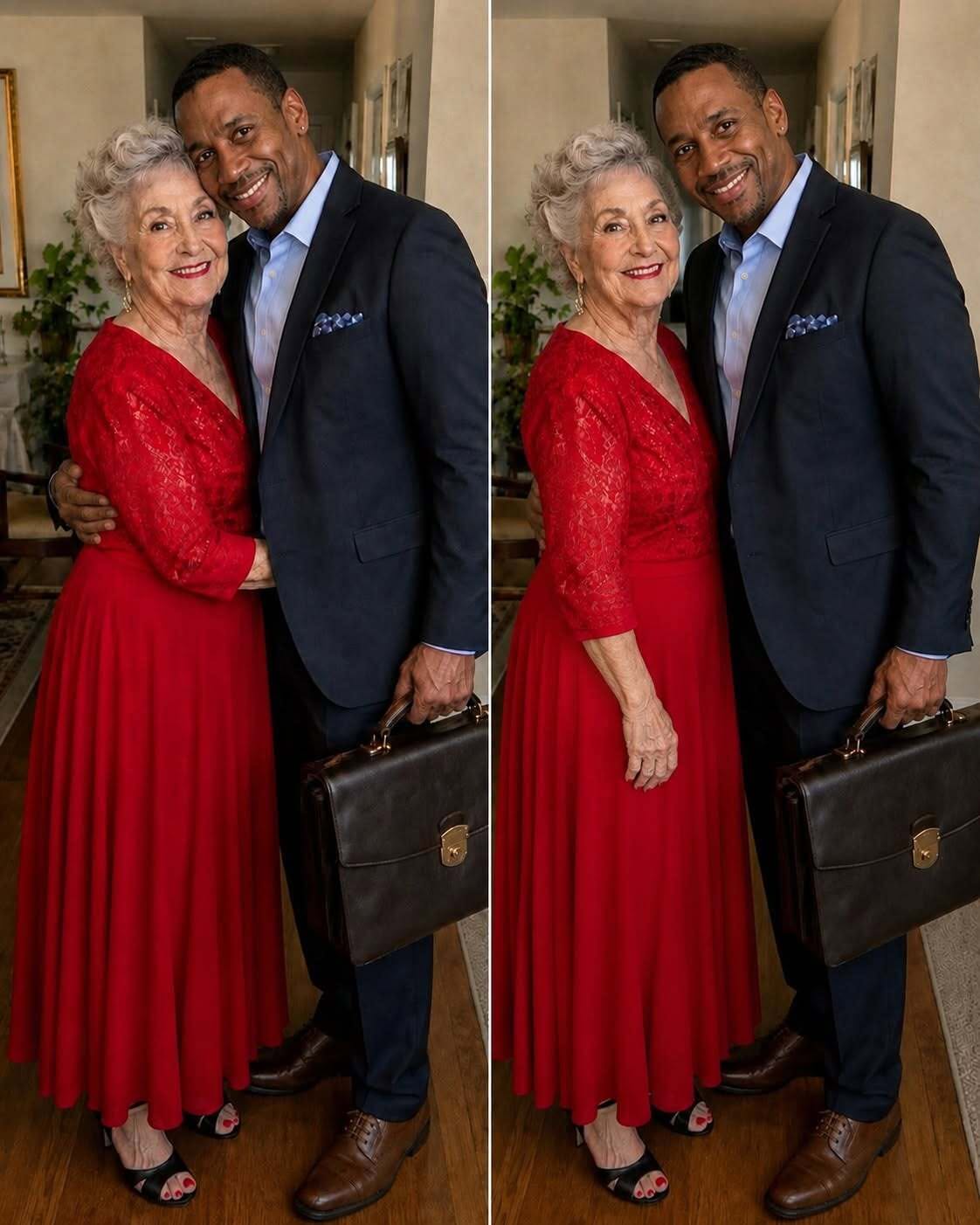
Then I realized it was Mom.
She was standing at the sink washing strawberries, quietly humming the same song Dad used to whistle while working in the garage.
I stopped in the doorway.
“Mom?”
She jumped.
“What?”
“You were humming.”
“I was not.”
“You absolutely were.”
She smiled and turned back toward the sink.
That smile told me everything.
Richard was responsible.
And I wanted desperately to be happy about that.
I really did.
But there was something about Richard that bothered me.
Every Sunday evening, no matter what was happening, he left my mother’s house at exactly 7:30.
Not approximately.
Not around then.
Exactly 7:30.
And after a while, I started wondering what kind of man had somewhere else he absolutely had to be every Sunday night.
Dad died when Mom was 61.
His death was sudden.
A heart attack.
One morning, he was complaining that Mom had put too much cinnamon in his oatmeal.
By lunchtime, he was gone.
They had been married for thirty-eight years.
Afterward, something inside my mother simply switched off.
She stopped wearing perfume.
Stopped buying clothes unless she absolutely needed them.
Stopped going to restaurants.
She still attended birthdays and holidays, but she always left early.
For years, whenever anyone gently suggested she might eventually meet someone else, Mom gave the same answer.
“I already had my person.”
Then, eleven years later, she joined a community gardening club.
That was where she met Richard.
He was 52, almost twenty years younger than Mom, which initially made me suspicious.
Mom found my concern hilarious.
“You think he’s after my fortune?”
“You don’t have a fortune.”
“Exactly.”
She laughed so hard she started coughing.
That alone made me soften toward him.
Richard seemed wonderful.
He brought Mom flowers without needing an occasion.
When her porch railing became loose, he arrived Saturday morning with tools and repaired it.
He remembered how she took her coffee.
He listened when she spoke.
More importantly, Mom became herself again.
She bought a red dress.
She started wearing the perfume Dad had once given her.
One afternoon, I caught her applying lipstick before Richard arrived.
“Who are you?” I teased.
She gave me a look.
Then she smiled.
That smile made me feel guilty for distrusting him.
But then came Sundays.
Richard usually arrived around four.
We would have dinner together.
He would help Mom clear the table.
Sometimes we’d play cards.
Then, around 7:20, something changed.
Richard started checking his watch.
At 7:25, he became restless.
And at 7:30, he left.
Always.
The excuses changed.
“I’ve got an early business call.”
“My neighbor needs help.”
“I’m expecting a repairman.”
“I promised somebody I’d stop by.”
But the departure time never changed.
My fifteen-year-old daughter, Chloe, noticed before I ever mentioned it.
One Sunday, she leaned toward me after Richard left.
I nearly choked on my coffee.
“Chloe.”
“What? Every Sunday at 7:30, the carriage turns back into a pumpkin.”
Mom overheard.
“Leave Richard alone.”
Chloe grinned.
“I’m just saying Grandma should check whether he owns glass slippers.”
Mom laughed.
I didn’t.
Because by then, I’d started wondering whether Richard was married.
Or had another girlfriend.
Maybe Mom was unknowingly the Sunday-afternoon woman.
The possibility made me sick.
One afternoon, I finally asked her something simple.
“Have you ever been to Richard’s house?”
Mom’s expression changed.
“No.”
“Never?”
“He prefers coming here.”
“Mom.”
“Don’t.”
“Don’t what?”
“Turn this into something ugly before you know there’s anything ugly about it.”
I sat across from her.
“I just don’t want you getting hurt.”
She looked toward the window.
For several seconds, she said nothing.
Then she spoke quietly.
My heart tightened.
“Mom—”
That silenced me.
Because I realized how much courage it had taken for her to love anyone after Dad.
So I stopped asking questions.
At least aloud.
Then came Mom’s 72nd birthday.
We had dinner at her house.
Richard arrived carrying two dozen roses.
Mom wore her red dress.
Chloe decorated the dining room with balloons.
For most of the evening, everything was perfect.
Until 7:26.
Richard checked his watch.
I saw it.
So did Chloe.
Mom saw it too.
Something passed across her face.
Disappointment.
“Stay for cake,” she said.
Richard hesitated.
“I really can’t.”
“It’s my birthday.”
“I know.”
“Twenty minutes.”
He looked genuinely miserable.
“I’m sorry.”
Mom’s smile disappeared.
Richard kissed her cheek, grabbed his leather bag, and left.
The front door closed at 7:30.
Exactly.
Nobody spoke.
Then Chloe stood.
“Where are you going?”
“Outside.”
“Chloe.”
But she was already pulling on her coat.
Forty minutes later, she returned.
She wasn’t alone.
Or rather, she wasn’t empty-handed.
Richard’s brown leather bag was clutched against her chest.
“Where did you get that?”
“He dropped it.”
My stomach tightened.
“Where?”
Chloe looked at Grandma.
“I followed him.”
“You WHAT?”
“I didn’t get in his car! I followed on my bike.”
I was furious.
But then Chloe placed the bag on the table.
“He drove to a place called Willow Creek.”
Mom went pale.
I recognized the name.
It was a memory-care facility about two miles away.
“He got out really fast,” Chloe continued. “The bag fell beside his car. He didn’t notice.”
“We shouldn’t open it,” Mom said.
She was right.
Then Chloe said:
“I already did.”
“Chloe!”
“Mom, you need to see what’s inside.”
She opened the bag.
There were photographs.
Dozens of them.
Richard as a child.
Richard as a teenager.
Richard standing beside an elderly woman.
There was also a tiny wooden music box.
Then I saw several laminated cards.
One showed Richard’s photograph.
Underneath it were the words:
RICHARD — YOUR SON.
Another showed a photograph of a house.
YOUR HOME BEFORE WILLOW CREEK.
Another:
YOU ARE SAFE HERE.
Mom sat down.
Chloe pulled out one final card.
On it was a photograph of the elderly woman.
The message beneath it was handwritten.
Nobody spoke.
Suddenly, every Sunday made sense.
Richard returned for his bag around nine.
When Mom opened the door, he immediately knew.
The cards were still sitting on the kitchen table.
His shoulders dropped.
“I can explain.”
Mom didn’t accuse him of cheating.
She didn’t yell.
She simply asked:
“Who is Evelyn?”
Richard closed his eyes.
“My mother.”
She was 86.
Three years earlier, she’d been diagnosed with dementia.
Her condition had gradually worsened until Richard could no longer safely care for her alone.
Eventually, he moved her into Willow Creek.
Nighttime was the hardest.
As evening approached, Evelyn became frightened.
She sometimes forgot where she was.
Sometimes she forgot Richard.
But Sunday nights had become their routine.
Richard arrived before eight.
He played her favorite music.
They looked at photographs.
Sometimes he read the identification cards with her.
Other nights, she became angry and demanded to know why a strange man was sitting beside her bed.
“Why didn’t you tell me?” Mom asked.
Richard stared at the floor.
“Because the last woman I was with left because of it.”
Mom said nothing.
“She said my mother controlled my life. She hated that I wouldn’t travel whenever she wanted. She hated that I couldn’t disappear for weekends.”
He looked at Mom.
“So when I met you…”
“You lied.”
“Yes.”
“Not about where you were going.”
“No.”
“But about why.”
Richard nodded.
“I thought if you knew how complicated my life was, you’d decide you didn’t want it.”
Mom’s eyes filled.
“You let me think there might be another woman.”
Richard looked devastated.
“I know.”
Then Mom reached across the table.
She took his hand.
Richard began crying.
Not dramatic tears.
Quiet ones.
The kind people cry after carrying something alone for too long.
The following Sunday, everything changed.
At 7:20, Richard looked at his watch.
Mom stood.
“Let’s go.”
He blinked.
“Where?”
“To see Evelyn.”
“Margaret—”
“You’ve been doing Sundays alone long enough.”
That evening, Mom met Richard’s mother.
Evelyn didn’t understand who she was.
Not really.
Mom introduced herself anyway.
“I’m Margaret.”
Evelyn studied her red dress.
“Pretty.”
Mom smiled.
“Thank you.”
Then Evelyn pointed toward Richard.
“Do you know that man?”
Mom looked at him.
“I do.”
Evelyn leaned closer.
“He’s nice.”
Richard turned away because he was crying again.
After that, Sunday dinners changed.
Sometimes Richard brought Evelyn to Mom’s house when she was having a good day.
Other times, Mom went with him to Willow Creek.
Chloe made new picture cards.
She laminated one showing Mom.
Underneath, she wrote:
MARGARET — RICHARD’S FRIEND.
Months later, she replaced it.
MARGARET — SOMEONE WHO LOVES RICHARD.
Evelyn never consistently remembered us.
But sometimes she’d smile when Mom walked into the room.
And Mom always treated that smile like enough.
The strangest thing happened eventually.
Richard stopped checking his watch.
Not because Evelyn stopped needing him.
She didn’t.
He stopped because he no longer had two separate lives to manage.
There was nothing left to hide.
Mom still wore her red dress.
Richard still brought flowers.
And she kept humming.
One Sunday evening, I stood in the kitchen watching Richard help Evelyn into her coat while Mom searched for her scarf.
Chloe leaned toward me.
“No more Cinderella schedule.”
I smiled.
“No.”
Richard looked at his watch.
It was almost eight.
For the first time since we’d known him, he didn’t seem worried about the time.
I had spent months believing 7:30 represented betrayal.
Another relationship.
Another woman.
A secret life.
I had been right about only one thing.
There was another woman.
She was 86 years old.
Some nights, she couldn’t remember her son’s name.
And every Sunday, he went back anyway.
Because love isn’t always flowers, romance, or staying for birthday cake.
Sometimes love is sitting beside someone who may have forgotten you and introducing yourself again.
Sometimes it’s showing up at exactly the same time every week because routine is one of the few things they still understand.
And sometimes the secret you’re most afraid of discovering isn’t evidence that someone loves your family less.
It’s proof that their heart was already carrying more love than you knew.