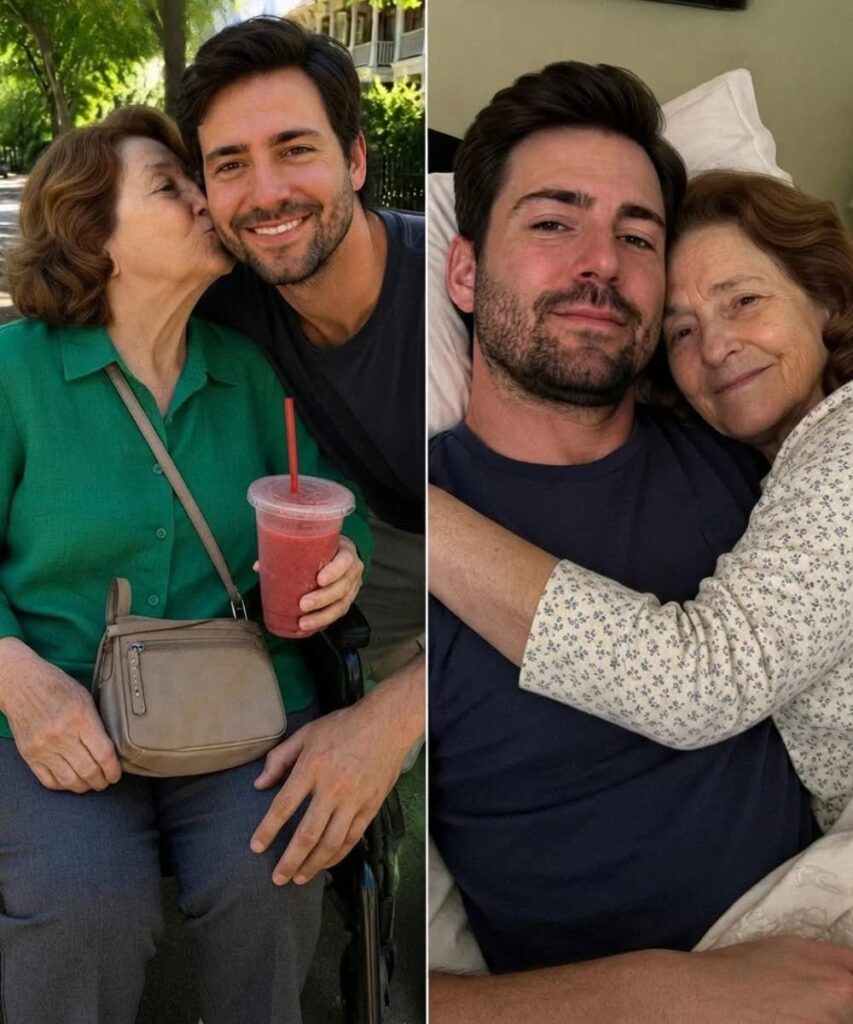
I had no idea she was quietly holding the one thing that could finally free me from my past.
“You’re after her HOUSE!”
Susan’s nephew, Greg, was shouting from my front porch loudly enough for half the neighborhood to hear.
A few curtains had already moved across the street.
Someone two houses down was pretending to water flowers.
Greg pointed toward me.
“You moved a dying woman into your home because you want her money!”
I gripped the doorframe.
Behind me, Susan was asleep in the spare bedroom.
At least, I hoped she was.
“We’re calling the police,” Greg continued. “Today.”
His wife, Marcy, stood beside him with her arms folded.
“You had no right to move her here without contacting the family.”
“I didn’t know how to contact you.”
“You should’ve tried harder.”
That almost made me laugh.
Susan’s family hadn’t visited her in five years.
I knew because I lived directly across the street.
My name is Sam.
I’m thirty-one, single, and I work from home.
Until three weeks earlier, my life had been almost painfully quiet.
Then Susan became seriously ill.
She was weak.
Frightened.
And almost completely alone.
So I brought her into my house.
Greg pointed toward the hallway.
“She needs to go home.”
“She asked to stay here.”
“She’s dying, Sam. She doesn’t know what she wants.”
That sentence nearly broke whatever patience I had left.
Neither Greg nor Marcy had been there when Susan woke at two in the morning struggling to breathe.
They hadn’t held the cup while she tried to drink.
They hadn’t wiped soup from her blouse after her hands grew too weak to hold the spoon.
They hadn’t waited outside the bathroom because she was too embarrassed to admit she could no longer stand safely by herself.
But I didn’t say any of that.
Not yet.
By that evening, rumors had already spread.
One neighbor claimed I was pressuring Susan to change her will.
Another said I had manipulated her into believing her family abandoned her.
Someone told my friend Joel that Susan had already signed over her house.
None of it was true.
Joel came over the next afternoon carrying groceries.
He set the bags on my counter.
“Why are you doing this to yourself?”
“Doing what?”
“Sam, come on. You’re cooking for her, getting up every few hours, taking her to appointments, dealing with her family, and now half the neighborhood thinks you’re trying to steal from her.”
“I don’t care what they think.”
“You should.”
I looked at him.
“She had nobody.”
Joel’s face softened.
“That doesn’t make her your responsibility.”
Responsibility.
The word stayed with me.
For years, I had told myself my own mother hadn’t been my responsibility either.
Or at least, that was the excuse I used whenever the guilt became too heavy.
My father left when I was young.
Mom raised us almost entirely by herself.
She worked constantly.
She sacrificed everything.
Somehow, she still managed to help all her children build lives of their own.
I went to college out of state.
My siblings moved away too.
Mom had always been strong, so when her health started failing, none of us understood how bad it really was.
She never told us.
Whenever I called, she said the same thing.
“I’m fine, Sam. Stop worrying.”
And because believing her was easier than imagining the alternative, I let myself believe it.
By the time we realized how much help she needed, there was almost no time left.
She died before I could fix any of it.
Years passed.
The guilt stayed.
I never forgave myself for not being there for the woman who had always been there for me.
Susan knew Mom had died, but she rarely asked about it.
We had lived across from each other for years.
She waved when I checked the mail.
Sometimes she brought muffins.
Once, when my kitchen sink leaked, she stood in the doorway watching me struggle with a wrench.
After several minutes, she said, “You know you’re holding that backward.”
She teased me about it for months.
Then, about a month ago, I noticed her curtains hadn’t opened all day.
That was unusual.
I crossed the street and knocked.
No answer.
I knocked again.
“Susan?”
Something scraped inside.
Then I heard a faint voice.
“Sam?”
When she finally opened the door, I barely recognized her.
Her robe hung loosely from her shoulders.
Her face looked gray.
Standing seemed difficult.
She tried to smile.
“I suppose I look awful.”
“You look sick.”
“That’s not very diplomatic.”
I helped her to the sofa.
The next several days disappeared into doctor appointments, medication schedules, groceries, and phone calls.
Susan was seriously ill.
Her strength was disappearing quickly.
“Can someone come stay with you?” I asked one afternoon.
She stared through the window.
“They’re busy.”
“You can’t do this alone.”
“I’m not alone.”
Then she looked at me.
It took me a second to understand.
I worked from home.
I had a spare room.
And every time I looked at Susan sitting alone in that house, I heard my mother telling me she was fine.
So I made the decision before I could talk myself out of it.
“Come stay with me.”
Susan immediately shook her head.
“No.”
“You shouldn’t be alone.”
“I’ll manage.”
“That’s exactly what my mother used to say.”
Something changed in her face.
She stared at me for several long seconds.
Then she whispered, “All right.”
Three weeks later, my quiet house was full of medicine bottles, blankets, soup bowls, and soft nighttime conversations.
Susan’s relatives only appeared after another neighbor finally tracked them down.
And they arrived furious.
Greg demanded that Susan go home.
Marcy accused me of separating her from family.
Another relative called me manipulative.
Then came threats about lawyers, guardianship, police, and financial exploitation.
I refused to argue.
Whenever they left, I went back into Susan’s room and asked whether she needed water.
But there was something none of them knew.
Every evening at exactly nine, I followed the same routine.
Medicine.
Water.
Blankets.
Then I dragged a wooden chair beside her bed.
And I told Susan things I had never told anyone else.
“I should’ve gone home sooner.”
She always listened.
Never interrupted.
One night, I stared at the floor.
“I knew Mom was getting older. I could hear how tired she sounded. I knew something was wrong, Susan. But every time she said she was fine, I let myself believe her.”
Susan reached for my hand.
Her fingers were weak, but she touched my knuckles gently.
“I was her son,” I whispered. “I should’ve known.”
That became our ritual.
At nine o’clock, I confessed.
Susan listened.
I told her about the birthday I missed.
The call I postponed because I was busy.
The weekend I almost flew home, then canceled because Mom insisted I shouldn’t waste the money.
Finally, one night, I said the sentence that had followed me for years.
“I think my mother died believing I didn’t need her anymore.”
Susan’s eyes filled with tears.
I lowered my head.
“And I don’t know how to forgive myself.”
Her hand tightened around mine.
The next morning, Greg came back.
This time, he brought company.
He stood outside with Marcy and his daughter, Laura.
A police officer waited near the sidewalk.
Several neighbors were watching from porches.
Greg held up a folder.
“This ends today.”
I stepped outside and pulled the door closed behind me.
“You need to leave.”
“No, Sam. You need to bring my mother outside.”
“She’s resting.”
Laura shook her head.
“You’ve kept us away long enough.”
“I never stopped any of you from visiting.”
“You moved her into your house.”
“Because she was alone.”
Greg stepped closer.
“You expect us to believe you’re doing all this out of kindness?”
I stayed quiet.
Then he raised his voice.
“Five years without visiting doesn’t mean we stopped being family.”
Something inside me finally snapped.
“No.”
The porch went silent.
“It means Susan spent five years learning exactly how little that word meant to you.”
Laura looked away.
Then I heard a weak voice behind me.
“Sam.”
I turned.
Susan stood in the hallway with one hand pressed against the wall.
“Susan, you shouldn’t be out of bed.”
She ignored me.
In her other hand was a bundle of old envelopes tied with a faded blue ribbon.
Greg stared.
“What’s that?”
I recognized the bundle.
It had been in Susan’s bedside drawer since she moved in.
I had never touched it.
Susan slowly stepped forward.
“Bring everyone inside.”
“You need to rest.”
“No.”
Her voice was weak, but firm.
“They came looking for the truth.”
She looked down at the letters.
“Let them hear it.”
Minutes later, Susan sat in my living room chair.
Greg, Marcy, and Laura crowded onto the sofa.
The officer stayed near the front door, mainly to confirm Susan was safe and staying with me voluntarily.
Greg frowned at him.
“This is a family matter.”
Susan looked straight at her son.
“You made it everybody’s matter when you started shouting accusations across the neighborhood.”
Greg went quiet.
Susan untied the blue ribbon.
The envelopes were yellow with age.
Then I saw the handwriting.
My chest tightened.
I knew it.
Birthday cards.
Shopping lists.
School forms.
Little notes stuck to the refrigerator.
I stood abruptly.
“No.”
Susan looked at me with tears in her eyes.
“Sit down, Sam.”
“Where did you get those?”
Greg looked between us.
“What’s happening?”
Susan lifted one envelope.
“Sam’s mother gave them to me.”
The room disappeared around me.
“What?”
Susan nodded.
“You knew my mother?”
“For many years.”
“How?”
“She was one of my closest friends.”
I slowly sat down.
“Why didn’t you ever tell me?”
“Because she asked me not to unless the day came when you needed to know.”
“That makes no sense.”
“It will.”
Susan rested one hand over the bundle.
“Your mother and I became friends years before you moved into that house across the street.”
I could barely breathe.
“She talked about you constantly,” Susan continued. “You and your siblings. She was proud of all of you.”
I stared at her.
“When she became ill, she started writing letters.”
“To me?”
“Yes.”
“Then why didn’t she send them?”
Susan swallowed.
“Because she knew they would make you rush home out of guilt.”
My throat tightened.
“She didn’t want the end of your relationship with her to be about obligation.”
She held out an envelope.
My name was written on the front.
I took it with shaking hands.
Inside, Mom explained everything.
She knew I worried.
She admitted deliberately hiding how weak she had become.
Not because she didn’t trust me.
Because she wanted me to keep living.
She knew that if I understood how sick she really was, I would leave everything and come home.
Then I reached the part I could barely read.
She wrote that if I ever blamed myself for not being beside her when she died, I had to stop.
She knew I loved her.
She had always known.
I bent forward and cried.
Not quietly.
Years of guilt came out at once.
Susan rested a hand against my shoulder.
“I told her you would blame yourself,” she whispered.
I looked up.
“What?”
A faint smile crossed her face.
“Your mother knew you very well. She once told me, ‘Sam always thinks loving someone means he has to fix everything.’”
A broken laugh escaped me.
That sounded exactly like Mom.
“She asked me to keep the letters until the right time.”
Susan looked around the room.
“I almost mailed them after she died.”
“Why didn’t you?”
“Then years later, you moved in across from me.”
I stared at her.
“You recognized me?”
“The first week.”
“And you said nothing?”
“I nearly did. Many times.”
“Why didn’t you?”
“Because you were polite, busy, distant. Guarded.”
Her eyes softened.
“I realized you weren’t ready.”
I looked down at Mom’s letter.
“And now?”
Susan squeezed my hand.
“Now you’ve spent three weeks sitting beside my bed at nine every night telling me how badly you failed her.”
I couldn’t speak.
“You needed to hear her answer in her own words.”
Then Susan turned toward Greg.
“And now you understand why Sam let me stay here.”
Greg lowered his eyes.
“I thought he wanted the house.”
Susan’s expression sharpened.
“You thought about my house because apparently that was what mattered to you.”
“Mom—”
“Five years.”
Greg went still.
“Not one visit in five years. Then someone tells you I’m seriously ill, and suddenly all of you remember my address.”
Laura started crying.
“I kept meaning to come, Grandma.”
Susan looked at her.
“Meaning to come isn’t coming.”
Laura wiped her face.
“I got married. We moved. Work was busy. Every time I planned it, something happened.”
Susan nodded sadly.
“There is always something.”
Then she pointed toward me.
“When I could no longer care for myself, Sam walked across the street.”
She looked at Greg.
“He didn’t ask about my savings.”
Then Marcy.
“He didn’t ask about my will.”
Then Laura.
“He asked whether I had eaten.”
Nobody spoke.
“He took me to doctors. He cooked. He stayed awake when I was frightened. When I couldn’t sleep, he sat beside me.”
Greg stared at the floor.
“We didn’t know.”
“No.”
Susan’s voice softened.
“You didn’t.”
Then she turned toward the police officer.
“There is no abuse here. I am staying in Sam’s home because I want to.”
The officer nodded.
Greg slowly closed the folder in his hands.
“I’m sorry, Sam.”
I looked at him.
“I’m not the person you owe an apology to.”
Greg turned toward Susan.
She lifted one hand.
“I don’t want speeches.”
“What do you want, Mom?”
Susan looked at all three of them.
“My family.”
Laura cried harder.
“If you have time to argue about what happens after I die,” Susan said, “then you have time to sit with me while I’m still alive.”
Nobody had an answer.
So they stayed.
That afternoon, something changed in my house.
Greg made tea.
Laura helped Susan wash her hair.
Marcy changed the sheets and organized the medication table.
The officer left after confirming again that Susan was mentally aware, safe, and staying there by choice.
By evening, the neighborhood finally became quiet.
At 8:55, Greg stood near the front door.
“We’ll give you two your usual time.”
I looked toward Susan’s room.
For the first time since she moved in, the approach of nine o’clock didn’t feel like a weight on my chest.
I carried her medicine inside.
She swallowed it and grimaced.
“Terrible.”
“You say that every night.”
“It tastes terrible every night.”
I laughed and pulled the same wooden chair beside her bed.
Susan studied me.
“Well?”
I looked at Mom’s letter.
“I don’t know what I’m supposed to confess tonight.”
Susan smiled.
“That sounds like progress.”
I laughed softly.
Then another question came to me.
“Is that why you agreed to stay here?”
“What?”
“Because of Mom. Because you had the letters.”
“Partly.”
“What was the other reason?”
Susan looked toward the window.
Her smile faded.
Then she whispered, “I was afraid.”
The answer hurt.
“I didn’t want to be alone.”
I took her hand.
“You’re not.”
Voices came from the kitchen.
Greg and Marcy had returned with food for the next day.
Susan heard them.
A peaceful expression settled across her face.
“Your mother used to say people sometimes need a second chance before they understand what they should have done with the first one.”
I swallowed.
“I wish I could thank her.”
Susan glanced toward the letter.
“You can.”
“How?”
“Stop punishing the son she loved.”
My eyes filled again.
This time, I didn’t fight the tears.
For years, I had convinced myself that Mom died waiting for me.
I imagined her lying alone, wondering why her son hadn’t come home.
I imagined that my absence was the last message I gave her.
But now I knew the truth.
She died knowing I loved her.
And somehow, years later, she had still found a way to tell me.
Through Susan.
Through those letters.
Through a woman who had lived across the street from me without ever demanding anything in return.
I couldn’t go backward.
I couldn’t answer the calls I postponed.
I couldn’t sit beside Mom’s bed.
I couldn’t arrive sooner.
But I could sit beside Susan.
I could bring her water.
I could hold her hand when she was afraid.
I could make sure she never woke in darkness wondering whether anyone was still there.
And Susan’s family still had choices too.
They kept coming back.
Greg stopped talking about property.
Laura rearranged her schedule.
Marcy brought meals and helped with laundry.
It wasn’t magically perfect.
There were awkward silences.
Old resentments.
Hard conversations.
But there were conversations.
Real ones.
One afternoon, Laura apologized again.
Susan squeezed her hand.
“I’m not asking you to erase the last five years,” she said. “You can’t.”
Laura nodded through tears.
“Just don’t waste whatever time is left explaining them.”
I knew that sentence was meant for me too.
For years, I had explained my past to myself.
If I had called more.
If I had ignored Mom and flown home.
If I had noticed sooner.
If I had been a better son.
Every version ended with me somehow saving her.
But Mom knew who I was.
She knew I would drop everything if she told me the full truth.
She also knew that if I arrived too late, I would blame myself forever.
So she left me something stronger than an explanation.
Forgiveness.
I simply hadn’t received it until Susan decided I was ready.
The following evening, nine o’clock came again.
I entered Susan’s room with her medicine and sat in the wooden chair.
For three weeks, that chair had been my confession booth.
Every night, I listed failures.
Missed chances.
Things I wanted to undo.
That night was different.
Susan waited quietly.
I looked at Mom’s letter resting on the bedside table.
Then I said something I had spent years believing could never be true.
“My mother knew I loved her.”
Susan squeezed my hand.
“Yes, Sam.”
I looked at her.
For the first time, there was no argument in my head.
No voice saying I should have done more.
No memory twisting itself into punishment.
Only the truth.
Mom knew.
Susan smiled.
“She always knew.”
And that was the first night in years that I finally believed it.
{"post":109089,"page":2,"next":[{"id":109086,"title":"The Man Who Donated a Kidney to Me Proposed a Month Later, Claiming He Was Terminally Ill and Didn\u2019t Want to Pass Alone","url":"https:\/\/new24.info\/109086"},{"id":109083,"title":"After 8 Years Together, I Overheard My Boyfriend Tell His Best Friend That I Was \u0027Not Wife Material\u0027 \u2013 A Week Later, He Came Home to Something He Never Expected","url":"https:\/\/new24.info\/109083"},{"id":109080,"title":"After Four Daughters, My Husband Finally Got the Son He\u0027d Been Begging For \u2013 But When He Held Our Newborn Boy for the First Time, His Words Made My Stomach Drop","url":"https:\/\/new24.info\/109080"},{"id":109078,"title":"The Reliable Guide to Selecting the Perfect Sweet and Juicy Watermelon Every Time","url":"https:\/\/new24.info\/109078"},{"id":109074,"title":"My Newborn Daughter Looked Nothing Like Us \u2013 I Suspected My Wife Until Her Childhood Photo Exposed Our Marriage\u0027s Biggest Lie","url":"https:\/\/new24.info\/109074"},{"id":109069,"title":"The world is mourning the loss of a beloved, multi-talented actor who has died at 94","url":"https:\/\/new24.info\/109069"},{"id":109064,"title":"Shocking Scheme To Steal My Inherited Victorian House Ended In Disaster","url":"https:\/\/new24.info\/109064"},{"id":109061,"title":"Parents Destroyed My Wedding Dresses So I Created An Unforgettable Ceremony","url":"https:\/\/new24.info\/109061"},{"id":109057,"title":"Wife Discovers Ultimate Betrayal And Reclaims Her Fortune At Charity Gala","url":"https:\/\/new24.info\/109057"},{"id":109054,"title":"Former Husband Bragged About His New Baby Before Losing Absolutely Everything","url":"https:\/\/new24.info\/109054"},{"id":109050,"title":"Unforgivable Greed Made My Sister Shatter Our Family Over An Inheritance","url":"https:\/\/new24.info\/109050"},{"id":109047,"title":"Cruel Brother Takes DNA Test To Insult Me But Exposes Himself","url":"https:\/\/new24.info\/109047"},{"id":109043,"title":"The Old Shawl My Mother Left Me Held a Secret No One Expected","url":"https:\/\/new24.info\/109043"},{"id":109040,"title":"The Subtle Messages Hidden in a Woman\u2019s Legs","url":"https:\/\/new24.info\/109040"},{"id":109036,"title":"Paris Jackson and the Reality of Personal Expression Through Minimalist Ink and Artistic Independence","url":"https:\/\/new24.info\/109036"},{"id":109037,"title":"Paris Jackson and the Reality of Personal Symbolism: Beyond the Myths of Black Band Tattoos","url":"https:\/\/new24.info\/109037"},{"id":109032,"title":"Tragic On-Ice Collision Claims Life of 15-Year-Old Figure Skater, Prompting Safety Discussions","url":"https:\/\/new24.info\/109032"},{"id":109029,"title":"The Complex Life of Redmond O\u0027Neal: Navigating Personal Struggles and the Legacy of His Parents","url":"https:\/\/new24.info\/109029"},{"id":109025,"title":"I Found My Missing Daughter\u2019s Earrings at a Flea Market \u2013 The Next Morning, an Officer Came to My Door and Said One Sentence That Nearly Knocked Me to the Floor","url":"https:\/\/new24.info\/109025"},{"id":109016,"title":"Tom Cruise\u0027s dark-haired daughter, 20, is called his \u0027female version\u0027 as fans she \u0027stole\u0027 her dad\u0027s face is new pics","url":"https:\/\/new24.info\/109016"}]}