
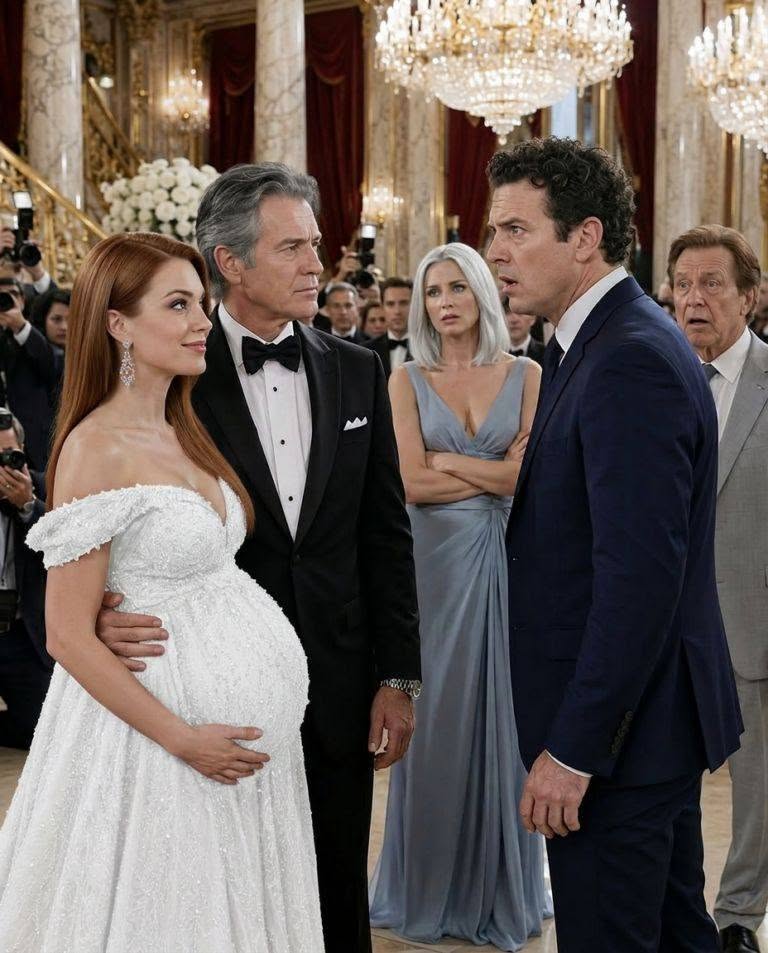
The night Julian ended our marriage, he laid my fertility records across the kitchen table as though they were evidence against me.
There were dozens of pages.
Blood tests.
Ultrasounds.
Medication schedules.
Surgical reports.
Six years of hope and heartbreak reduced to a pile of paper.
Then Julian smiled.
“Chloe is pregnant,” he said, adjusting the cuffs of the expensive suit I had helped him buy. “So I guess now we know who the problem was.”
For a moment, I forgot how to breathe.
“Chloe?”
I knew exactly who he meant.
Chloe Mercer was Julian’s executive assistant.
Twenty-nine years old.
Blonde.
Beautiful.
And apparently pregnant with my husband’s child.
“How long?” I whispered.
Julian shrugged.
“Does it matter?”
“Yes.”
“Three months.”
The room seemed to tilt.
Three months.
Three months earlier, Julian had been sitting beside me at a fertility clinic, holding my hand while a specialist explained why our latest treatment had failed.
He had kissed my forehead in the parking lot.
“We’ll keep trying,” he had promised.
That same evening, I had cried against his chest.
And somewhere during those weeks, he had apparently been sleeping with Chloe.
For six years, I had endured injections, surgeries, endless appointments, and losses that left me emotionally exhausted.
Julian’s mother, Patricia, had never allowed me to forget it.
At every Christmas dinner, every birthday, every family gathering, there was some little remark.
“When are we finally getting grandchildren?”
Or:
“Some women just aren’t naturally maternal.”
Once, after my second failed IVF cycle, she had actually placed her hand on my shoulder and said:
“At some point, you have to ask whether you’re preventing Julian from having the family he deserves.”
Julian had heard her.
He had told me afterward not to take it personally.
“She’s old-fashioned.”
But he never stopped her.
Still, I had believed he loved me.
He held my hand in clinic waiting rooms.
He brought me soup after procedures.
He kissed my forehead after failed treatments.
He promised that whatever happened, we would face it together.
Apparently, that promise ended the moment Chloe showed him a positive pregnancy test.
“You’re leaving me?” I asked.
Julian sighed.
“I want children, Emma.”
“So did I.”
“That’s different.”
I stared at him.
“How?”
His answer came without hesitation.
“Because Chloe can actually give me one.”
Something inside me broke.
But before I could respond, Julian gathered the fertility records and pushed them toward me.
“You should keep those.”
“Why?”
His mouth curled slightly.
“Maybe they’ll help you understand.”
I should have screamed.
Instead, I became very calm.
“What happens now?”
“My attorney will contact you.”
“This is my house too.”
Julian looked toward the kitchen doorway.
“No. The deed is connected to the company trust. Technically, you’ve been living in property owned by Blackridge Holdings.”
I stared at him.
“What?”
“You signed the paperwork years ago.”
The paperwork.
Hundreds of pages Julian had brought home during a refinancing.
Documents he had told me were routine.
“Sign here.”
“Initial there.”
“I’ll explain later.”
I had trusted my husband.
Now that trust had become a weapon.
By sunrise, Julian had emptied our joint checking account.
My cards stopped working.
My health insurance was canceled.
And while I was at work the following afternoon, he arranged to have the locks changed.
His attorney sent me an email claiming that I had voluntarily abandoned the marital residence.
Julian even kept the car because it was registered under his company’s name.
When I returned home and found my key no longer worked, I stood on the porch with my purse over one shoulder and stared through the window at the life I had spent eleven years building.
Julian opened the door but did not let me inside.
A suitcase waited beside him.
My suitcase.
“You packed my things?”
“Some of them.”
“My mother’s jewelry is inside.”
“I don’t know anything about that.”
“Julian—”
“You’ll manage,” he said. “You’ve always been good at being alone.”
Then he put the suitcase outside.
And closed the door.
Across the narrow road, someone had watched the entire thing.
Garrison Blackwood.
The lonely former sheriff.
Or at least, that was who I thought he was.
PART 2 — THE MAN ACROSS THE ROAD
Everyone in Cedar Hollow knew Garrison Blackwood.
Or thought they did.
He had moved into the old farmhouse across from us about four years earlier.
He was somewhere in his early sixties, tall and broad-shouldered, with silver at his temples and the posture of someone who never completely relaxed.
He lived alone except for an aging German shepherd named Duke.
People said his wife had died years earlier.
People also said he had been a sheriff somewhere out west before retiring.
Nobody seemed to know where.
Garrison wasn’t unfriendly.
He simply didn’t talk unnecessarily.
He waved when people drove past.
Helped elderly neighbors clear snow.
Fixed Mrs. Callahan’s broken porch railing without accepting payment.
But he never attended neighborhood parties.
Never invited anyone inside.
And rarely received visitors.
Julian disliked him.
“Something strange about that guy,” he once said.
I remembered asking why.
Julian had laughed.
“Men like him spend their whole lives thinking they’re important because they carried a badge.”
That evening, standing beside my suitcase, I saw Garrison leave his mailbox and cross the road.
He looked toward our house once.
Then at me.
“Do you have somewhere safe to stay tonight?”
Embarrassment burned through me.
“I’ll get a motel room.”
“No.”
“I appreciate it, but—”
“You can stay at my house.”
“I don’t need charity.”
“Good.”
His gray eyes met mine.
“Because I’m not offering charity.”
I almost refused.
Then I remembered my bank account contained $143.
I followed him across the road.
Duke greeted me at the door by sniffing my suitcase and wagging his tail.
Garrison’s farmhouse surprised me.
It wasn’t dusty or neglected.
It was warm.
Books lined the walls.
Family photographs stood on a mantel.
And beside the fireplace was a photograph of a smiling dark-haired woman.
His wife, I assumed.
Garrison led me into the kitchen.
Then he placed three items on the table.
A spare house key.
A business card belonging to a divorce attorney named Rebecca Sloan.
And a sealed envelope from a fertility specialist in Boston.
I stared at them.
“What is all this?”
“My late wife spent years being blamed for something that was never her fault,” Garrison said quietly. “It taught me not to automatically trust the person making the loudest accusation.”
I picked up the envelope.
Inside was confirmation of a medical appointment.
Already scheduled.
Already paid for.
The doctor’s name stopped me.
Dr. Miriam Feld.
I knew that name.
Anyone who had spent years researching infertility knew it.
She worked with complicated reproductive cases and patients who had experienced repeated treatment failures.
“Garrison, I can’t afford this.”
“You don’t need to.”
“I can’t let you pay.”
“You’re not.”
I looked at him.
“What does that mean?”
“Read the second page.”
I did.
The appointment had been funded through something called the Evelyn Blackwood Foundation.
I glanced toward the photograph near the fireplace.
“Your wife?”
He nodded.
“She died twelve years ago.”
“Why would her foundation pay for me?”
Garrison pulled out the chair opposite mine.
“Because you qualify.”
“For what?”
“For help.”
Then he slid another piece of paper across the table.
A photocopied medical report.
I had never seen it before.
Julian’s name was printed across the top.
My eyes moved toward the conclusion.
Severe male-factor infertility.
Extremely low likelihood of natural conception without assisted reproductive intervention.
My hands started trembling.
“No.”
Garrison said nothing.
“This isn’t possible.”
“Keep reading.”
I did.
The test had been performed nearly five years earlier.
Five years.
For five years, Julian had known.
For five years, I had undergone procedures while believing my body was responsible.
I had apologized to him.
I had apologized to his mother.
I had cried alone in bathrooms because I thought I had failed as a wife.
And Julian had known.
“Where did you get this?”
Garrison’s expression hardened.
“Your husband arranged for the original report to disappear with help from someone working inside the fertility clinic.”
My stomach turned.
“How do you know?”
“Because I kept a copy.”
“Why would you have access to Julian’s medical report?”
He hesitated.
“That clinic administrator was once connected to an investigation.”
“You investigated him?”
Something subtle changed in Garrison’s face.
His voice remained calm, but suddenly the lonely man across the road seemed far more complicated.
“I used to investigate a lot of people.”
I looked down at the report again.
Then another thought struck me.
“Chloe.”
Garrison nodded slowly.
“If Julian’s diagnosis is accurate, Chloe’s pregnancy raises an obvious question.”
I whispered it.
“Is the baby his?”
“I don’t know.”
“But you suspect it isn’t.”
“I don’t suspect anything without evidence.”
That sentence told me more about Garrison than he probably intended.
He didn’t guess.
He collected facts.
And for some reason, he had been collecting facts about my husband.
PART 3 — THE FIRST LIE WASN’T THE BIGGEST
Rebecca Sloan met me the following morning.
Her office occupied the top floor of a restored brick building downtown.
She was in her late forties, sharp-eyed and frighteningly organized.
Before I finished explaining what had happened, she interrupted me.
“Your husband emptied the joint account?”
“Yes.”
“Canceled your insurance?”
“Yes.”
“Changed the locks?”
“Yes.”
“Claimed you abandoned the residence voluntarily?”
“Yes.”
Rebecca leaned back.
“Good.”
I blinked.
“Good?”
“For us.”
She opened a notebook.
“For Julian? Catastrophic.”
For the first time in two days, I almost smiled.
Rebecca immediately filed emergency motions regarding marital assets and access to the house.
Then she began examining the company documents I had signed.
Within days, she found something disturbing.
Blackridge Holdings wasn’t simply Julian’s business.
Money from our personal accounts had repeatedly been transferred into it.
So had part of my inheritance from my grandmother.
Julian had told me that money was being invested for our future.
Instead, some of it appeared to have financed company properties.
Including the house he had just locked me out of.
“You may own more of that house than he does,” Rebecca told me.
Julian responded exactly as expected.
He became furious.
He called.
I didn’t answer.
He texted.
I ignored him.
Then Patricia called.
I made the mistake of answering.
“You should stop embarrassing yourself,” she said.
“Hello to you too, Patricia.”
“Julian has moved on. Chloe is carrying his child.”
“So I’ve heard.”
“You couldn’t give him what he needed.”
Six years earlier, those words would have destroyed me.
Even six days earlier, they might have.
Now I was staring at Julian’s hidden medical report.
“Are you sure about that?”
Silence.
“What is that supposed to mean?”
“You should ask your son.”
I hung up.
Ten minutes later, Julian called.
This time, I answered.
“What did you tell my mother?”
“Nothing.”
“Don’t play games, Emma.”
“I haven’t told her anything.”
“Then why did you tell her to ask me?”
I looked across Garrison’s kitchen.
He was drinking coffee while reading the newspaper.
“Julian?”
“What?”
“When were you planning to tell me about the test?”
Silence.
Absolute silence.
Garrison slowly lowered his newspaper.
“What test?” Julian finally asked.
“The one from five years ago.”
Another silence.
Then:
“Where did you get that?”
Not what are you talking about?
Not there was no test.
Where did you get that?
I felt something inside me settle.
He had just confirmed it.
“You knew,” I whispered.
“Emma, listen—”
“You knew.”
“It wasn’t definitive.”
“It says severe male-factor infertility.”
“Those tests aren’t always accurate.”
“You let me believe it was me.”
“I was protecting our marriage.”
I laughed.
Actually laughed.
“By letting me undergo surgery?”
“You wanted those treatments.”
“Because you lied to me!”
His voice changed.
“Who gave you that report?”
I looked at Garrison.
He shook his head once.
“Goodbye, Julian.”
“Emma—”
I ended the call.
Garrison folded his newspaper.
“He’s scared.”
“How can you tell?”
“He didn’t ask whether the report was real. He asked where you got it.”
That was the first time I understood the difference between a former wife listening emotionally and an investigator listening professionally.
I also realized something else.
Garrison was waiting.
For what, I didn’t know.
PART 4 — BOSTON
Two weeks later, I flew to Boston.
Garrison came with me.
Not because I asked.
Because he said I shouldn’t receive complicated medical information alone.
Dr. Miriam Feld reviewed six years of my records.
The appointment lasted nearly three hours.
At the end, she removed her glasses.
“Emma, I’m going to tell you something that may be difficult to hear.”
I braced myself.
“There is no clear medical reason in these records that you should have been described as incapable of carrying a pregnancy.”
I stared at her.
“What?”
“You do have factors that may complicate conception. But several treatment decisions made in your previous care are unusual.”
“How unusual?”
She chose her words carefully.
“Unusual enough that I’d like an independent review.”
My eyes filled.
“So I wasn’t…”
I couldn’t finish.
Dr. Feld understood.
“You were never broken.”
I covered my mouth.
Six years of shame came rushing back.
The injections.
The losses.
Patricia’s comments.
Julian’s disappointment.
The nights I had whispered apologies into the darkness.
Garrison sat beside me without speaking.
Then Dr. Feld asked whether Julian had ever undergone testing.
I handed her the hidden report.
She read it twice.
Her expression changed.
“Where did you obtain this?”
“From a friend.”
She looked at Garrison.
Something passed between them.
Recognition.
“You’re Garrison Blackwood.”
He nodded.
Dr. Feld stood.
“I didn’t realize.”
I looked between them.
“You know each other?”
“By reputation,” she said.
That phrase stayed with me.
By reputation.
Not as a sheriff.
Not as a neighbor.
By reputation.
Outside the clinic, I finally confronted him.
“Who are you?”
“Garrison Blackwood.”
“You know what I mean.”
He looked toward the street.
“I worked in law enforcement.”
“As a sheriff?”
“For a while.”
“What did you do before that?”
He remained silent.
“Garrison.”
“Federal investigations.”
My heart skipped.
“What kind?”
“Financial crimes. Public corruption. Organized fraud.”
I stared at him.
“You were federal?”
“Yes.”
“For how long?”
“Twenty-three years.”
“And the sheriff thing?”
“My last public job before retirement.”
Suddenly, everything made sense.
The way he observed people.
The careful language.
The connections.
The attorney.
The clinic.
But I still didn’t understand why he cared about Julian.
“Were you investigating my husband?”
Garrison looked directly at me.
“No.”
Relief came too quickly.
“Someone else was.”
PART 5 — THE BLACKWOOD NAME
Three months passed.
Rebecca dismantled Julian’s financial story piece by piece.
Transfers emerged.
Hidden accounts appeared.
Company assets Julian claimed belonged exclusively to him were partially funded with marital money.
Then came the house.
A judge temporarily restored my access.
Julian had already moved into Chloe’s luxury apartment downtown.
I could have returned.
I didn’t.
By then, Garrison’s farmhouse felt safer than the house where I had spent eleven years being deceived.
I rented the small guest cottage behind his property instead.
I insisted on paying rent.
Garrison charged me one dollar per month.
Rebecca called it “legally adorable.”
Meanwhile, Dr. Feld’s team completed its review.
The conclusion was complicated but hopeful.
Pregnancy was possible.
More importantly, the specialists believed previous treatments had focused too aggressively on me while Julian’s condition had been minimized.
I cried when Dr. Feld said:
“If you still want to become a mother, that door is not closed.”
I did.
But my marriage was over.
The future I had imagined was gone.
So I began considering motherhood differently.
Donor conception.
Embryo donation.
Eventually, after counseling, medical evaluation, and weeks of thinking, I chose a path that belonged entirely to me.
No Julian.
No Patricia.
No shame.
Just my decision.
Treatment began.
The first attempt failed.
I was devastated.
Garrison found me sitting on the cottage steps that evening.
He sat beside me.
Neither of us spoke for several minutes.
Finally, he said:
“Evelyn used to say disappointment isn’t the same thing as defeat.”
“Your wife?”
He nodded.
“She sounds wise.”
“She was.”
The second treatment cycle began six weeks later.
Fourteen days afterward, I received the phone call.
Positive.
I made the nurse repeat it.
Then repeat it again.
I walked across the road in tears.
Garrison was repairing a fence.
He saw my face and dropped the wrench.
“What happened?”
I held up the test results.
For the first time since I’d known him, Garrison Blackwood completely lost his composure.
He hugged me.
Actually lifted me off the ground.
Duke started barking excitedly.
Two weeks later, an ultrasound revealed two heartbeats.
Twins.
I cried so hard the technician handed me an entire box of tissues.
Garrison stared at the screen.
“Two?”
“Two.”
He smiled.
And that was how, six months after Julian left me because I supposedly couldn’t give him a child, I became pregnant with twins.
But Julian still hadn’t learned the most important part.
PART 6 — JULIAN COMES BACK
He discovered my pregnancy through Patricia.
Someone from Cedar Hollow had seen me leaving an appointment.
By then, I was beginning to show.
Julian arrived at Garrison’s property on a Saturday afternoon.
I was sitting on the porch drinking lemonade when his black Mercedes stopped beside the road.
He climbed out.
“Emma.”
I remained seated.
“What are you doing here?”
His eyes dropped toward my stomach.
“So it’s true.”
I instinctively placed one hand over my belly.
Julian looked stunned.
“How?”
I almost laughed.
“You remember all those doctors you told me couldn’t fix me?”
His face tightened.
“Whose children are they?”
“That isn’t your concern.”
“We’re still legally married.”
“Not for much longer.”
He stepped closer.
“Did you cheat on me?”
The hypocrisy was almost breathtaking.
“You left me for your pregnant assistant.”
“That’s different.”
“There it is again.”
“What?”
“That phrase.”
I stood.
“You always have a reason why the rules apply to everyone except Julian.”
His jaw tightened.
“Are they his?”
He looked toward Garrison’s house.
For one absurd second, I didn’t understand.
Then I did.
“You think Garrison is the father?”
Julian’s expression answered for him.
I laughed.
It was impossible not to.
The front door opened.
Garrison stepped onto the porch.
Julian pointed toward him.
“You stay out of this.”
Garrison’s expression didn’t change.
“You’re standing on my property.”
“This is between my wife and me.”
“Former wife,” I corrected.
Julian looked back at my stomach.
“Tell me they’re not his.”
“No.”
His face changed.
“No?”
“No, I’m not explaining my medical decisions to you.”
Julian stepped toward me.
Garrison moved once.
Only once.
Suddenly, he was between us.
“Back up.”
Julian stopped.
He was younger than Garrison.
Probably stronger.
But something in Garrison’s voice made him reconsider.
Julian scoffed.
“What are you going to do, Sheriff? Arrest me?”
Garrison’s eyes narrowed.
“No.”
Then another voice came from behind us.
“But I might.”
A dark SUV had pulled into the driveway.
Two people stepped out.
A woman in a navy suit.
And a man carrying a leather folder.
Julian’s face went white.
I had never seen either of them.
Garrison had.
“Right on time,” he said.
PART 7 — WHO GARRISON BLACKWOOD REALLY WAS
The woman introduced herself as Special Agent Lena Ortiz.
The man beside her was an investigator from the state attorney general’s office.
Julian stopped speaking.
Completely.
I looked at Garrison.
“What is happening?”
He exhaled slowly.
“It’s time I told you the rest.”
We went inside.
Julian wasn’t invited.
He remained near his car while Agent Ortiz spoke with him separately.
Inside the kitchen where my new life had begun months earlier, Garrison finally explained everything.
He had indeed been a sheriff.
But that was merely the last chapter of his career.
Before that, Garrison Blackwood had spent more than two decades working on major financial crime investigations.
His specialty was complicated fraud involving shell companies, medical billing networks, corrupt administrators, and money laundering.
After retirement, he had established the Evelyn Blackwood Foundation in his wife’s name.
The foundation funded fertility treatment for families who couldn’t afford it.
But that wasn’t all.
It also funded investigations into medical fraud.
Years earlier, one investigation had involved the fertility network Julian and I used.
An administrator had been accused of accepting payments to alter records, hide test results, and manipulate billing.
Julian’s file had appeared during that investigation.
Garrison had seen his name.
At the time, it meant nothing.
Then, years later, Garrison moved to Cedar Hollow.
And discovered Julian living across the road.
“What are the chances?” I whispered.
“Smaller than I like,” Garrison replied.
“Why didn’t you tell me?”
“Because an old investigation isn’t proof of a new crime.”
“So you watched him?”
“I noticed him.”
There was a difference.
“And when he threw me out?”
“I knew what kind of man we might be dealing with.”
Rebecca later discovered the financial connection that changed everything.
Blackridge Holdings had transferred money to a consulting company controlled by the same former clinic administrator connected to the altered fertility records.
Julian had paid him.
Repeatedly.
Not simply to hide his infertility diagnosis.
The consulting company had also been used to move business money.
Once investigators followed those transactions, they uncovered discrepancies far larger than my divorce.
False invoices.
Undisclosed accounts.
Improper transfers.
And possible tax fraud.
I stared at Garrison.
“So Julian wasn’t scared because I found his medical report.”
“Not entirely.”
“He was scared because he knew where it could lead.”
Garrison nodded.
That was why Julian had gone pale when he saw Agent Ortiz.
He recognized her.
She had already attempted to contact his attorney.
He had been avoiding her.
The “lonely sheriff” across the road wasn’t merely some retired small-town lawman.
Garrison had once helped build the task force investigating the very network Julian had apparently used.
And Julian had spent four years living directly across the street from him without realizing it.
PART 8 — CHLOE’S SECRET
I thought that was the final revelation.
It wasn’t.
Three weeks later, Chloe called me.
I almost didn’t answer.
“Emma?”
Her voice sounded nothing like the confident woman I remembered from Julian’s office.
“Yes?”
“I need to talk to you.”
“No.”
“Please.”
“You slept with my husband.”
“I know.”
“You’re having his child.”
Silence.
Then Chloe said:
“That’s why I’m calling.”
We met at a café with Rebecca present.
Chloe arrived wearing sunglasses.
She removed them only after sitting down.
Her eyes were swollen.
“I lied,” she said.
“About what?”
“The baby.”
My stomach tightened.
“Julian isn’t the father.”
Rebecca stopped writing.
I stared at Chloe.
“Does he know?”
“He does now.”
The story came out slowly.
Chloe had been dating another man when her affair with Julian began.
The relationship with Julian lasted less than two months.
When Chloe discovered she was pregnant, she genuinely wasn’t certain who the father was.
Julian immediately assumed the baby was his.
And because he desperately wanted proof that his infertility diagnosis had been wrong, he embraced that assumption.
Chloe let him.
“Why?”
She looked ashamed.
“Because he offered me everything.”
An apartment.
Financial security.
A promotion.
A future.
Then Julian began using Chloe’s pregnancy against me.
After the divorce proceedings started, Chloe became uncomfortable.
She requested prenatal paternity testing.
Julian initially refused.
Eventually, investigators learned about the situation and pressure mounted.
The test was performed.
Julian was excluded as the biological father.
The baby’s father was Chloe’s former boyfriend.
“So the night he left me…”
Chloe nodded.
“He didn’t know.”
I closed my eyes.
The cruelty of it was almost unbelievable.
Julian had destroyed our marriage over a pregnancy that wasn’t even his.
But Chloe wasn’t innocent.
“You knew what he was doing to me.”
Tears filled her eyes.
“Yes.”
“And you said nothing.”
“Yes.”
I stood.
“Then whatever happens between you and Julian is yours to live with.”
I walked away.
I didn’t forgive her.
Maybe someday I would.
But healing doesn’t require pretending betrayal never happened.
PART 9 — THE COURTROOM
My divorce was finalized four months before the twins were born.
Julian entered the courtroom looking like a different man.
The expensive confidence was gone.
Blackridge Holdings was under investigation.
Several accounts had been frozen.
His attorney had advised him to settle our marital case rather than risk further financial discovery.
The house was sold.
My share of the proceeds was substantial.
My grandmother’s money was returned.
Additional funds were awarded after records showed Julian had improperly depleted marital accounts.
He was also ordered to cover a significant portion of my legal expenses.
Patricia attended the final hearing.
She sat behind her son.
When I walked past her, visibly pregnant with twins, she couldn’t look at me.
Afterward, she approached me in the hallway.
“Emma.”
I stopped.
She looked at my stomach.
“I suppose congratulations are appropriate.”
I almost kept walking.
Then she said:
“I hope you understand that Julian was under tremendous pressure.”
There it was.
Another excuse.
I smiled politely.
“So was I.”
She lowered her voice.
“He always wanted children.”
“So did I.”
“He believed—”
“No, Patricia.”
She stopped.
“For six years, you treated me as though my worth depended on giving your son a baby. Julian knew his diagnosis and let you blame me anyway.”
Her face changed.
“He told me you were the one with the problem.”
“I know.”
That hurt her.
I could see it.
For years, Patricia had believed Julian’s version.
But I no longer needed her apology.
I certainly didn’t need her approval.
I walked away.
Garrison was waiting near the courthouse steps.
He held out a paper bag.
“What is that?”
“Lunch.”
I laughed.
“I just got divorced.”
“You still need lunch.”
That was Garrison.
No dramatic speeches.
No celebration over someone else’s downfall.
Just practical kindness.
PART 10 — TWO HEARTBEATS BECOME TWO CRIES
My twins arrived seven weeks later.
A boy and a girl.
Noah and Evelyn.
Yes.
Evelyn.
When I told Garrison the name I’d chosen for my daughter, he went completely silent.
Then he walked outside.
I found him ten minutes later beside the hospital window at the end of the corridor.
“You’re angry?”
He shook his head.
His eyes were wet.
“No one has said her name like that in a long time.”
I hugged him.
“You gave me my life back.”
“No.”
He stepped away and looked at me.
“I gave you information. You did the rest.”
Maybe he was right.
But without him, I might never have discovered the truth.
The Evelyn Blackwood Foundation covered much of the specialized treatment that brought my children into the world.
I eventually donated part of my divorce settlement back to the foundation.
Enough to help other women.
Women who had been told they were broken.
Women who couldn’t afford another specialist.
Women who needed someone to look at their medical records without judgment.
The twins spent eleven days under observation before coming home.
And by “home,” I don’t mean the old house.
I bought a modest place at the edge of Cedar Hollow.
Three bedrooms.
A large backyard.
A maple tree beside the porch.
And, completely by coincidence—or so Garrison insisted—it was four minutes from his farmhouse.
He built two cribs himself.
“They sell cribs,” I reminded him.
“Not good ones.”
“Thousands of babies survive commercial cribs.”
He ignored me.
Noah and Evelyn adored him.
So did Duke.
Though Duke seemed personally offended when he discovered babies couldn’t throw tennis balls.
PART 11 — JULIAN’S LAST VISIT
Almost a year after the night Julian left me on the porch, he came to my new house.
He looked exhausted.
The investigation into his finances was continuing.
His relationship with Chloe had ended immediately after the paternity results.
His company had lost clients.
His reputation in Cedar Hollow was destroyed.
But I didn’t feel satisfaction.
Mostly, I felt distance.
As though Julian belonged to someone else’s life.
He stood on my porch.
“I heard you had them.”
I nodded.
“Two healthy babies.”
He looked past me.
“Can I see them?”
“No.”
Pain crossed his face.
“They could have been ours.”
I stared at him.
“No, Julian.”
He looked down.
“They could have.”
“You don’t understand.”
“I understand perfectly.”
I stepped outside and closed the door behind me.
“Our marriage didn’t end because we couldn’t have children.”
He looked at me.
“It ended because when you were given a chance to tell me the truth, you chose to let me suffer instead.”
“I was ashamed.”
“So you gave the shame to me.”
He said nothing.
“You watched me inject myself with medication. You watched me undergo procedures. You watched your mother humiliate me.”
“I was scared you’d leave.”
The irony almost hurt.
“So you lied because you were afraid I would leave you. Then you left me because of the lie.”
Julian closed his eyes.
“I made mistakes.”
“No. Forgetting an anniversary is a mistake. What you did required decisions. Repeated decisions.”
His eyes moved toward the window.
Inside, Noah was sleeping in a bassinet.
Evelyn was in Garrison’s arms.
Julian noticed him.
“Blackwood.”
“Yes.”
“Are you with him?”
I almost smiled.
Even after everything, Julian still couldn’t understand a relationship that wasn’t about possession.
“Garrison is family.”
That answer seemed to hurt more than anything else.
Because Julian finally understood what he’d lost.
Not simply a wife.
Not simply the possibility of children.
He had lost the right to belong to the life we’d once planned together.
“Goodbye, Julian.”
I went inside.
This time, I was the one who closed the door.
PART 12 — THE ENVELOPE
Two years later, Garrison called me one Sunday morning.
“I need you to come over.”
Something in his voice frightened me.
I left the twins with their babysitter and drove immediately to the farmhouse.
Garrison was sitting at the same kitchen table where he had once placed three objects in front of me.
A key.
An attorney’s card.
And an envelope.
Now there was another envelope.
My name was written across it.
“What is this?”
“Something Evelyn wrote.”
I froze.
“Your wife?”
“Yes.”
“Why does it have my name?”
“It doesn’t.”
He turned it over.
The front actually said:
For the woman who needs this someday.
Garrison explained.
During Evelyn’s own fertility struggles, she had experienced years of blame.
Her first husband had accused her of being infertile.
His family had humiliated her.
Only later did testing reveal the primary fertility issue had been his.
Years afterward, Evelyn met Garrison.
They never had biological children.
Instead, they built the foundation.
Before she died, Evelyn wrote several letters for future recipients.
Garrison had never given one away.
Until now.
I opened it.
The letter was short.
I won’t pretend I remember every word exactly.
But one sentence never left me:
A family is not proof that your body succeeded. A family is what grows wherever love is given somewhere safe to live.
I cried.
Garrison cried.
Even Duke, old and nearly deaf by then, placed his head against my knee.
That evening, I brought Noah and Evelyn over for dinner.
The twins ran through the farmhouse.
Garrison complained they were terrorizing his dog.
Duke followed them everywhere.
I stood in the kitchen watching the three of them.
And suddenly I thought about the woman I had been two years earlier.
Locked outside her own home.
Holding one suitcase.
With $143 in her bank account.
Believing she had wasted six years failing to become enough.
If I could have spoken to that woman, I would have told her something simple.
The locked door wasn’t the end.
It was the first door that had ever forced her to walk in the right direction.
Julian believed he was leaving behind a woman who had nothing.
No husband.
No house.
No money.
No child.
He believed Chloe’s pregnancy proved that he had won and I had failed.
But Julian’s greatest mistake wasn’t hiding his diagnosis.
It wasn’t emptying our account.
It wasn’t even underestimating me.
His greatest mistake was assuming the quiet silver-haired man across the road was nobody.
Because Garrison Blackwood had spent a lifetime learning that the truth doesn’t usually announce itself.
Sometimes it sits quietly.
Sometimes it waits.
Sometimes it keeps copies.
And sometimes, when a powerful man becomes convinced that nobody can expose him, the truth is already living directly across the street.
Years later, people in Cedar Hollow still called Garrison “Sheriff.”
They still thought of him as the quiet widower in the old farmhouse.
Most never learned about his federal career.
They didn’t know how many investigations he’d worked.
They didn’t know how many families the Evelyn Blackwood Foundation had helped.
And Garrison preferred it that way.
As for me?
I stopped defining my life by what Julian took.
I had Noah.
I had Evelyn.
I had a home that belonged to me.
I eventually began volunteering with the foundation, helping women navigate the emotional side of fertility treatment and encouraging couples to seek complete, transparent medical evaluations.
And I had Garrison.
Not as the mysterious man across the road.
Not as the investigator who exposed Julian’s lies.
But as Grandpa Garrison, the man who showed up every Sunday morning carrying pancakes even though I repeatedly told him the twins did not need that much syrup.
One morning, when Noah and Evelyn were almost four, I found them sitting beside him on the porch.
“Grandpa,” Noah asked, “were you really a sheriff?”
Garrison nodded solemnly.
“Long time ago.”
“Did you catch bad guys?”
“A few.”
Evelyn climbed into his lap.
“Were you scared?”
Garrison thought about it.
“Sometimes.”
“What did you do?”
He glanced toward me.
Then he smiled.
“I looked for the truth.”
Evelyn seemed satisfied with that answer.
So was I.
Because after everything I’d survived, I finally understood something Garrison had known all along.
Lies can steal years from you.
They can steal money.
Confidence.
Relationships.
Even the way you see yourself.
But once the truth arrives, you still get to decide what happens next.
Julian’s lie cost me six years.
I refused to give it one day more.
And whenever I looked at my children racing across Garrison’s yard beneath the afternoon sun, I no longer thought about the family I had failed to give my husband.
I thought about the family I had finally been free to build for myself.