
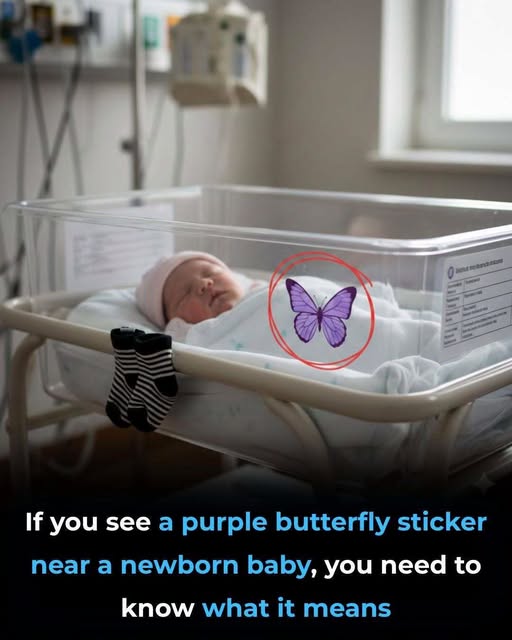
This initiative was born from the personal experience of Millie Smith, who gave birth to twin daughters, Callie and Skye. Following their premature arrival, Skye passed away just three hours after birth, while her sister, Callie, remained in the intensive care unit fighting for her life. During this incredibly fragile time, Millie endured a deeply painful interaction when a well-meaning stranger, unaware of the tragedy that had unfolded, remarked that she was lucky not to have twins.
The comment, while spoken without malice, highlighted a significant gap in how hospital environments communicate the status of families experiencing loss. Millie recognized that in the bustling, often impersonal atmosphere of a maternity ward, staff and visitors might inadvertently say something hurtful simply because they lacked the necessary context. She envisioned a system that could provide this information discreetly, allowing medical teams and visitors to offer more appropriate support and avoid triggering further distress for parents who were already navigating the depths of bereavement.
The butterfly was chosen as the primary image for the symbol because it represents the concept of babies who have flown away. This metaphor provides a soft, respectful way to acknowledge a life that was brief but deeply significant. Purple was selected as the color for the emblem because it is gender-neutral, ensuring that the symbol remains inclusive and appropriate for any family, regardless of the sex of the infants involved. The simplicity of the design allows it to be easily recognized by staff, providing an immediate cue to exercise sensitivity in their interactions.
Since its inception, the purple butterfly symbol has gained international recognition, with hospitals across various countries adopting the practice as a standard component of their neonatal care protocols. It has become a vital tool in fostering a culture of empathy within clinical settings. By normalizing the acknowledgment of infant loss, the symbol helps to ensure that families are not forced to repeatedly explain their circumstances to every new doctor, nurse, or visitor they encounter, which can be an exhausting and retraumatizing process during the early days of recovery.
The impact of this symbol extends beyond the immediate hospital stay. It validates the existence of the child who passed away, ensuring that their memory is honored rather than ignored or erased by the silence that often surrounds perinatal loss. For parents, seeing the butterfly can offer a small measure of comfort, knowing that their entire family—both the child present and the one who has passed—is being acknowledged by those around them. It transforms the way hospital staff approach these families, shifting the focus from a singular medical case to a holistic understanding of the family unit.
As this practice continues to spread, it serves as a reminder that healthcare is as much about emotional support as it is about physical treatment. The purple butterfly is a testament to the power of small, intentional acts of compassion in the face of profound sorrow. It encourages a more mindful approach to communication, reminding everyone who enters a neonatal unit that behind every bassinet is a unique story, and that kindness is the most essential tool in the healing process. This initiative reminds us all that the smallest gestures often carry the most weight when families are navigating the most difficult chapters of their lives.
If you find yourself in a hospital setting and notice a purple butterfly, the most practical and supportive response is to remain mindful of your words. You do not need to ask for details or offer specific advice. Simply acknowledging the family’s situation with warmth and grace is sufficient. If you are a visitor, follow the lead of the parents and the medical staff. By respecting the quiet dignity of this symbol, you contribute to a more supportive environment for families during their most vulnerable moments, ensuring they feel seen, heard, and held in their grief.