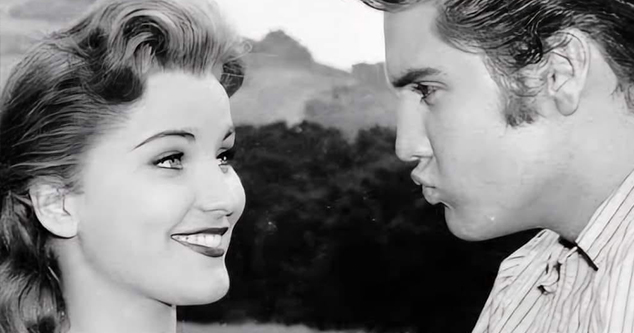
Watching the film today is a reminder of how much natural screen presence he possessed. Elvis was only 21 during production, yet his Southern drawl, expressive face and unmistakable charisma immediately drew attention whenever he appeared.
He was not yet the polished, black-haired movie star familiar from many of his later films. In *Love Me Tender*, his hair remained closer to its natural light-brown shade, and there was still an innocence about him that suited the role of Clint Reno, the youngest son in a family torn apart by war, jealousy and divided loyalties.
The film premiered at New York City’s Paramount Theatre on November 15, 1956. Elvis mania was already so intense that a giant promotional image of the singer was displayed above the theater, while large crowds gathered to see his movie debut. Contemporary accounts describe fans screaming so loudly during screenings that portions of the dialogue were difficult to hear.
Yet despite Elvis’ central place in the advertising, *Love Me Tender* was not originally created as an Elvis Presley vehicle.
The project began under the title *The Reno Brothers*. It was conceived as a Western drama loosely inspired by the real-life Reno Gang, a group of brothers associated with some of America’s earliest train robberies.
Elvis played Clint Reno, the youngest brother, who remains at home while his older brothers fight for the Confederacy during the Civil War. After the family receives incorrect news that the eldest brother, Vance, has died, Clint marries Vance’s former sweetheart, Cathy.
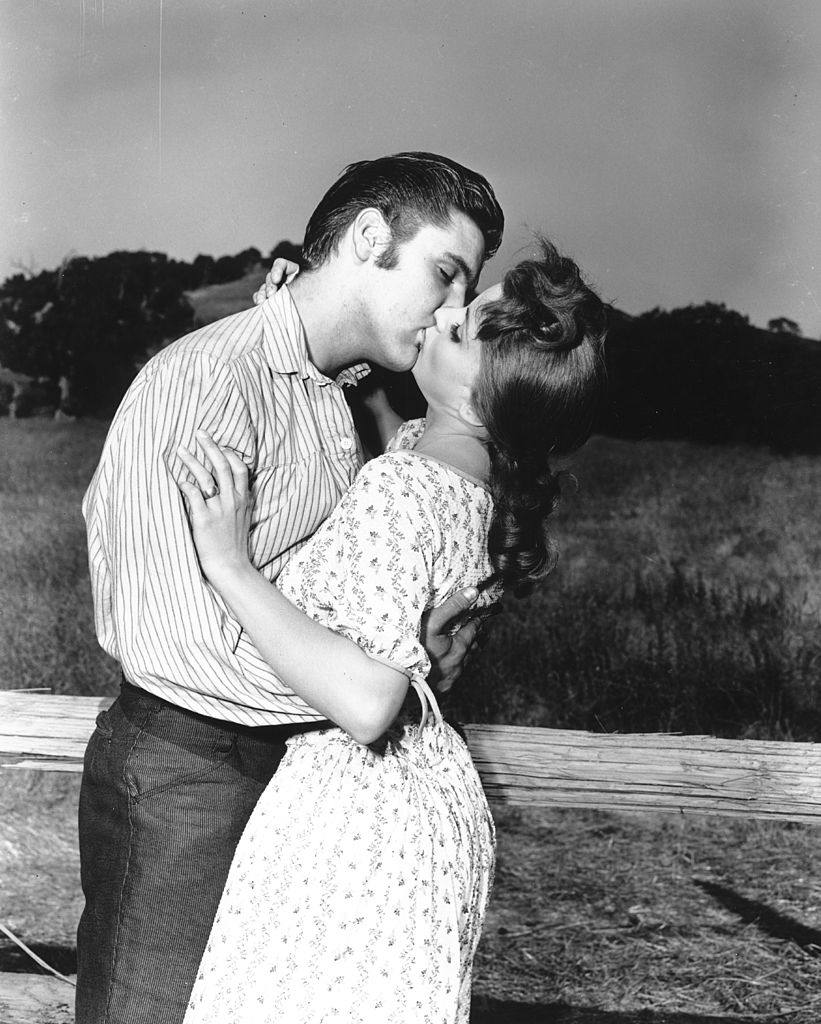
When Vance unexpectedly returns alive, the family is pulled into an increasingly painful conflict involving love, loyalty and stolen money.
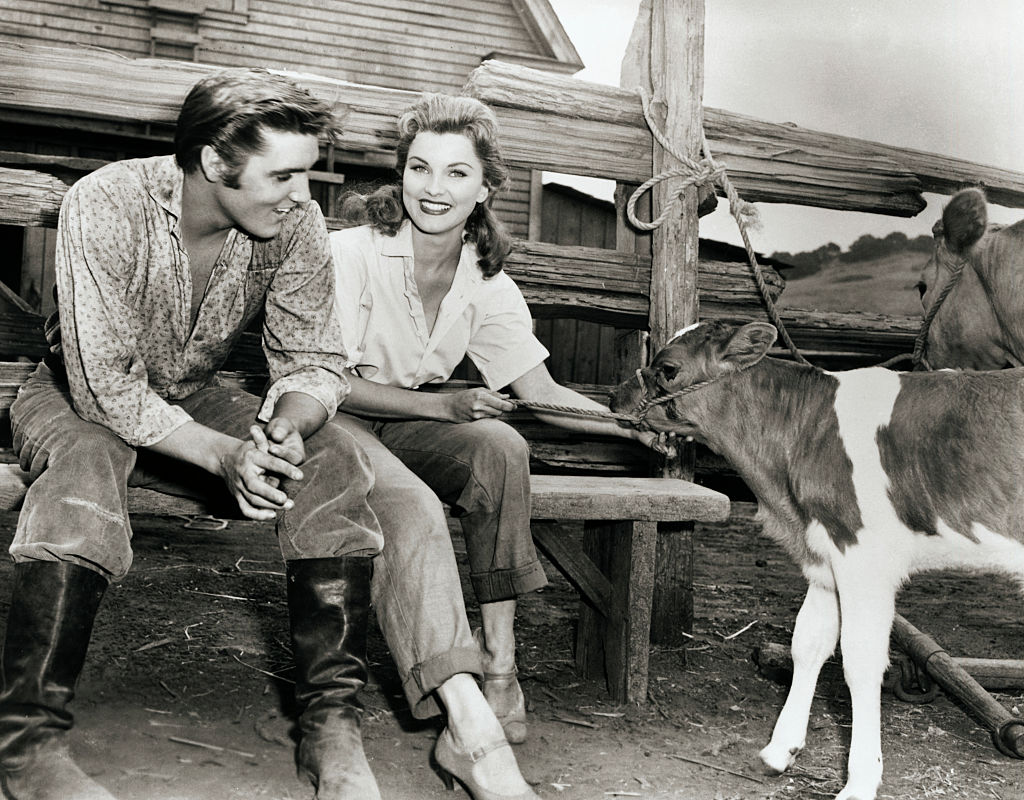
Richard Egan played Vance, while Debra Paget appeared as Cathy. Because Elvis’ character was originally intended to be a supporting role, he received third billing behind Egan and Paget. It became the only one of his feature films in which he was not given top billing.
The role had reportedly been rejected by Jeffrey Hunter and Robert Wagner because it was considered too small. Elvis joined the production only after the principal stars had already been selected.
Once the studio recognized how much attention his casting could generate, however, Clint’s role was expanded. Additional scenes and dialogue gave Elvis more screen time than the original version of the script had allowed.
The film’s title also changed because of his rapidly growing musical popularity.
During a break from filming, Elvis performed “Love Me Tender” on *The Ed Sullivan Show* on September 9, 1956. The response was extraordinary. RCA reportedly received more than one million advance orders for the single before its official release.
Recognizing the song’s commercial power, 20th Century Fox abandoned the title *The Reno Brothers* and renamed the movie *Love Me Tender*.
The famous melody was not entirely new.
“Love Me Tender” was adapted from “Aura Lea,” a sentimental Civil War-era song published in 1861. Ken Darby created the new arrangement and lyrics, although the released version was credited to Elvis and Darby’s wife, Vera Matson.
Elvis received songwriting credit largely because of the publishing arrangements commonly used around his recordings. Accounts differ slightly regarding how much he contributed, but his involvement in composing the lyrics appears to have been limited.
Whatever the complicated story behind its credits, the recording became one of Elvis’ signature ballads.
Its gentle sound offered a striking contrast to the energetic performances that had caused controversy on television. The song reached No. 1 in the United States and remained part of Elvis’ concert repertoire for the rest of his career.
Elvis had long dreamed of becoming a serious actor.
Before achieving fame as a singer, he reportedly worked as a movie-theater usher and admired dramatic performers such as James Dean, Marlon Brando and Tony Curtis. He wanted the chance to prove that he could act rather than simply appear in lightweight musicals built around his records.
That ambition helps explain why he approached his first film with such determination.
Producer David Weisbart praised Elvis as cooperative, punctual, humble and deeply serious about acting. Elvis reportedly arrived with his own dialogue memorized and demonstrated a strong awareness of the other actors’ scenes as well.
Nevertheless, the studio had no intention of putting one of the world’s hottest young singers into a movie without allowing him to sing.
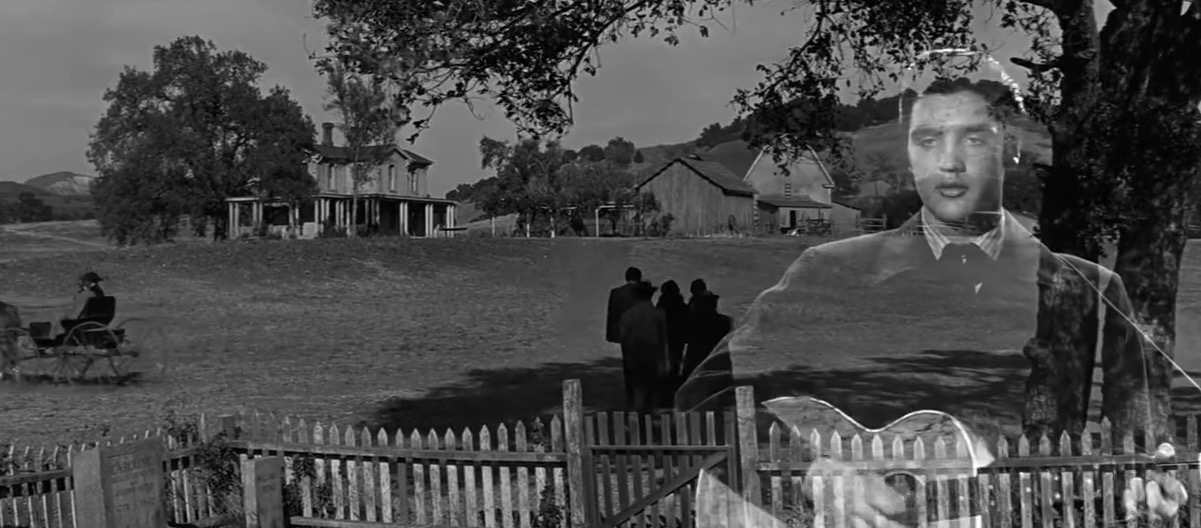
Elvis performs four songs in *Love Me Tender*. Their inclusion occasionally feels strange in a drama set during the 1860s, particularly when Clint performs before an enthusiastic crowd whose reaction resembles a group of 1950s teenagers at an Elvis concert.
These musical moments may not always fit the historical setting perfectly, but they reveal the commercial strategy that would shape much of Elvis’ movie career. The films promoted the records, and the records promoted the films.
Elvis nevertheless delivers a committed performance as Clint.
The character begins as a devoted but emotionally vulnerable young husband. As the story develops, jealousy and manipulation push him toward increasingly desperate behavior.
Elvis had no formal acting training, and some moments reveal his inexperience. Even so, his nervous energy and sensitivity work well for a young man who feels threatened by the return of his older brother.
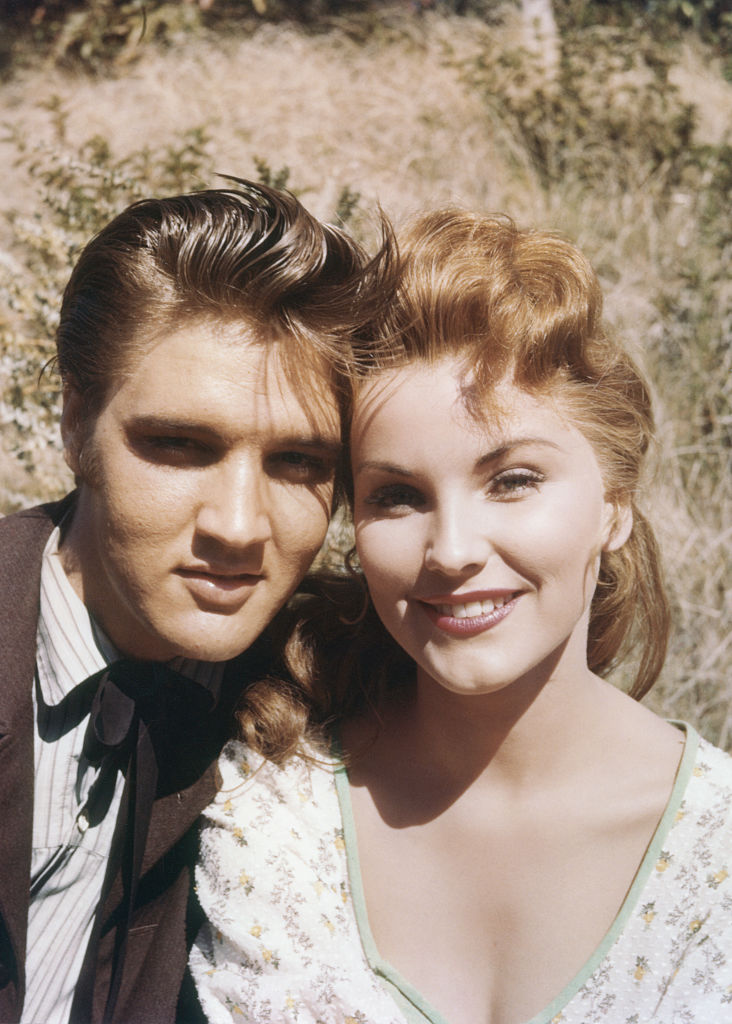
His chemistry with Debra Paget also became the subject of considerable speculation.
Paget was already an established actress when she appeared opposite Elvis. She later remembered being impressed by his politeness and sincerity when they met. Stories published over the years have claimed that Elvis became deeply attracted to her and may even have proposed marriage after filming.
Paget herself reportedly said that he asked her to marry him but that her parents opposed the match. However, many stories about Elvis’ private relationships have been repeatedly retold and embellished, so the exact nature of their romance remains difficult to establish with certainty.
What is clear is that Elvis and Paget shared convincing screen chemistry.
Their scenes possess an awkward tenderness that suits the complicated relationship between Clint and Cathy. Elvis sometimes appears less like an actor performing romance and more like an earnest young man genuinely overwhelmed by the woman standing before him.
The movie’s ending became one of its most controversial elements.
Clint is shot and dies in Cathy’s arms—a devastating conclusion for audiences who had come primarily to see Elvis.
Test screenings reportedly produced strong emotional reactions, particularly from fans who did not want to watch their idol die. The studio responded by adding footage of Elvis singing “Love Me Tender” over the closing credits, providing viewers with one final image of him alive and performing.
Elvis’ mother, Gladys, was also said to have been deeply upset when she watched her son’s character die during a private screening in Memphis.
According to accounts repeated in Presley biographies, Elvis subsequently insisted that his future movie characters should not be killed on screen.
The added closing footage created a noticeable continuity issue. Elvis’ appearance had changed by the time the scene was filmed, particularly his hair, which was darker than it had been during principal photography.
That is not the only mistake viewers have noticed.
Like many older Hollywood productions, *Love Me Tender* contains several continuity errors and historical inaccuracies.
Objects sometimes move between shots, and the positions of weapons or costumes change as the camera angle shifts.
Some viewers have also pointed to clothing fasteners that appear too modern for the Civil War period. Although early zipper-like devices existed during the 19th century, the modern zipper did not become common until much later, making its appearance in an 1860s setting questionable.
Another frequently discussed moment occurs during the song “We’re Gonna Move.” Elvis briefly removes his hands from the guitar while the accompaniment continues, exposing the fact that the music had been prerecorded rather than performed live during filming.
A modern vehicle has also been reported in the distant background of one scene, though it can be difficult to notice without pausing the movie.
These imperfections do not ruin the film.
In many ways, they make it more enjoyable to revisit.
*Love Me Tender* captures a unique moment when Hollywood was still trying to understand Elvis Presley. The studio did not yet know whether to present him as a dramatic actor, a Western hero, a romantic lead or a singer whose every movie needed to become an extended musical advertisement.
As a result, the film is an unusual mixture of all four.
Elvis would go on to make more than 30 feature films, including stronger performances in *Jailhouse Rock*, *King Creole* and *Wild in the Country*. Yet *Love Me Tender* remains special because it shows him at the very beginning—young, ambitious and determined to be taken seriously.
The film may be imperfect, but Elvis is difficult to ignore.
Every smile, glance and nervous movement hints at the enormous star he was becoming.
For fans, watching *Love Me Tender* is more than revisiting an old Western. It is an opportunity to witness the moment the King of Rock ’n’ Roll stepped onto a movie screen for the first time and discovered that his presence could command a theater just as powerfully as his voice commanded a stage.