
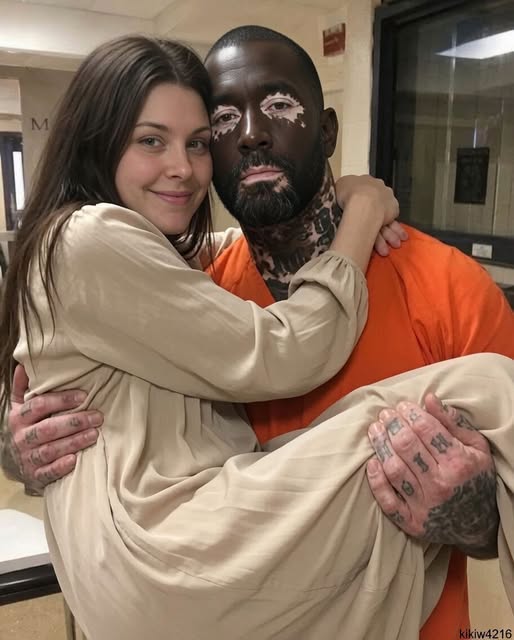
The agreement was simple on its face, yet it required me to step into a life I never wanted. I was expected to visit Jonah twice a month, write letters, and present a facade of domestic stability to the court to aid his parole prospects. I walked into that prison visiting room expecting a criminal, a man hardened by his conviction for embezzling from his family’s charity. Instead, I found a man whose gentleness felt like a quiet, persistent ache in my chest. He remembered the small details of Owen’s life, asked about my health, and filled the margins of his letters with intricate sketches of things he missed. My initial detachment began to fray, replaced by a curiosity that soon deepened into a genuine, terrifying affection. I stopped acting the part of the devoted wife and started living it, spending my nights hunched over stacks of legal documents, hunting for the cracks in his conviction.
The investigation became my obsession. I spent hours in the law library, tracing the paper trail of the charity funds. I found forged signatures that looked nothing like Jonah’s, dates that contradicted his supposed whereabouts, and a key witness who had vanished shortly after the trial. Every piece of evidence I uncovered felt like a brick being pulled from a wall. I stood on the steps of the courthouse, clutching folders of proof, demanding that the system look at the truth. Jonah never asked why I was doing it; he simply watched me with eyes that seemed to hold a lifetime of patience. When the truth finally surfaced—that his own cousin had orchestrated the theft and framed him to protect his own interests—the relief was so profound it felt like grief. Jonah was exonerated after three years of stolen life, and the day he walked out of those gates, I expected a celebration. Instead, he seemed haunted by his own freedom.
For the first week of his release, we existed in a fragile, quiet bubble. We lived in my cramped apartment, trying to navigate the sudden absence of bars and guards. I felt the weight of our shared history, the way our lives had been tethered by a lie that had become our reality. On the eighth night, the air in the kitchen grew heavy. Jonah set a small, black box on the table, his movements deliberate and solemn. When he opened it, the contents weren’t jewelry or mementos, but a collection of documents and a flash drive that clearly contained far more than just legal records. He looked at me, his expression shifting from the gentle man I knew to someone burdened by a much larger, more dangerous awareness. He whispered that he had to be honest, because when I signed those marriage papers, I hadn’t just agreed to a business transaction; I had unknowingly stepped into a web of corporate corruption that reached far beyond his family’s charity. The black box contained the proof of a systemic conspiracy that had used him as a scapegoat, and by marrying him, I had become the only person he could trust to help him expose the truth. He explained that his mother had chosen me specifically because my desperation made me invisible to the people who had framed him. We were not just husband and wife; we were partners in a fight for justice that had only just begun. As he detailed the extent of the betrayal, I realized that the life I had been living was merely the prologue to a much larger story. We sat in the silence of the kitchen, the weight of the black box between us, and for the first time, I understood that our marriage was the foundation for everything we were about to reclaim. The fear that had defined my life for so long began to transform into a cold, sharp resolve. We were no longer victims of a cruel arrangement; we were the architects of our own exoneration. As the night deepened, we began to plan, turning the pages of the documents in the box, finally seeing the path forward. The man I had married for money had given me something far more valuable: a purpose that was entirely our own, and a future that we would finally build without the shadow of a lie. We moved through the documents with a newfound clarity, realizing that the cousin who had betrayed Jonah was merely the first domino in a chain of corruption. The black box was not just a collection of evidence; it was a roadmap to dismantling the empire that had sought to destroy him. Together, we began the long, difficult process of reclaiming our lives, piece by piece, knowing that the truth was finally our most powerful weapon against those who had once held all the cards.
In the quiet of that kitchen, the final pieces of the puzzle clicked into place. Jonah explained that the charity had been a front for laundering money, a scheme his cousin had perfected while Jonah was away at school. The forged signatures were not just amateur mistakes; they were calculated attempts to bury him under a mountain of debt and criminal liability. By marrying me, Jonah had gained an outsider—someone with no ties to the family business who could investigate without raising suspicion. He hadn’t known me before the arrangement, but his mother had vetted me, sensing that my devotion to Owen would make me relentless. When I finally looked up from the documents, the fear was gone, replaced by a fierce, protective love for the man who had risked everything to keep me safe. We were a team now, bound not by a contract, but by the shared burden of a dangerous truth. The black box held the keys to our freedom, and as we sat there, planning our next move, I knew that no matter what happened, we would face it together. The marriage of convenience had blossomed into a partnership of iron, forged in the fires of betrayal and tempered by the pursuit of justice. We were finally free, and for the first time, the future was ours to write.