
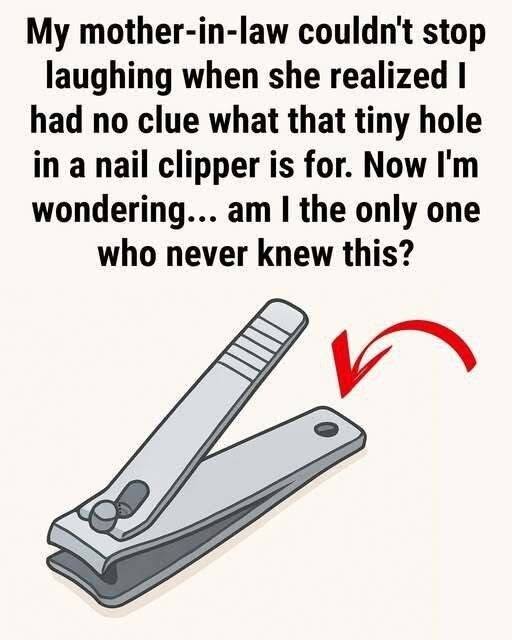
One of the primary reasons for the hole is portability. Nail clippers are compact and easy to misplace, especially when traveling or storing them with other small grooming items.
The hole allows the clipper to be attached to a key ring, lanyard, toiletry bag, or small hook. This makes it easier to keep track of and ensures it’s always within reach when needed.
For people who like to stay organized, this simple feature can prevent countless searches through drawers and travel bags.
Better Grip and Control
The hole can also improve handling. Some people thread a small cord or key ring through it to create a larger grip, making the clipper easier to hold and control.
This can be especially helpful for older adults or anyone with arthritis, reduced hand strength, or limited finger mobility. The added leverage may make pressing the lever more comfortable during nail trimming.
Keeping Grooming Tools Organized
Many households use separate clippers for fingernails and toenails. By attaching different clippers to labeled key rings or small loops, it’s easier to keep them organized and avoid mixing them up.
The hole also allows the clipper to be secured inside a grooming kit, helping prevent it from getting lost among other personal care items.
A Design That Dates Back More Than a Century
The small hole isn’t a recent innovation. Nail clippers became increasingly common in the late 19th century, and many early models included a hole so they could be attached to pocket watch chains, grooming cases, or decorative holders.
At the time, personal grooming tools were considered everyday essentials that people often carried with them. The hole offered a practical way to keep the clipper accessible while reducing the chance of losing it.
Although nail clipper designs have evolved over the years, this feature has remained because it continues to serve a useful purpose.
Why Manufacturers Still Include It
In product design, unnecessary features are often removed over time to simplify manufacturing and reduce costs. The fact that the hole has survived for decades suggests it still provides real value.
Whether it’s used for hanging, attaching to a keychain, improving grip, or keeping grooming tools together, the small opening continues to make the clipper more practical without adding complexity.
Other Hidden Features You May Not Have Noticed
Many traditional nail clippers also include a built-in metal nail file that folds out or is attached to the lever. Some versions have a small pointed tip designed to help clean underneath fingernails, while newer models may include built-in nail catchers that collect clippings for easier cleanup.
These small additions reflect the same philosophy behind the hole itself: simple improvements that make everyday grooming more convenient.
A Reminder That Good Design Is Often Invisible
The best-designed tools are often the ones we rarely think about. They solve everyday problems so effectively that we simply accept them as normal.
The tiny hole in a nail clipper is a perfect example. It’s a small detail that improves portability, organization, and usability while connecting modern clippers to a design that’s been trusted for well over a century.
The next time you trim your nails, take a closer look at that little opening near the lever. What may seem like an insignificant feature is actually a thoughtful piece of engineering that has quietly made one of the world’s most common grooming tools more practical for generations.