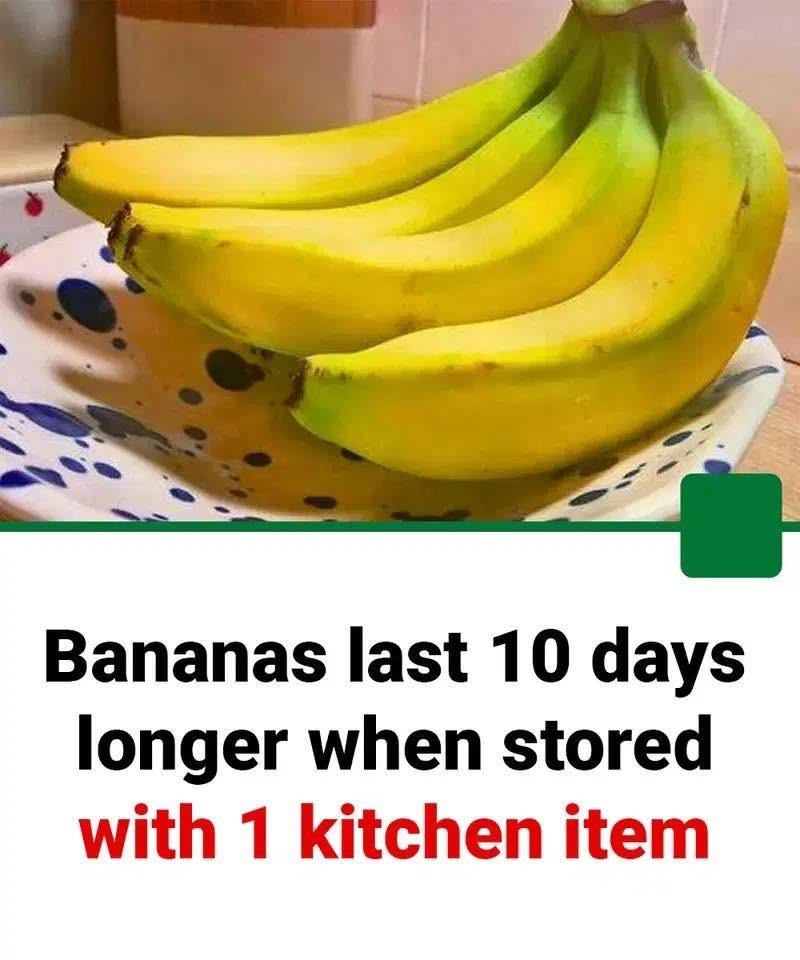
Bananas naturally produce ethylene gas, a plant hormone that triggers the ripening process. Most of this gas is released through the stems, causing the fruit to soften and sweeten over time. When bananas are kept together in a bunch, the ethylene they produce speeds up the ripening of the entire cluster.
The process can happen even faster if bananas are stored near other fruits that also release high amounts of ethylene, such as apples, pears, avocados, peaches, and tomatoes.
The Plastic Wrap Trick
One of the simplest methods for slowing ripening is to wrap the stems of the bananas with plastic wrap (cling film). Some people wrap the entire bunch, while others separate the bananas and wrap each stem individually.
The idea is that the plastic helps reduce the amount of ethylene gas escaping from the stems, slowing the ripening process. While results vary depending on storage conditions and the bananas’ initial ripeness, many people find that this method helps keep bananas fresh longer than simply leaving them uncovered in a fruit bowl.
How to Try It
- Leave the bananas in a bunch or separate them if preferred.
- Wrap the stems tightly with plastic wrap.
- Store the bananas at room temperature.
- Keep them away from fruits that produce large amounts of ethylene gas.
- Handle them gently to reduce bruising.
More Ways to Keep Bananas Fresh
Use a banana hanger. Hanging bananas helps prevent pressure points that can cause bruising and brown spots.
Refrigerate fully ripe bananas. Once bananas reach your preferred ripeness, placing them in the refrigerator can slow further ripening. The peel will likely turn dark brown or black, but the fruit inside usually remains fresh for several more days.
Freeze overripe bananas. If bananas become too ripe to eat fresh, peel them, slice them, and freeze them. They’re perfect for smoothies, banana bread, muffins, pancakes, or homemade frozen desserts.
Store them separately from other fruit. Keeping bananas away from apples, pears, avocados, and similar fruits can help slow the ripening process.
Common Storage Mistakes
Avoid sealing bananas inside a plastic bag. Unlike wrapping only the stems, enclosing the entire fruit can trap excess moisture, increasing the risk of mold and spoilage.
It’s also best not to refrigerate bananas before they’re ripe. Cold temperatures can interrupt the normal ripening process, resulting in fruit that may not develop its full flavor or texture.
Finally, avoid piling heavy fruit on top of bananas, as bruising can speed deterioration.
The Bottom Line
Wrapping banana stems with plastic wrap is a simple and inexpensive storage trick that may help slow ripening by reducing the release of ethylene gas. Combined with storing bananas away from other ethylene-producing fruits and minimizing bruising, this method can help extend freshness and reduce unnecessary food waste.
Although the exact amount of extra freshness varies depending on temperature, humidity, and the bananas’ stage of ripeness, these easy storage habits can help you enjoy your bananas for longer before they become overripe.
{"post":107265,"page":2,"next":[{"id":107261,"title":"The Wheel of Fortune Scandal: Why Fans Are Calling for a Total Boycott Over This Disastrous Final Round","url":"https:\/\/new24.info\/107261"},{"id":107258,"title":"I Married a 78-Year-Old Wealthy Man \u2013 During Our Wedding Vows, He Grabbed the Mic and Said, \u2018My Bride Doesn\u2019t Know One Important Detail About Me\u2019","url":"https:\/\/new24.info\/107258"},{"id":107255,"title":"My Fianc\u00e9 Pressured Me to Send My 5-Year-Old Twin Brothers to a Group Home After I Became Their Guardian \u2013 So I Taught Him a Lesson He Would Never Forget","url":"https:\/\/new24.info\/107255"},{"id":107250,"title":"After I Gave Birth to Our Son, My Husband Walked into My Hospital Room With a Pregnant Woman and Said, \u0027Our Family Is Growing Again\u0027 \u2013 What His Father Did Next Left Everyone Speechless","url":"https:\/\/new24.info\/107250"},{"id":107247,"title":"I Pretended to Be the Daughter of an Elderly Man I Met by Chance \u2013 Days Later, His Lawyer Found Me and Said, \u0027You Walked Straight Into His Trap\u0027","url":"https:\/\/new24.info\/107247"},{"id":107229,"title":"A Rude Woman Took the Window Seat I\u0027d Paid for My 6-Year-Old Daughter With Autism \u2013 So the Pilot Taught Her a Lesson She\u0027d Never Forget","url":"https:\/\/new24.info\/107229"},{"id":107244,"title":"Remembering Rob Hirst: The Rhythmic Heartbeat and Enduring Cultural Legacy of an Australian Music Icon","url":"https:\/\/new24.info\/107244"},{"id":107238,"title":"Hidden Prom Dress Inside My Son\u2019s Beanbag Chair Revealed Painful Truths","url":"https:\/\/new24.info\/107238"},{"id":107234,"title":"How My Sister Hijacked My Empty Austin House For Her Secret Party","url":"https:\/\/new24.info\/107234"},{"id":107225,"title":"Returning Home To Discover My Parents Faked My Disappearance For Money","url":"https:\/\/new24.info\/107225"},{"id":107226,"title":"Why Unplugging This Popular Kitchen Appliance at Night Can Protect Your Home","url":"https:\/\/new24.info\/107226"},{"id":107221,"title":"How One Unanswered Text Message Ended Years Of Toxic Family Demands","url":"https:\/\/new24.info\/107221"},{"id":107216,"title":"Relentless Mother Uses Her Secret Investigative Past To Expose Reckless Family","url":"https:\/\/new24.info\/107216"},{"id":107212,"title":"How One Courageous Haircut Revealed A Beautiful Secret From A Father","url":"https:\/\/new24.info\/107212"},{"id":107208,"title":"Hidden Audio Files And Secret Financial Records Finally Exposed Victor Payne","url":"https:\/\/new24.info\/107208"},{"id":107205,"title":"High blood pressure, high cholesterol: Avoid these 3 habits in the morning","url":"https:\/\/new24.info\/107205"},{"id":107202,"title":"12 nasty things you do in old age that everyone notices, but no one dares to tell you","url":"https:\/\/new24.info\/107202"},{"id":107199,"title":"After 32 Years, My Company Handed Me a Box and Five Minutes to Leave \u2013 Three Days Later, a Man From the CEO\u0027s Office Knocked on My Door","url":"https:\/\/new24.info\/107199"},{"id":107197,"title":"A Practical Guide to Safely Washing and Reusing Your Kitchen Storage Bags","url":"https:\/\/new24.info\/107197"},{"id":107191,"title":"Is That Itchy Rash on Your Hands Actually a Hidden Danger? The Secret Signs of Dyshidrotic Eczema You Can\u2019t Afford to Ignore","url":"https:\/\/new24.info\/107191"}]}