
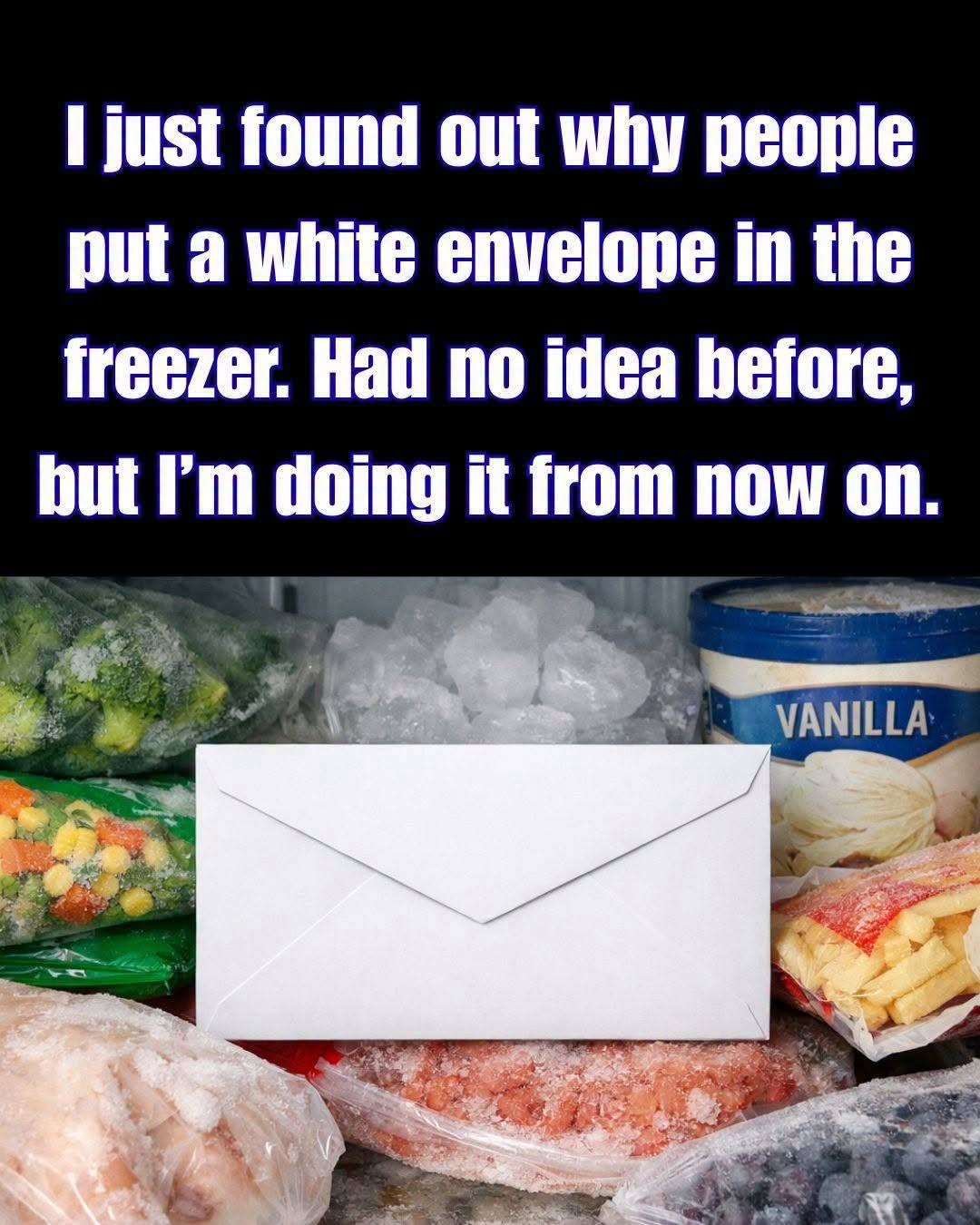
The technique involves placing the envelope in the freezer. It works best with traditional lick-and-stick envelopes that use water-activated adhesive. Exposure to cold temperatures can make this type of glue more brittle, sometimes weakening the seal just enough to allow the flap to be lifted carefully.
After leaving the envelope in the freezer for a while, remove it and gently try lifting one corner of the flap. Using your fingers or a dull, thin object, work slowly and patiently to avoid tearing the paper. If the adhesive has loosened enough, the flap may separate with minimal damage.
Keep in mind that this method isn’t foolproof. Many modern self-sealing envelopes use pressure-sensitive adhesives that are far more resistant to cold, making the freezer trick much less effective. Even with traditional envelopes, success depends on the type of paper, glue, and how firmly the envelope was sealed.
Rather than being a guaranteed fix, this method simply takes advantage of the way some water-based adhesives respond to low temperatures. In some cases, you’ll be able to reopen the envelope neatly, while in others, the paper may still tear, requiring a replacement envelope.
The takeaway is simple: everyone makes small mistakes. Fortunately, a little patience and a clever trick can sometimes give you the chance to correct them without having to start from scratch.