My name is Greta. I was thirty years old and living in a quiet neighborhood at the edge of town, where streets emptied soon after sunset and most people knew the names of everyone living within three houses of their own.
It was the kind of place where nothing dramatic ever seemed to happen.
At least, that was what I had always believed.
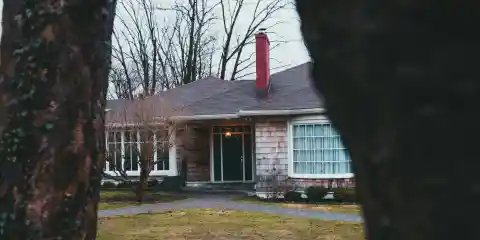
My next-door neighbor, Dorothy, was an eighty-three-year-old widow who had lived in the same pale-yellow house for as long as I could remember.
Her husband had died more than a decade earlier.
They had never had children.
After his death, Dorothy rarely traveled farther than the grocery store, the pharmacy, or the small church on the corner.
She was more than a neighbor to me.
When I was a child, Dorothy helped my mother look after me. She watched me when my mother worked late, made grilled-cheese sandwiches when I refused to eat anything else, and sat beside me during thunderstorms because I was terrified of the noise.
“You count the seconds after the lightning,” she used to say. “That way, the thunder doesn’t get to surprise you.”
Even after I became an adult, Dorothy continued treating me like the little girl who used to race through her kitchen with scraped knees and tangled hair.
“Greta, you’re too thin,” she would say whenever I visited. “Sit down. I made soup.”
“I came to bring you groceries.”
“And I am trying to keep you alive.”
As she grew older, I began returning the kindness she had shown me.
I brought groceries.
Cleaned the rooms she struggled to manage.
Took out her trash.
Changed light bulbs.
Checked on her several times a week.
Dorothy hated admitting she needed help.
“I can still carry my own laundry,” she insisted one afternoon when I took the basket from her hands.
“You nearly tripped over the rug last week.”
“That rug has always held a personal grudge against me.”
“Then let me protect you from it.”
She gave me an exaggerated look of annoyance, but I saw the gratitude behind it.
Our routine continued for years.
I usually visited after work carrying food or a grocery bag. Sometimes we talked for an hour. Other times, Dorothy complained about her knees while I wiped down the counters.
Then, one Tuesday evening, everything changed.
I arrived with bread, fruit, and the tea she liked.
Dorothy opened the front door only halfway.
That alone surprised me.
Normally, she invited me inside before both my feet reached the porch.
“I brought your groceries,” I said, lifting the bag.
She glanced over her shoulder before looking back at me.
“You didn’t have to do that.”
“I always do.”
Dorothy hesitated.
There was more color in her cheeks than usual, and her gray hair looked freshly brushed.
Then she smiled in a way I had not seen before.
“You don’t need to visit anymore,” she said. “I have Alex now.”
I stared at her.
“Who is Alex?”
Her smile widened.
“He’s a delivery driver. He brought me a package, and we fell in love.”
For a moment, I waited for her to laugh.
Dorothy had a dry sense of humor and enjoyed saying outrageous things just to watch me react.
“Very funny.”
“I’m not joking, Greta.”
“What do you mean you fell in love?”
“Exactly what I said.”
“How old is he?”
“Old enough.”
Something tightened in my stomach.
Before I could ask anything else, she reached for the grocery bag.
“Thank you. Alex will help me put these away.”
Then she closed the door.
I remained on the porch for several seconds, confused and embarrassed.
Part of me wondered whether I had insulted her by questioning her.
Dorothy was elderly, but she was not helpless.
She had every right to choose who entered her life.
Still, something about the conversation bothered me.
Two days later, I saw Alex for the first time.
I was leaving for work when Dorothy’s door opened.
A young man stepped outside and pulled it shut behind him.
He looked barely twenty.
He wore faded jeans, worn sneakers, and a plain gray sweatshirt. His dark hair was untidy, and his thin frame made him appear even younger.
He did not resemble the polished con artist I had imagined.
He looked like an ordinary young man struggling to get by.
When he noticed me watching, he stopped.
“Good morning.”
“Morning.”
His eyes moved toward my house, then back to me.
“You must be Greta.”
The fact that he knew my name unsettled me.
“And you’re Alex.”
He nodded.
“How is Dorothy?”
“She’s fine.”
“I haven’t seen her outside lately.”
“She’s been tired.”
His tone was polite, but guarded.
Before I could continue, he walked toward an old car parked near the curb and drove away.
Over the next two weeks, I did not see Dorothy outside once.
Alex came and went almost every day.
Sometimes he arrived early and stayed for hours.
Other times, his car remained in the driveway overnight.
Soon, I saw him unlocking Dorothy’s front door with his own key.
Each time, my concern grew.
I tried to tell myself Dorothy was happy.
Perhaps she enjoyed the attention.
Perhaps Alex performed the chores I had once done.
Perhaps I was being judgmental because of the age difference.
But Dorothy stopped calling me.
She no longer waved from her window or came out for the mail.
Whenever I called, she ignored the phone.
Instead, she sent brief messages.
I’m fine. Don’t worry about me.
The first time, I accepted it.
The second time, I stared at the words for several minutes.
Dorothy never wrote like that.
Her messages were usually long and crowded with unnecessary details.
She asked whether I had eaten.
Reminded me to carry an umbrella.
Complained about television commercials.
The new messages contained none of her warmth.
I called again.
No answer.
Several minutes later, another message appeared.
I’m fine. Don’t worry about me.
The wording was identical.
Something was wrong.
Then, one afternoon, a package intended for Dorothy was delivered to my porch.
I carried it next door.
I knocked several times.
No one answered.
“Dorothy?” I called. “It’s Greta.”
Silence.
I knocked harder.
Nothing.
Growing more frightened by the second, I returned home and retrieved the emergency key Dorothy had given me years earlier.
My hands shook as I unlocked her door.
The house was perfectly clean.
Too clean.
No dishes waited beside the sink.
No newspaper rested on the table.
Dorothy’s usual blanket was missing from the back of her chair.
Everything looked arranged and untouched.
“Dorothy?”
Neither she nor Alex answered.
Then I heard it.
A faint knocking sound beneath the floor.
My blood ran cold.
The sound came again.
Three weak knocks.
A pause.
Then two more.
I rushed toward the basement stairs.
“Dorothy?”
A faint voice answered from below.
“Greta?”
I nearly fell as I hurried down.
The knocking came from behind the storage-room door.
I grabbed the handle.
It would not turn.
“I’m here,” I said. “Move away from the door.”
I threw my shoulder against the wood.
Once.
Twice.
On the third attempt, the old latch tore free.
The door flew inward.
Dorothy sat on the concrete floor beside a stack of cardboard boxes.
Her face was pale.
One hand gripped her ankle.
An overturned stool lay nearby.
“Oh, my God.”
I dropped beside her.
“Are you hurt?”
“My ankle.”
“What happened?”
“I climbed onto the stool to reach the top shelf. It slipped. The door swung shut, and the lock jammed.”
“How long have you been down here?”
“Perhaps an hour.”
Relief and anger collided inside me.
“Where is Alex?”
“He went to the pharmacy.”
“And he left you alone?”
Dorothy frowned.
“He didn’t know I came down here.”
I pulled out my phone.
Before I could call an ambulance, the front door slammed upstairs.
“Dorothy?” Alex shouted.
His footsteps pounded across the floor.
When he appeared at the bottom of the stairs, his face turned white.
A paper pharmacy bag slipped from his hand.
“What happened?”
“You left an eighty-three-year-old woman alone in a house where she could fall,” I snapped.
He stared at Dorothy, then rushed toward us.
“I was gone twenty minutes.”
“That was enough.”
“Greta,” Dorothy warned.
Alex knelt beside her.
His hands shook as he examined her ankle.
“I’m so sorry,” he whispered. “I should have told you not to come down here.”
“You did tell me,” Dorothy admitted. “Several times.”
Alex closed his eyes briefly, blaming himself anyway.
I called emergency services.
While we waited, he folded a blanket beneath Dorothy’s leg and spoke to her in a quiet voice.
“Stay with me, Dot.”
“I’m not dying.”
“I know.”
“Then stop looking at me as if I am.”
His jaw tightened.
That was when I realized he was fighting tears.
The paramedics determined that Dorothy had badly sprained her ankle but had not broken it.
She refused to go to the hospital, so they settled her on the couch and gave us instructions.
The moment they left, I turned toward Alex.
“What is happening here?”
He looked at Dorothy.
“She should tell you.”
Dorothy sighed.
“Sit down, Greta.”
I remained standing.
“No. I have spent weeks wondering whether you were safe. You stopped answering my calls. He has a key. You haven’t been outside, and those messages don’t even sound like you.”
“They weren’t mine,” she said.
My stomach dropped.
Alex lifted both hands.
“She asked me to send them.”
“Why?”
“Because I was ashamed,” Dorothy answered.
Her gaze fell toward her swollen ankle.
A month earlier, the package Alex delivered had contained adult incontinence supplies.
Dorothy had ordered them after several accidents but had been too embarrassed to tell me that her health was changing.
“When Alex arrived, the bottom of the box split open,” she said. “Everything fell across the porch.”
She had expected him to stare.
Or laugh.
Or make some careless remark that would strip away what little dignity she felt she had left.
Instead, Alex quietly gathered the items, carried them inside, and asked whether she needed anything else.
“He noticed there was almost no food in my refrigerator,” Dorothy continued. “I had been pretending I was managing better than I was.”
After finishing his shift, Alex returned with soup, bread, and fruit.
The next day, he came back to repair a loose railing.
Then he fixed a leaking faucet and replaced the burned-out basement light.
“So you fell in love with him?” I asked.
Dorothy gave me a tired smile.
“Not the way you imagined.”
She looked toward Alex.
“I love him like the grandson I never had.”
Alex stared down at his hands.
His mother had died when he was sixteen.
His father disappeared shortly afterward, leaving Alex to move between relatives, rented rooms, and occasionally his car.
He worked long shifts making deliveries and slept wherever he could afford to.
Dorothy discovered the truth after seeing clothing and blankets piled across his back seat.
“I had three empty bedrooms,” she said. “He had nowhere safe to sleep.”
“She offered me a room,” Alex added. “I tried to refuse.”
“He was very bad at refusing.”
A faint smile crossed his face.
I looked toward the basement.
“What was inside all those boxes?”
“Care packages,” Dorothy said.
She and Alex had been collecting canned food, toiletries, blankets, and winter clothing for elderly neighbors and struggling families.
The project had been Dorothy’s idea.
“Needing help made me realize how many people are too proud or frightened to ask,” she explained. “I wanted to do something useful.”
What I had mistaken for secrecy was preparation.
Every box had a handwritten label.
Some were intended for families with children.
Others were for elderly people living alone.
“But why shut me out?” I asked.
The hurt in my voice surprised even me.
Dorothy’s expression softened.
“Because I knew you would try to take over.”
“I would have helped.”
“Exactly.”
She reached for my hand.
“You have spent years caring for me, Greta. I wanted to prove I could still give something back.”
Her words silenced me.
I had always thought kindness meant protecting Dorothy from every burden.
I had never considered that my constant help might make her feel she had become a burden herself.
“I’m sorry,” I whispered.
“So am I. I should have trusted you.”
Alex cleared his throat.
“The messages were my fault. I thought short answers would stop you from worrying.”
“They made me worry more.”
“I understand that now.”
A week later, Dorothy sat near the front window with her ankle elevated while Alex and I carried the first care packages to our cars.
We delivered food, toiletries, blankets, and basic household supplies to twelve homes that afternoon.
Dorothy directed everything from her armchair like a military commander.
“Greta, Mrs. Bell needs the soft bread.”
“Yes, ma’am.”
“And Alex, do not take the blue blanket to Mr. Jenkins. He hates blue.”
Alex leaned toward me.
“She has become very powerful.”
“I heard that,” Dorothy called.
For the first time in weeks, laughter filled the house.
The project grew quickly.
Mrs. Patterson from the next street began collecting canned food.
The local church donated blankets.
A pharmacy provided hygiene products and medical supplies.
Alex built shelves in Dorothy’s garage, and I created a list of neighbors who might need help but were unlikely to ask.
Dorothy named the project The Open Door Pantry.
“No one should have to explain why they need something,” she said. “They should simply be able to knock.”
As the months passed, Dorothy regained some strength.
Her ankle healed.
She began sitting on the porch again.
Alex stayed in the upstairs bedroom and continued working, but he also enrolled in evening classes at the community college.
Dorothy helped him complete the application.
He helped her learn how to use video calls.
They argued about his laundry.
He complained that she overfed him.
She complained that he did not own a proper winter coat.
They became, in every way that mattered, family.
One afternoon, I asked Dorothy whether she had truly meant it when she told me they had fallen in love.
She smiled.
“Of course.”
“You deliberately made it sound romantic.”
“You were becoming far too comfortable.”
I laughed.
“You frightened me half to death.”
“Then perhaps you needed the exercise.”
That was Dorothy.
Eighty-three years old, recovering from a fall, and still pleased with herself.
I had entered her basement expecting to uncover cruelty.
Instead, I found two lonely people who had rescued one another.
Dorothy gave Alex a home.
Alex gave Dorothy companionship, dignity, and a renewed sense of purpose.
Together, they taught me that kindness does not always arrive in a form we immediately recognize.
Sometimes it appears with a damaged package.
Sometimes it carries groceries through a front door.
Sometimes it knocks from beneath the floor.
And sometimes it gives an elderly woman a reason to believe her life still contains something new to offer.
I had spent weeks judging Alex from a distance because fear told me a stranger must be dangerous.
The truth was more complicated.
He was not taking Dorothy away from me.
He was helping return a part of herself that age, loneliness, and my well-intentioned protection had slowly taken from her.
Dorothy had never needed someone to run her life.
She needed people willing to stand beside her while she continued living it.
That was the lesson I carried from the basement.
Not every locked door conceals something terrible.
Sometimes kindness is waiting on the other side, hoping someone will finally stop assuming the worst and open it.